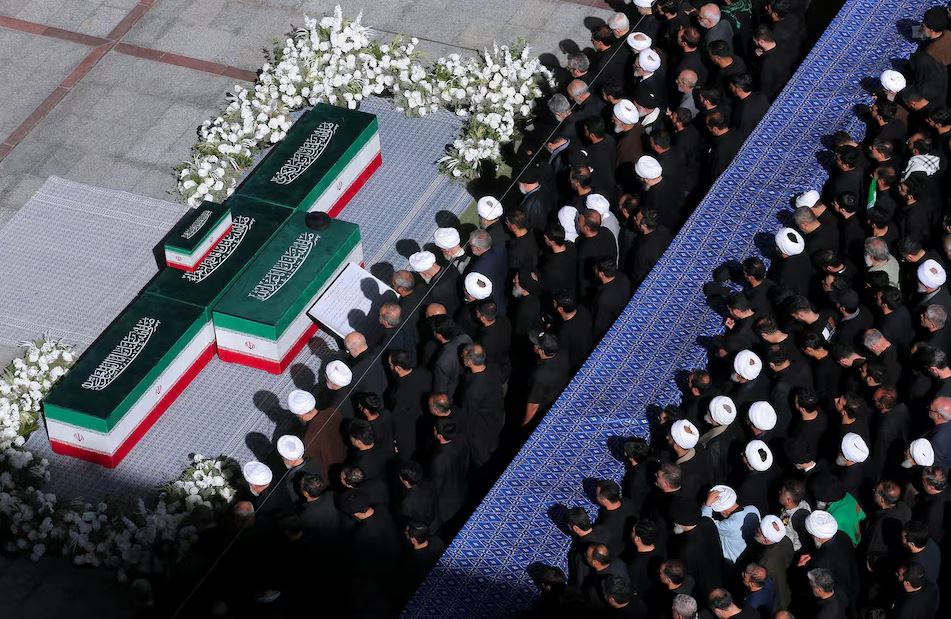
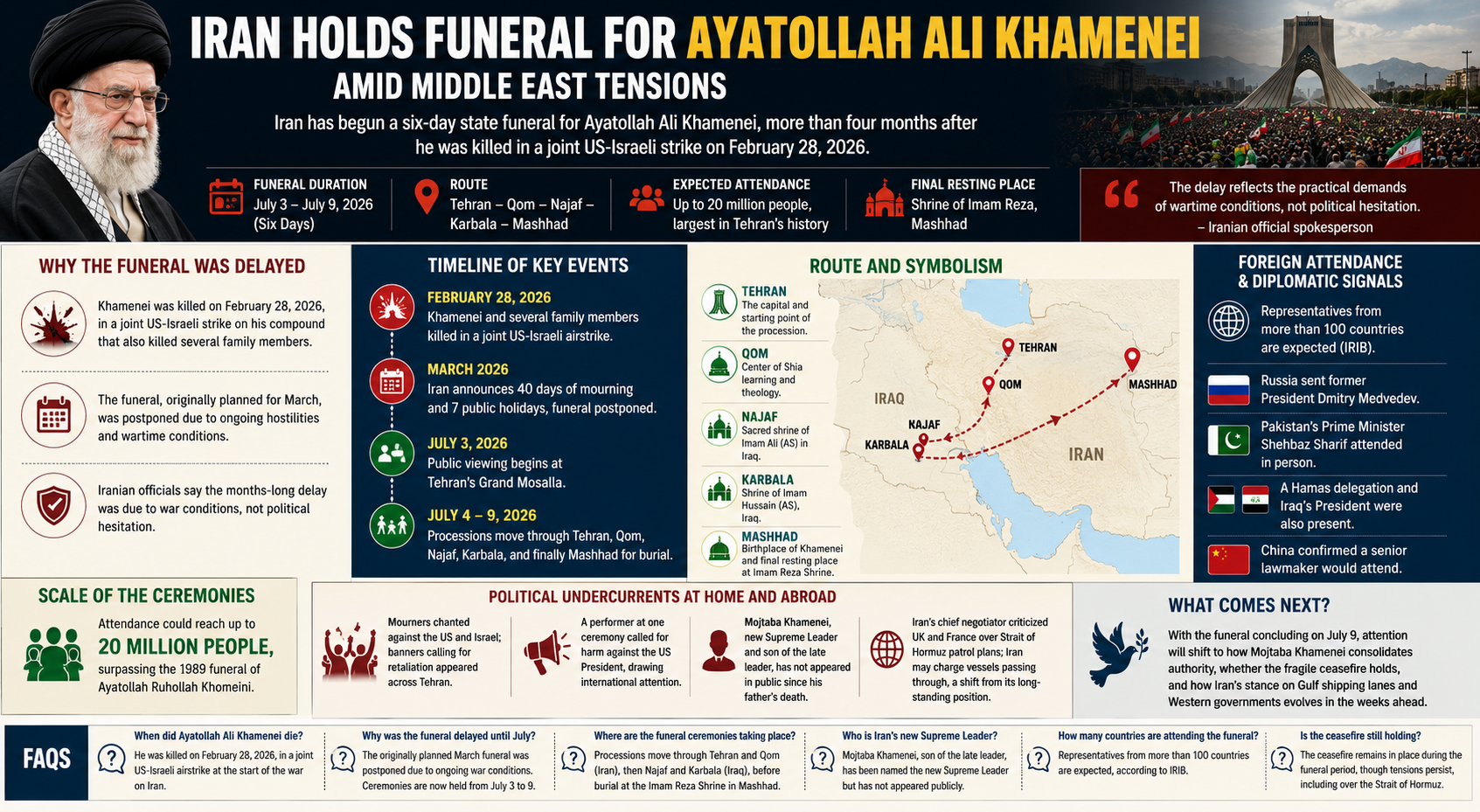
Iran has begun a six day state funeral for Ayatollah Ali Khamenei, more than four months after the Supreme Leader was killed in a joint US Israeli strike on the first day of the war in February. The delayed ceremonies, running from July 3 to 9 across Tehran, Qom, Najaf, Karbala, and Mashhad, are unfolding against a backdrop of continued regional tension and a fragile ceasefire.
Why the Funeral Was Delayed
Khamenei died on February 28, 2026, when a strike on his compound killed him along with several family members at the opening of the US Israel war on Iran. The funeral was originally planned for March but authorities postponed it because of ongoing hostilities.
Iranian officials say the months long delay reflects the practical demands of wartime conditions rather than any political hesitation. A spokesperson tied to the funeral preparations cited the war conditions directly as the reason ceremonies could not proceed sooner.
Timeline of Key Events
- February 28, 2026: Khamenei and several family members killed in a joint US Israeli airstrike.
- March 2026: Iran announces 40 days of mourning and 7 public holidays, funeral postponed.
- July 3, 2026: Public viewing begins at Tehran's Grand Mosalla.
- July 4 to 9, 2026: Processions move through Tehran, Qom, Najaf, Karbala, and finally Mashhad for burial.
Scale and Symbolism of the Ceremonies
Iranian authorities have prepared for a funeral that could rival or exceed the historic 1989 turnout for Ayatollah Ruhollah Khomeini. Tehran's mayor has said attendance could reach 20 million people, which would make it the largest gathering in the city's history.
The route and symbolism carry deep religious weight. The procession moves from Tehran to Qom, home to major Shia learning centers, then into Iraq for ceremonies at the shrines in Najaf and Karbala, before returning to Mashhad, Khamenei's birthplace, for burial at the shrine of Imam Reza.
Foreign Attendance and Diplomatic Signals
- Representatives from more than 100 countries are expected, according to Iranian state linked broadcaster IRIB.
- Russia sent former president Dmitry Medvedev.
- Pakistan's Prime Minister Shehbaz Sharif attended in person.
- A Hamas delegation and Iraq's president were also present.
- China confirmed a senior lawmaker would attend.
Political Undercurrents at Home and Abroad
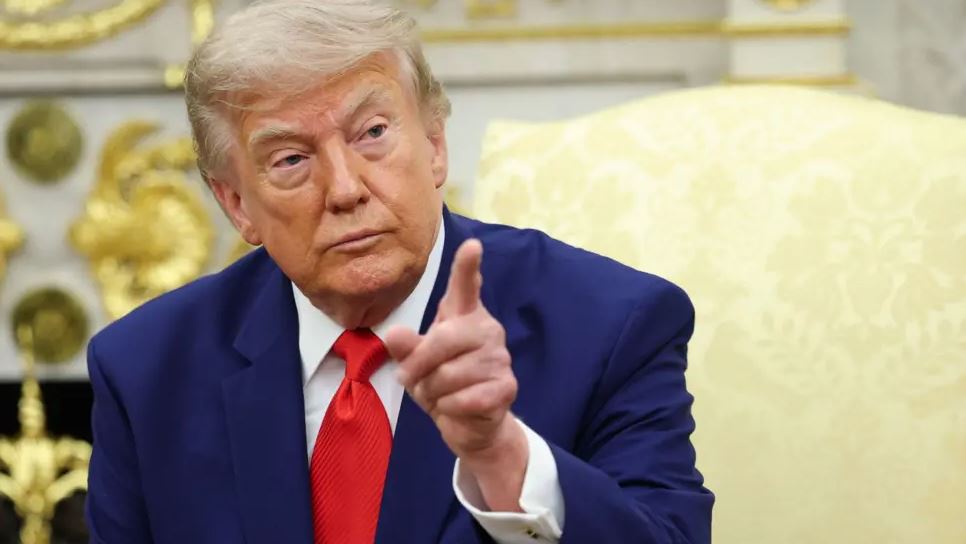
The funeral has doubled as a display of defiance. Mourners have chanted against the United States and Israel throughout the ceremonies, and banners referencing retaliation have appeared across Tehran. A performer at one ceremony publicly called for harm against the US president, drawing wide attention.
Mojtaba Khamenei, the new Supreme Leader and son of the late leader, has not appeared in public since his father's death, raising ongoing questions about his health and his role in governing the country. Several of Khamenei's other sons did attend the proceedings.
Away from the ceremonies, tensions in the region remain active. Iran's chief negotiator has criticized a joint statement from the British and French leaders about patrolling the Strait of Hormuz, and Iran has signaled interest in charging vessels passing through the waterway, a departure from its long standing status as an open international route.
What Comes Next
With the funeral concluding on July 9, attention will shift to how Mojtaba Khamenei consolidates authority, whether the fragile ceasefire holds, and how Iran's posture toward Gulf shipping lanes and Western governments evolves in the weeks ahead.