This is not a routine diplomatic development. The agreement announced on June 14, 2026 between Washington and Tehran represents the most consequential energy market event since the 1970s oil crisis. Understanding its full impact on global oil prices requires examining the scale of the disruption it is unwinding, the precise mechanics of how markets will respond, and the serious geopolitical uncertainties that still remain.
The IEA's Executive Director has described the combined impacts of the Strait of Hormuz closure as "the greatest threat to global energy security in history." The war in the region that began on February 28 has impeded energy trade flows through the strait, creating the largest supply disruption in the history of the global oil market.
That is the baseline from which this peace deal departs.
The Damage the Deal Is Unwinding: Data from the Worst Supply Shock in History
To assess where oil prices go from here, analysts must first understand what the Hormuz closure actually did to global supply.
The IEA estimates that oil output from countries affected by the closure is down more than 14 million barrels per day, describing this shock as "the largest supply disruption in the history of the global oil market."
The scale of that number is difficult to overstate. For context:
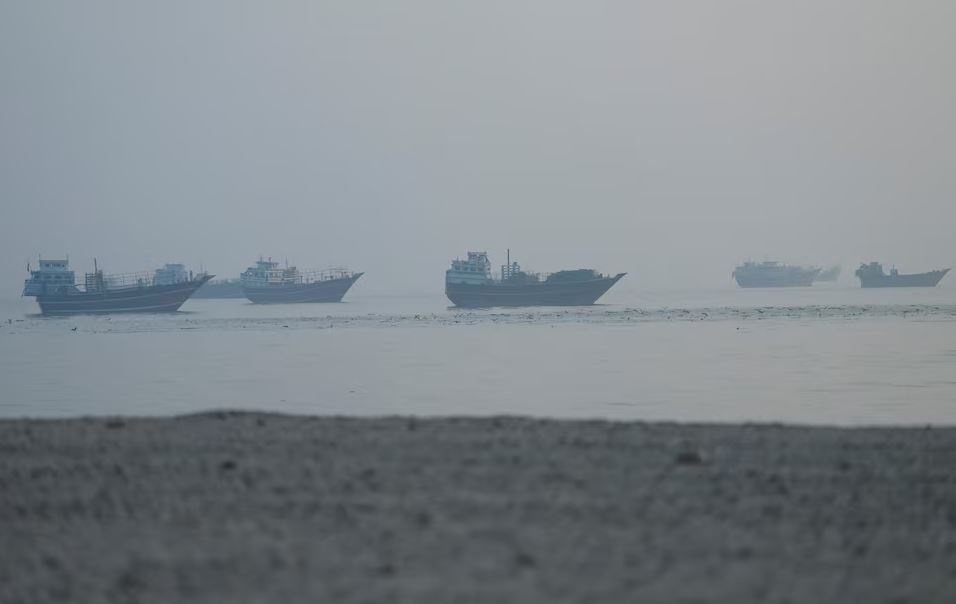
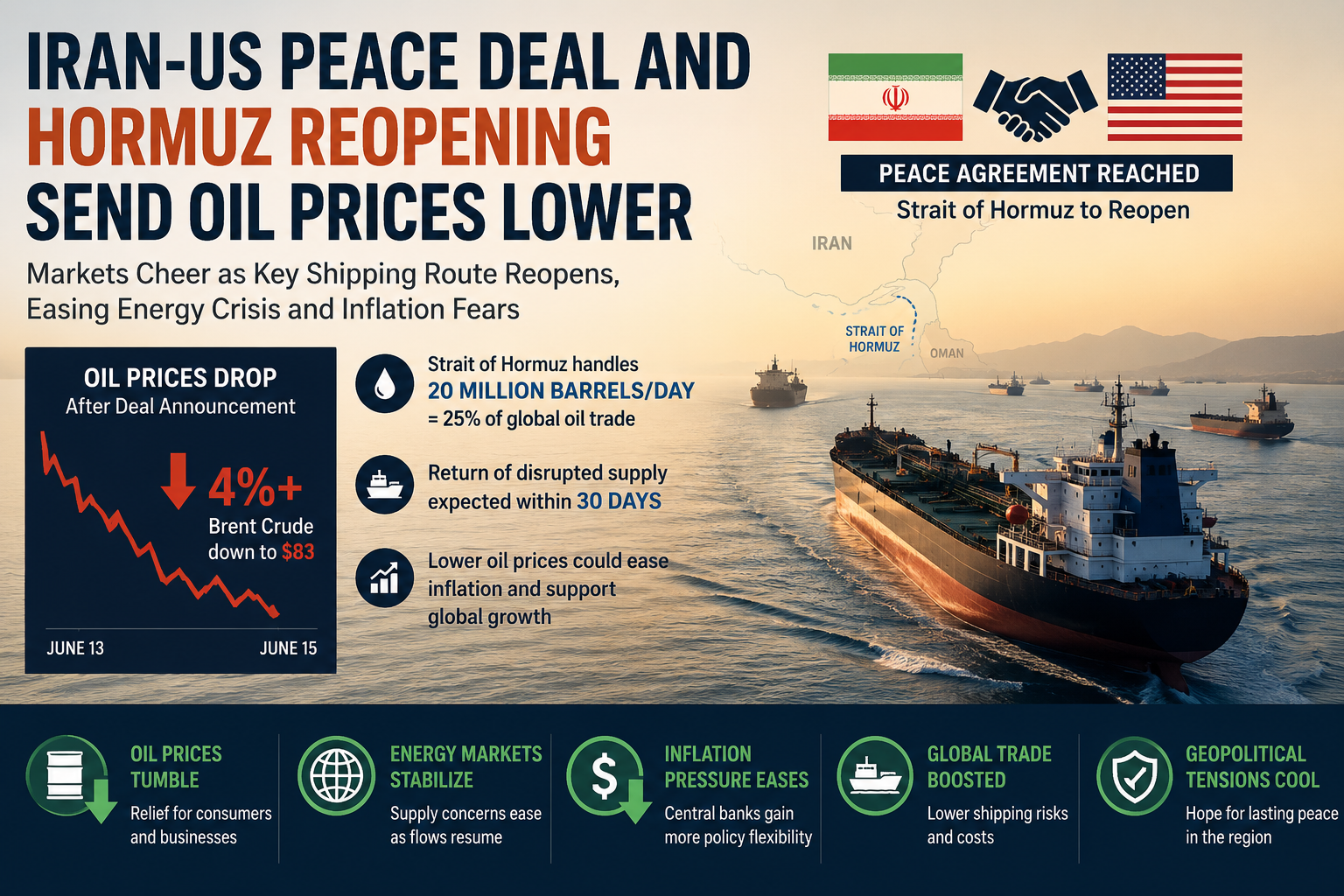
- The Strait of Hormuz carried approximately 20 million barrels per day of crude oil and products in 2025, equivalent to roughly 25 percent of global seaborne oil trade. Its effective closure since late February has reduced flows to less than 10 percent of normal, forcing Gulf producers to curtail approximately 10 million barrels per day of total liquids output.
- The US Energy Information Administration estimated that Iraq, Saudi Arabia, Kuwait, the UAE, Qatar, and Bahrain collectively shut in 7.5 million barrels per day of crude oil production in March, rising to 9.1 million barrels per day in April.
- Physical crude oil prices surged to record levels near $150 per barrel during the peak of the crisis, far above futures market prices, with middle distillate prices in Singapore reaching all-time highs above $290 per barrel.
- Global oil supply declined by a further 1.8 million barrels per day in April alone to 95.1 million barrels per day, taking total losses since February to 12.8 million barrels per day.
Freight costs for large crude carriers soared during the crisis, with war risk insurance premiums multiplying and vessels forced into costly rerouting or prolonged delays. This reshaped shipping economics and affected industries worldwide, from manufacturing to transportation to consumer goods, showing how geopolitical risk at Hormuz rapidly becomes a global supply chain issue.
The Asian dimension of this crisis is particularly stark. Eighty to eighty-nine percent of Hormuz crude flows to Asia, with China alone absorbing 38 percent. Japan depends on Hormuz for 73 percent of its oil imports, South Korea for 70 percent, India for 42 percent, and China for 40 to 45 percent.
What the Peace Deal Actually Says, and What It Does Not
Pakistani Prime Minister Shehbaz Sharif announced on June 14 that a peace deal between the United States and Iran had been reached, with both sides declaring the immediate and permanent termination of military operations on all fronts, including in Lebanon. The official signing ceremony is scheduled for June 19 in Switzerland.
US President Trump declared the deal complete on Truth Social, stating: "I hereby fully authorize the toll free opening of the Strait of Hormuz, and, simultaneously herewith, authorize the immediate removal of the United States Naval blockade. Ships of the World, start your engines. Let the oil flow!"
Key terms of the framework include:
- The memorandum of understanding would reopen the Strait of Hormuz immediately without tolls and restore prewar shipping within approximately 30 days, as well as lifting the US naval blockade.
- A 14-page draft memorandum outlines terms including the US lifting oil sanctions and Iran committing to reopening the Strait of Hormuz within 30 days.
- The agreement still leaves Tehran's nuclear program for further negotiation over the next 60 days, meaning the most sensitive issues remain unresolved.
- European nations have signaled readiness to lift sanctions on Tehran in exchange for Iran taking steps to curb its nuclear program.
What it does not settle is equally significant. Iran has long maintained its nuclear programme is peaceful and has not publicly committed to giving up its enriched uranium. At times, the US sought the removal of the enriched uranium as part of a deal. Russia has offered to take it. At other times, Trump said he wanted it destroyed.
Oil Price Impact: Immediate Reaction and What Comes Next
Markets responded immediately and decisively on June 14 and 15.
- US crude oil fell more than 4.5 percent to $80 per barrel, its lowest level since the first week of March, as trading opened Sunday evening following the announcement. Brent crude tumbled by about 4 percent, touching $83, also its lowest level since early March.
- The US dollar weakened to a 10-day low against its major peers as the preliminary agreement sent oil prices tumbling and boosted demand for riskier assets.
- "The fall in oil prices will provide some relief for central banks around the world who were worried about the inflation outlook," analysts noted, with attention now turning to the US Federal Reserve's interest rate decision this week.
However, the price drop must be read carefully against the larger picture. Even at $80 per barrel, oil prices have risen more than 20 percent since the war started and more than 40 percent since the beginning of the year. Last week alone, prices dropped more than 6 percent as momentum built toward the deal announcement.
On the question of full price recovery, markets are expecting a release of approximately 100 million barrels of crude oil from the stranded ships to flow out once the deal is formally in place, according to senior oil market analyst June Goh at Sparta in Singapore.
The structural recovery, however, will take time. EIA Administrator Tristan Abbey warned: "Just as we had never before seen the strait close, we've never seen it reopen. What exactly that looks like remains to be seen. Full restoration of flows will take months."
Three variables will determine how far and how fast prices fall:
- How quickly tanker traffic resumes and insurance markets normalize.
- Whether the June 19 signing in Switzerland holds without new conditions.
- Whether the 60-day nuclear talks produce a durable agreement or collapse into renewed conflict.
According to economic models, a sustained 10 percent drop in oil prices typically reduces headline inflation by approximately 0.4 percentage points. By removing the war premium that had added nearly $30 to the price of every barrel, the de-escalation effectively acts as a global tax cut.
A finalized peace deal could ease inflationary pressures "enormously," restore consumer confidence, and give global central banks more room to maneuver on monetary policy, according to Christian Noyer, honorary governor of the Bank of France.