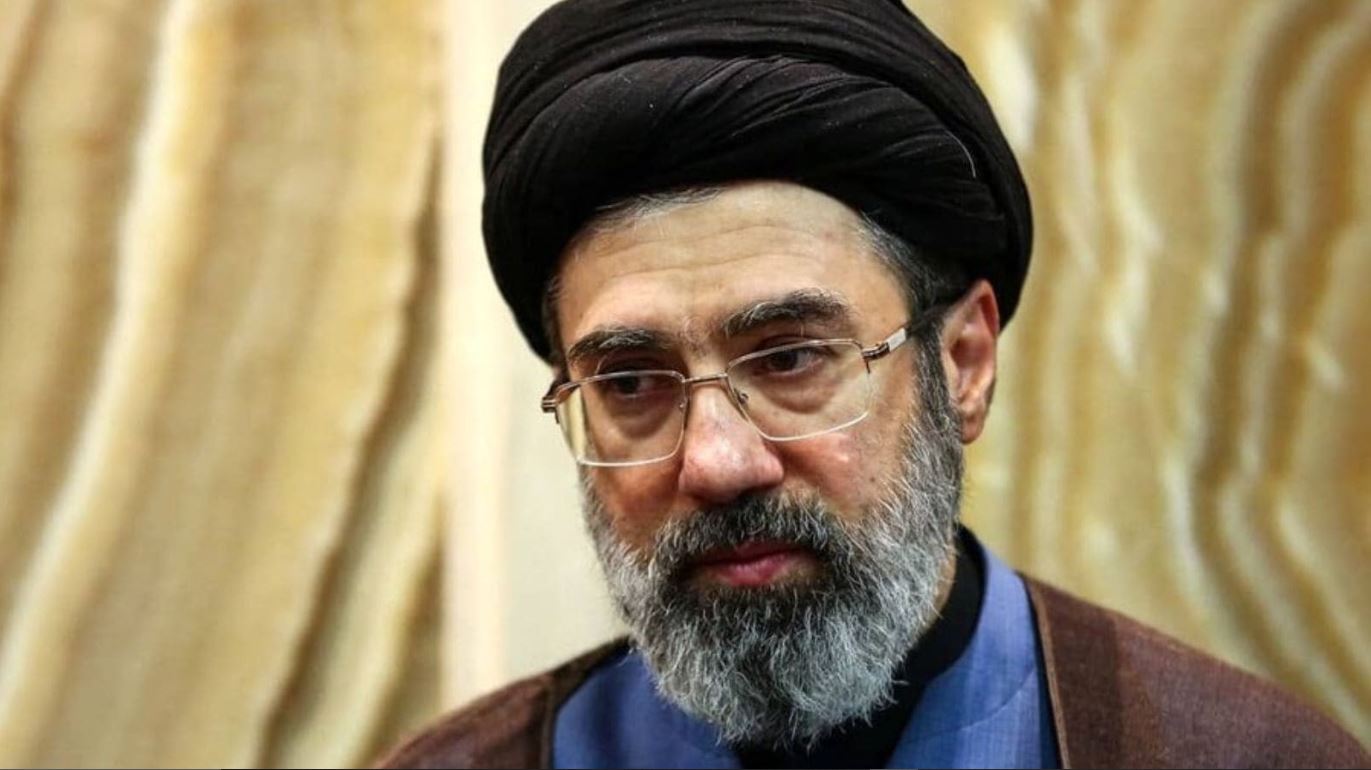
On March 8, 2026, Iran's Assembly of Experts named Mojtaba Khamenei, the 56-year-old son of the assassinated Supreme Leader Ayatollah Ali Khamenei, as the Islamic Republic's third supreme leader. His ascension, carried out under active wartime conditions and intense IRGC pressure, signals a hardline continuity doctrine that will define Iran's posture toward the United States, Israel, and the broader international order for years to come.
WHO IS MOJTABA KHAMENEI: BACKGROUND AND EARLY LIFE
Birth, Family, and Formative Years
Mojtaba Hosseini Khamenei was born on September 8, 1969, in Mashhad, the Shia holy city in northeastern Iran. He is the second son of Ayatollah Ali Khamenei, who led Iran from 1989 until his assassination on February 28, 2026. Mojtaba grew up in a household steeped in revolutionary ideology at precisely the moment his father was emerging as a central figure in the opposition to Shah Mohammad Reza Pahlavi. He received his early schooling in Sardasht and Mahabad before completing high school in Tehran.
His father's elevation to supreme leader in 1989 transformed the family's position entirely. From that point forward, Mojtaba Khamenei operated not as a public figure but as a quiet architect of power within the supreme leader's
inner sanctum, a role that would define his entire career.
Military Service and IRGC Ties
Mojtaba joined the Islamic Revolutionary Guard Corps in 1987 and served during the Iran-Iraq War, fighting in the Habib Battalion. He sustained injuries during combat operations. That wartime experience was not merely biographical; it seeded a network of relationships with IRGC officers who would go on to occupy the most sensitive positions in Iran's security and intelligence apparatus. These bonds, forged under fire in the 1980s, became the structural foundation of his political influence decades later.
His close ties to IRGC chief Ahmad Vahidi, former IRGC intelligence head Hossein Taeb, and Parliament Speaker Mohammad Bagher Ghalibaf are not coincidental alliances. They are the product of a deliberately cultivated, decades-long strategy of positioning within the security establishment, a strategy that ultimately paid off in the succession crisis of March 2026.
Theological Education and Clerical Rank
After his military service, Mojtaba studied Islamic theology in Qom, Iran's primary center of Shia learning, under his father and the late Ayatollah Mahmoud Hashemi Shahroudi. He holds the clerical rank of Hojatoleslam, a mid-level designation that sits below the rank of ayatollah. This has been one of the central points of contention surrounding his appointment, since Iran's theocratic governance model rests on the principle of Velayat-e Faqih, rule of the Islamic jurist, which traditionally demands a senior clerical rank. His father faced the same legitimacy deficit in 1989 and the constitution was amended to accommodate him. A parallel legal and religious accommodation for Mojtaba is expected.
HOW MOJTABA KHAMENEI ACCUMULATED POWER: THE SHADOW STATESMAN
Operating from Inside the Supreme Leader's Office
Mojtaba Khamenei never held an elected government office, never gave public speeches, and never delivered Friday sermons. He functioned as what US diplomatic cables published by WikiLeaks in the late 2000s described as the power behind the robes, controlling access to his father and overseeing political and security affairs through the supreme leader's office. He was, in effect, the deputy chief of staff of the Islamic Republic without a formal title.
A 2019 US Treasury Department designation formalised what analysts had long observed: Mojtaba had been representing the supreme leader in an official capacity despite holding no elected or appointed government post. The Treasury stated that he worked closely with the commander of the IRGC's Quds Force and the Basij paramilitary to advance what it characterised as his father's destabilising regional objectives.
Role in Domestic Repression and Electoral Politics
Mojtaba Khamenei was widely believed to have engineered the sudden rise of hardliner Mahmoud Ahmadinejad to the presidency in 2005 and backed his disputed re-election in 2009. The 2009 contested election triggered the Green Movement, one of the largest protests in the Islamic Republic's history. Mojtaba was identified by opponents, including moderate cleric Mehdi Karroubi, as the figure who had orchestrated the Basij's violent crackdown on protesters. Ali Khamenei denied the accusation at the time, but the allegations became part of Mojtaba's permanent political profile.
During the 2022 Mahsa Amini protests, triggered by the death of a 22-year-old woman in morality police custody, Mojtaba was again a particular target of demonstrator anger. His name appeared in protest chants that demanded accountability from the regime's inner circle. For nearly two decades, Iranian civil society has associated his name with the violent suppression of dissent.
Economic Empire and Western Sanctions
Beyond his security and political roles, Mojtaba Khamenei has been linked to an extensive financial network. In January 2026, US Treasury Secretary Scott Bessent stated that Iranian leaders had wired billions of dollars to financial institutions worldwide, with Israeli reporting linking Mojtaba to approximately 328 million dollars in cryptocurrency transfers routed through a Dubai account. Bloomberg connected him to Ali Ansari and the collapsed Bank Ayandeh, which had been forcibly dissolved after accruing debts from insider loans.
His name does not appear directly in the alleged transactions, a structural feature of the opacity that has characterised his operation throughout his career. He has reportedly moved billions of dollars through a network of insiders affiliated with the Iranian establishment over the years. These financial holdings across multiple countries represent not just personal wealth but a tool of political patronage and institutional leverage.
THE SUCCESSION PROCESS: HOW A WARTIME LEADER WAS CHOSEN
The Assassination of Ali Khamenei and the Emergency Succession
On February 28, 2026, Ayatollah Ali Khamenei was killed in joint US-Israeli strikes on Iran during the opening phase of the 2026 Iran war. The strikes also killed approximately 40 other senior Iranian officials, as well as Mojtaba's mother, wife, and one of his sons. Mojtaba himself was not present and survived. The constitutional responsibility for selecting a successor fell to the 88-member Assembly of Experts, the clerical body empowered under Iranian law to choose the supreme leader. What followed was a process that several assembly members later described as neither free nor deliberative.
IRGC Pressure and Internal Resistance
According to Iran International, starting on March 3, IRGC commanders applied systematic pressure on Assembly of Experts members through in-person meetings,phone calls, and what multiple sources described as psychological and political coercion to secure votes for Mojtaba. A first electoral session was held online on March 3. Assembly members described the atmosphere as unnatural. Those who presented arguments against Mojtaba Khamenei were given limited time to speak, the discussion was cut off, and a vote was forced.
There was significant internal opposition. At least eight assembly members stated they would boycott a follow-up session planned for March 5. One member noted that Ali Khamenei himself had reportedly been opposed to his son's succession and had never allowed the issue to be raised during his lifetime. The appointment was also criticised as reminiscent of the hereditary Pahlavi monarchy that the 1979 Islamic revolution had overthrown, a contradiction that carries deep ideological weight within the Islamic Republic's founding mythology.
The Formal Announcement on March 8
On March 8, 2026, the Assembly of Experts announced that Mojtaba Khamenei had been elected Supreme Leader by a decisive vote, becoming the third leader of the Islamic Republic. Iranian state media, the IRGC, the armed forces, and President Masoud Pezeshkian quickly pledged allegiance. One assembly member, Ayatollah Mohsen Heidari Alekasir, framed the choice in explicitly confrontational terms, noting the new leader had been selected based on Ali Khamenei's guidance that Iran's supreme leader should be hated by the enemy. The reference to US President Trump's prior statement that Mojtaba was unacceptable was deliberate: the appointment was itself presented as an act of defiance.
WHAT MOJTABA KHAMENEI'S LEADERSHIP MEANS FOR IRAN AND THE WORLD
Ideological Orientation: Ultraconservatism and Mahdism
Mojtaba Khamenei is aligned with Iran's ultraconservative principlists. He is a patron of the Front for Islamic Revolution Stability and is strongly associated with Taqi Yazdi, one of the most doctrinally rigid figures within the clerical establishment. According to the Atlantic Council, he holds fundamentalist and Mahdist views. The practical implication of this ideological positioning is that the pragmatic moderating tendencies sometimes attributed to factions within the Iranian elite are not part of Mojtaba's political vocabulary.
The Iran-US-Israel Triangle Under New Leadership
The geopolitical implications of Mojtaba Khamenei's succession are severe and immediate. Israel has explicitly threatened to target any replacement for Ali Khamenei. President Trump declared Mojtaba's selection unacceptable and suggested he wanted to be involved in choosing Iran's leader, a statement Iran's parliament speaker publicly mocked. Al Jazeera's Iran correspondent Ali Hashem described Mojtaba as his father's gatekeeper, adopting identical positions on the United States and Israel, and characterised the incoming leadership as confrontational rather than moderate.
The Daily Telegraph assessed that Mojtaba would view the United States as an implacable enemy and would be unlikely to make compromises or engage in meaningful negotiations in the near term. Mehmet Ozalp, writing in The Conversation, suggested that Mojtaba may lean more heavily on the IRGC than his father did, deepening the already dominant role of the security establishment in Iranian governance. His selection signals that Iran's ruling elite has chosen institutional continuity and hardline resistance over reform or diplomatic opening at the moment
of maximum external pressure.
Nuclear Programme and Regional Proxy Networks
As supreme leader, Mojtaba Khamenei holds final authority over Iran's nuclear programme, its foreign policy, and the command of the IRGC and its regional proxy architecture, including Hezbollah, Hamas, Palestinian Islamic Jihad, the Popular Mobilization Forces in Iraq, and the Houthis in Yemen. His 2019 US sanctions designation specifically cited his role in supporting these groups through the Quds Force. There is no credible analytical basis for expecting him to fundamentally restructure Iran's regional strategy or reduce support for these networks.
Domestic Legitimacy Challenges
Mojtaba Khamenei's internal legitimacy is contested on at least three grounds. His clerical rank of Hojatoleslam is constitutionally insufficient, requiring legal amendment. His association with the violent suppression of the Green Movement and the Mahsa Amini protests has made him a specific target of opposition anger. And his succession to his father has revived comparisons to the hereditary monarchy the Islamic Republic was founded to replace. He has never delivered a public speech, and many Iranians have not heard his voice despite knowing his name for years. Building a governing persona under active military bombardment, while managing a war with the United States and Israel, represents a legitimacy challenge of historic magnitude.