The Strike That Reshaped the Middle East
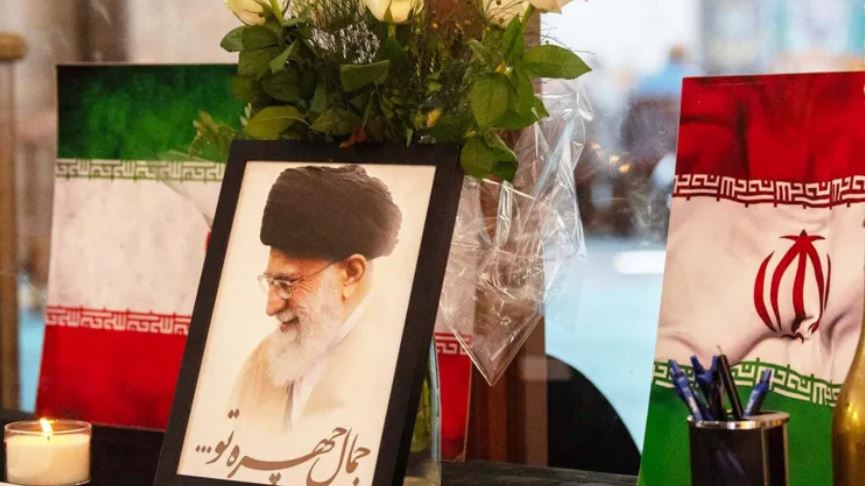
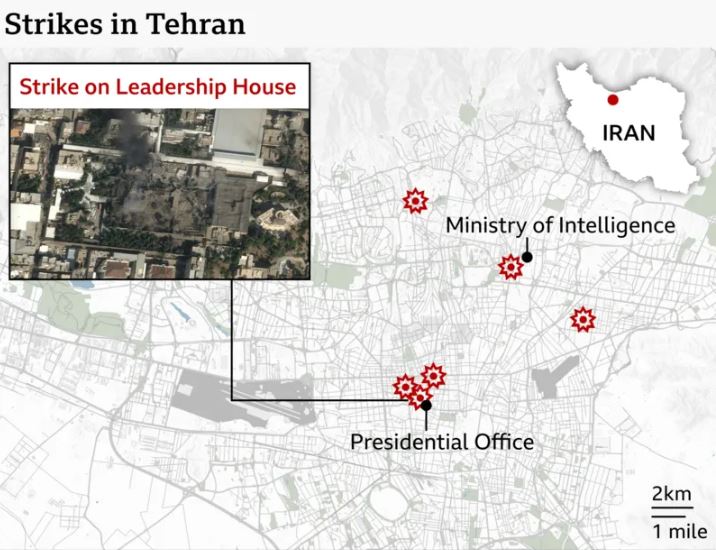
The day of February 28, 2026 marked a change in modern world history, as the Islamic Republic of Iran ceased to exist in its previous form. A successfully executed military action carried out by a joint United States-Israeli team titled “Operation Epic Fury” by the Pentagon and “Operation Lion’s Roar” by the IDF, resulted in the successful elimination of Iran’s Supreme Leader Ayatollah Ali Khamenei via a coordinated decapitation strike on his compound located within Tehran’s Pasteur District. This was not a sudden act of war, but had been in the making for many months as a result of an accumulation of intelligence, strategic patience, and the identification of a clear window of opportunity for the execution of the operation which should have been evident to analysts since late last year following the outcome of the Twelve Day War in June 2025. What follows is neither a celebration nor condemnation of these events, but rather an objective evaluation of how they occurred and why at this moment and the consequences for both the regional and global order at large.
How the Intelligence Architecture Made the Strike Possible
CIA-Mossad Coordination: Years of "Pattern of Life" Tracking
The successful operational aspects of this operation are not solely due to an intelligence breakthrough. Officials with knowledge of the operations state there is a considerable surveillance infrastructure that has been established for quite some time with two sources of information: HUMINT (Human Intelligence) networks within Iran and technical/physical access to the Iranian Telecommunications Infrastructure.
For several months prior to this operation, CIA analysts have been following and watching Khamenei and his "pattern of life" by looking at his daily movements & routines, how he accesses his underground bunker, as well as when and how often senior Iranian leaders meet each other. After the "Twelve Day War," Khamenei became extremely reclusive and didn't come to the surface very often. The bunker in which he was staying had an elevator that took more than five minutes to get from the top of his compound to the elevator at the bottom of the compound. This significantly reduced the ability of the American/Israeli forces to strike during this short time frame.
The intelligence breakthrough occurred when the CIA learned that a meeting would occur between senior leaders of Iran, and Khamenei would be present. This concentration of Iranian leadership was established and will be monitored by the Israelis/Americans; this would be exactly what military planners call a "Target Rich" environment; therefore, both Americans and Israelis decided to execute their attacks at this time.
The Division of Labor Between Washington and Jerusalem
The different operational architectures demonstrated the partners' relative advantages over each other. When discussing the operations, officials from the US and Israel state that their strikes were aimed at two different goals: Israel's strikes focused on removing important political figures and military leaders, whereas the US strikes were concentrated on ballistic missile systems (which could pose an immediate threat to US and partner military personnel in the region) and also on missile silos/air defense systems. This is important from a strategic standpoint because Israel has developed a very sophisticated intelligence network inside Iran over many years of covert operations that has provided them with valuable intelligence for targeting Iranian leaders. Additionally, the US has been able to bring superior precision strike capability (and/or military weight) in order to conduct operations against Iranian capabilities while simultaneously suppressing Iran's abilities to retaliate against the US and Israel. The two operations were conducted simultaneously rather than in sequence as they were highly synchronized operations.
The Strike Itself: Anatomy of a Decapitation Operation
Targeting the Bunker Beneath the Compound
On a daytime operation, Israeli aircraft released 30 bombs on Khamenei's compound, an operationally daring move that differed from the accepted strategy of precision nighttime air strikes. The goal was not to destroy the surface structure, but rather to destroy an underground bunker directly below. In spite of that, more than one bomb needed to be used because even though the bunker is not one of Iran's deep facilities, due to the amount of structural reinforcement surrounding the bunker, there had to be enough structural reinforcement for the bomb(s) to penetrate through the layers.
Sources say that this was an intentional "guaranteed strike." Instead of jeopardizing an operational failure due to hitting a hardened target, the planners approved a high munitions load to achieve complete penetration. Internally, the phrase used reflects the need to remove any additional uncertainty: it was not designed for injury or message, it was designed to be a lethal strike.
In addition to Khamenei, the three highest ranking members of his defense team were also killed: Ali Shamkhani, the Secretary of the Defense Council; Brigadier General Aziz Nasirzadeh, the Minister of Defense; and General Mohammad Pakpour, the head of the IRGC. Furthermore, after this operation was completed, the IDF reported four additional senior-level officials were killed, which included the Director of Intelligence for Khatam al-Anbiya emergency response and Head of Iran's Organization of Defensive Innovation and Research.
Why Daytime: The Strategic Signal
Because daytime air strikes provide no ability to hide themselves we need to analyze any decision to strike during the day. An air strike made at night allows for some tactical concealment; however, air strikes made during the daytime can also send a message (i.e., we do not fear what you may do, and we want the world to see it). The air strike was described by those on the ground as "a very bold daytime attack that took down senior leaders from above." This is not a complete operational failure; rather, this is an intentional signal regarding the strength of intelligence confidence as well as the commitment level of the air strike overall.
Regional Context: Why This Moment Was Chosen
The Strategic Degradation Since October 2023
To comprehend February 28, 2026, one must first recognize the cumulative strategic erosion Iran experienced during the preceding 28 months. Since the October 7, 2023, Hamas attack on Israel, Iran’s forward deterrent posture has been progressively dismantled through military operations.
The most capable of Iran's proxy forces and it's centerpiece of Iran's proxy network, Hezbollah, has been severely damaged through consistent military pressure applied by Israeli forces. The Assad regime in Syria, which is a critical node in Iran's "Axis of Resistance" land corridor, has collapsed. At the close of the June 2025, Twelve-Day War, Israel had eliminated many of Khamenei's senior security officials and close advisors. By the start of 2026, Iran's strategic depth was hollowed out, and what remained was an isolated core regime presiding over a country with the most severe internal unrest in decades; following the violent repression of protests in January 2026 that resulted in thousands of deaths.
Thus, the moment that Khamenei was taken off the board by his adversaries was at a time of maximum vulnerability for the Iranian regime with the regime’s external deterrent capability removed and the regime's domestic legitimacy in a generation of decline.
Saudi Arabia's Role: The Gulf Dimension
Saudi Crown Prince Mohammed bin Salman made multiple phone calls to President Trump asking the US to act on behalf of the Kingdom of Saudi Arabia, according to reporting from The Washington Post and The Telegraph. The Saudis were unequivocal, through defence channels as well, that if Iran was able to re-emerge, it would be more dangerous than ever before. Riyadh’s position is unsurprising, given its decades spent managing the threat of Iranian-backed militant groups at its borders and in its area of interest; therefore, the Gulf is very quietly aligning in support of this initiative, given the longstanding convergence of interest, though seldom acknowledged, between Israel, Saudi Arabia, and the UAE with respect to Iran's ability to project power.
Succession, Instability, and What Comes Next
Iran's Constitutional Succession Framework
The constitution of Iran clarified (but also complicated) the ways in which the next supreme leader will be chosen. The Assembly of Experts, made up of 88 senior clerics who are considered to be the most learned in Iranian Shia Islam, is tasked with selecting the next supreme leader. While the Assembly of Experts will select the next supreme leader, until they do, a provisional leadership council made up of the President and head of the judicial branch, along with a senior cleric from the Guardian Council, will exercise power in unison. Within hours of the announcement of Khamenei's death, a provisional leadership council was formed with President Masoud Pezeshkian, Chief Justice Gholam-Hossein Mohseni-Ejei, and Ayatollah Alireza Arafi.
Although Iran has established provisions for orderly succession under its constitution, it should not be interpreted to mean that the country is politically stable. Khamenei had ruled Iran for 37 years, and his power was defined equally by his personal and institutional authority. The next supreme leader will not be able to meet the conditions of Khamenei's power (theological credibility, political experience and coercive power). The IRGC, which represents the only organization in Iran capable of maintaining stability or instability of the transition, has also experienced a vacuum of leadership of its highest commanders. A power vacuum exists in Iran now.
The Risk of Escalation: Iran's Retaliation Calculus
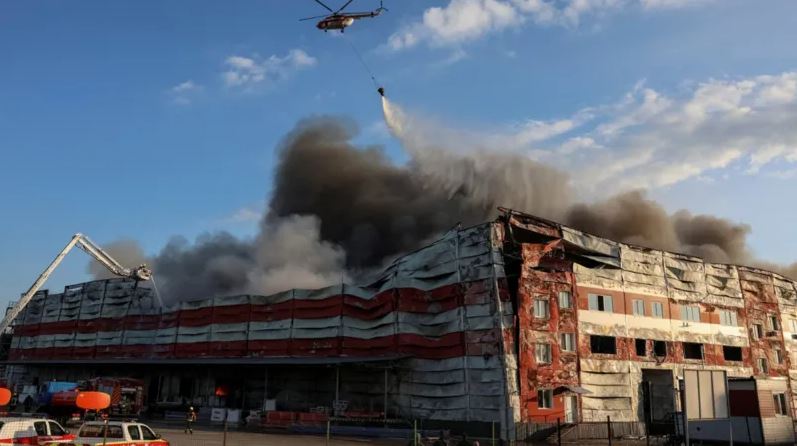
The Iranian response was swift. With the help of more than 150 missiles, they attacked US and Israeli positions (Bahrain, UAE and various Gulf countries with US military bases). The Iranian regime, represented by President Pezeshkian, used existential terms to define the response as a "right and sacred duty." Simultaneously, the IRGC also declared their willingness to conduct the "most intense military action ever in the history of the IRGC."
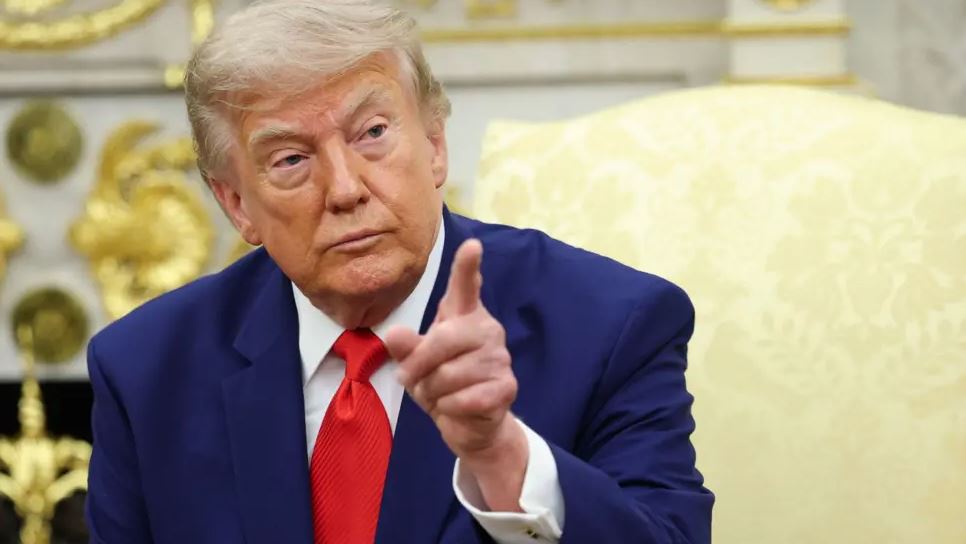
President Trump has made it clear that he will respond with overwhelming force to any increases in Iranian military activities. Whether this tactic works will depend upon what the remaining military leadership in Iran believes will ensure their survival (i.e., negotiating a de-escalation or proving that they can inflict pain on the US and Israel after being decapitated through the use of military force). The historic trend is that nations that are being annihilated usually retaliate symbolically rather than risk self-destruction through further military confrontation, but the IRGC has deviated from this predictable model of rational behavior.
The use of military force by Iran against trade in the Strait of Hormuz has the potential to unleash gunpowder all over the energy markets of the world, reaching every major economy, including China and India, which are heavily dependent upon access to oil from Iran. In 2025, approximately one-third of global trade by sea will pass through the Strait of Hormuz.
Strategic Assessment: What This Operation Changes
The termination of Khamenei, along with a significant part of Iran's senior military and security leadership, through one operation constitutes the most important action taken by the United States and Israel against the leadership structure of a hostile state since the end of the Cold War. The operation is not only an unprecedentedly ambitious and far-reaching decapitation operation but also devotes enormous resources compared to previous decapitation operations in recent years.
The strategic environment is now defined by three realities:
Any state actor witnessing this event has permanently discredited the proxy deterrence doctrine used by Iran to create an extensive network of armed proxies to protect Iran from direct confrontation with another state. The elimination of those proxies has eliminated Iran's buffer and has also resulted in the elimination of the strategic rationale for the existence of the Iranian regime.
The intelligence fusion between the CIA and Mossad demonstrated in this operation establishes a new standard for allied intelligence operations. The capability to achieve sufficient surveillance of a target's life patterns through combined HUMINT (human intelligence) and telecommunications penetration to allow for sustained tracking for months to facilitate a precisely executed attack on a target that had been concentrating leadership at the time of the attack will cause state adversaries to reassess how they will protect their senior leadership in the future.
Thirdly, the future of the Iranian government is truly at an all-time high and is truly up in the air as it has not been since 1979. Whether this new era of Iranian political freedom will result in a moderate government or a hardline government controlled by the Iranian Revolutionary Guard Corps or whether it will result in a prolonged period of instability will play out over a matter of weeks; not years. Public celebrations in the Iranian diaspora and the many protests occurring within Iran hint that there is a high level of desire from Iranians for change. The key question is whether the opposition forces can channel that desire for change into a permanent political change while we still have active conflict within the country.