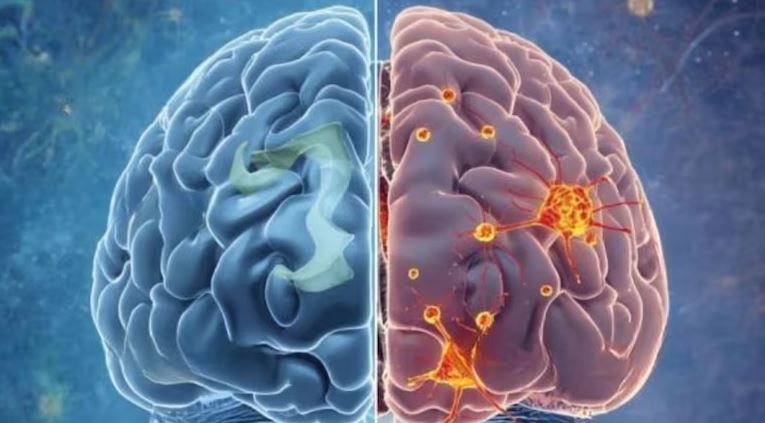
Scientists at King's College London have identified a previously unknown process that may explain how brain cells die in Alzheimer's disease and frontotemporal dementia(FTD). The mechanism, called karyoptosis, could give researchers their clearest target yet for slowing neuron loss before it becomes irreversible.
I have spent years translating dense neuroscience papers for general readers, and this finding stands out because it fills a genuine gap. Scientists have long known that toxic proteins build up in Alzheimer's, but exactly how that buildup kills brain cells has remained unclear.
What Researchers Actually Found
The study, published in Nature Communications and conducted with the UK Dementia Research Institute and support from Alzheimer's Research UK, examined roughly 3,000 brain cells from 28 patients.
Karyoptosis describes a chain reaction triggered when toxic proteins accumulate inside a neuron. As the process unfolds, the cell's nucleus, which holds its genetic material, gradually shrinks before eventually breaking apart entirely.
Key findings from the brain tissue analysis:
- More than one-third of cells in the frontal cortex of Alzheimer's patients showed signs of karyoptosis.
- Only 15 percent of cells in healthy older brains showed the same signs.
- The gap suggests karyoptosis is strongly linked to disease progression rather than normal aging.
A Specific Molecular Switch
The team traced part of the mechanism to an interaction between two proteins: p38 MAP kinase and LaminB1. This interaction appears to play a central role in damaging the cell's nuclear structure during karyoptosis.
In follow-up experiments using rat brain cells, targeting kinases, the molecular switches that control this process, reduced signs of karyoptosis. That result points to a concrete, druggable target rather than a purely descriptive finding.
Why This Matters for Future Treatments
Existing forms of cell death, including apoptosis, never fully accounted for the scale of neuron loss seen in Alzheimer's and frontotemporal dementia. Karyoptosis may be the missing link connecting toxic protein accumulation to that widespread cell death.
Dr. Manolis Fanto of King's College London's Institute of Psychiatry, Psychology and Neuroscience said the study clarifies an important piece of dementia biology. Dr. Sara Rodrigues of Alzheimer's Research UK described the identification of karyoptosis as a crucial step toward finding treatment targets that could stop or slow cell loss.
How This Fits the Broader Research Landscape
This discovery arrives alongside a wave of related 2026 findings targeting different points in the same disease process:
- Researchers identified an enzyme called IDOL that, when removed from neurons, sharply reduced amyloid plaques.
- A separate study found that boosting a protein called Sox9 activated brain support cells to help clear plaques.
- Other work has focused on OTULIN, an enzyme linked to tau buildup, and on restoring mitochondrial function in aging neurons.
Karyoptosis adds a distinct angle to this landscape by targeting the cell death process itself, rather than only the plaques or tangles that trigger it.
What Comes Next
Any treatment based on this discovery remains early stage. The current findings come from human brain tissue analysis and rat cell experiments, not clinical trials in patients. Researchers will need to confirm whether blocking the p38 MAP kinase and LaminB1 interaction is safe and effective in living human brains before any therapy can move forward.
Still, the finding gives drug developers a new and specific mechanism to pursue, one that could complement existing amyloid-clearing treatments like lecanemab and donanemab rather than replace them.