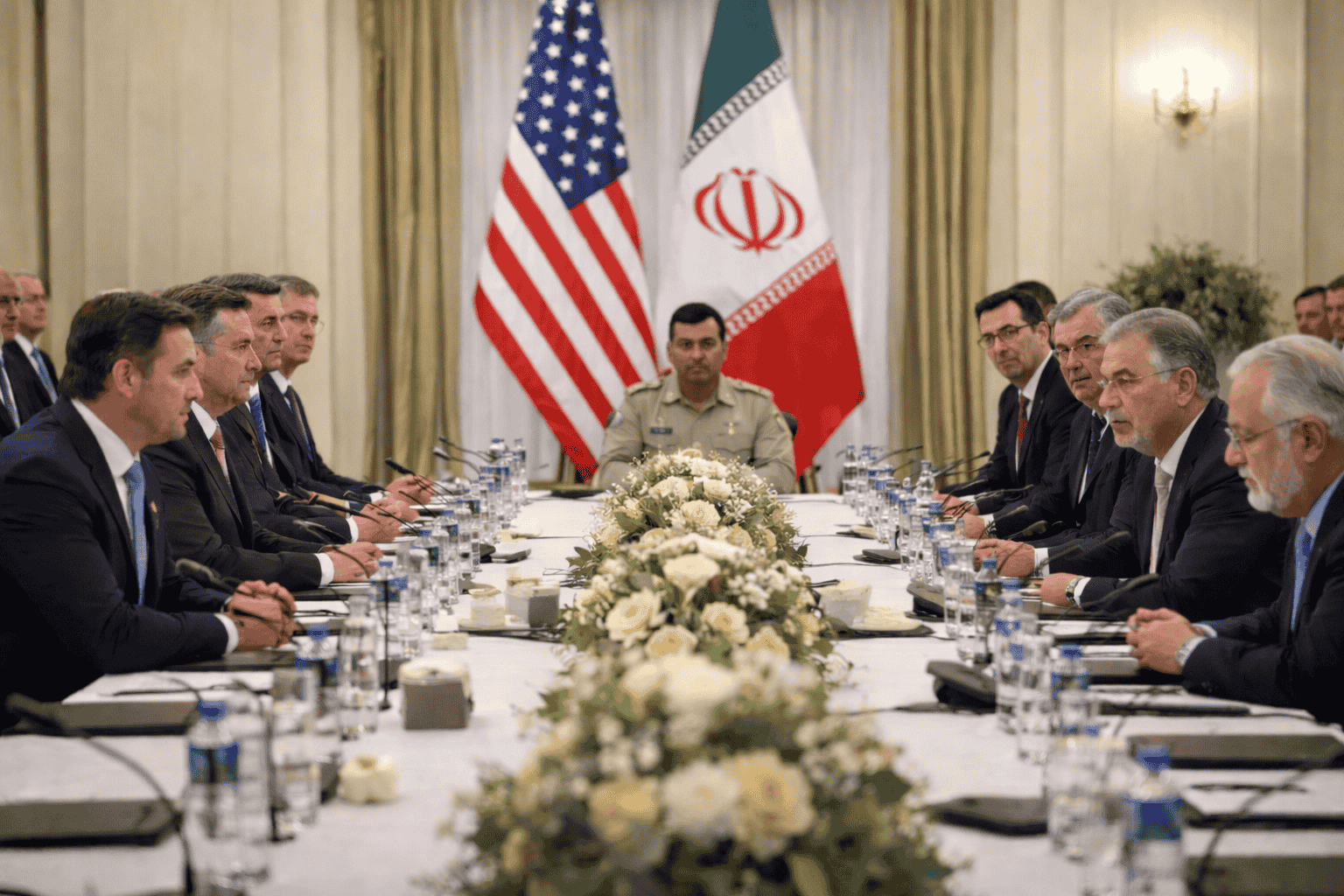
The fragile two-week ceasefire between the United States and Iran, brokered by Pakistan and announced on April 8, 2026, represents a critical juncture in global diplomacy. This temporary truce follows 40 days of US-Israeli attacks on Iran that pushed the region to the brink of a wider war, testing the international community's capacity to mediate complex geopolitical crises while balancing competing national interests.
The Strategic Context Behind the Ceasefire Agreement
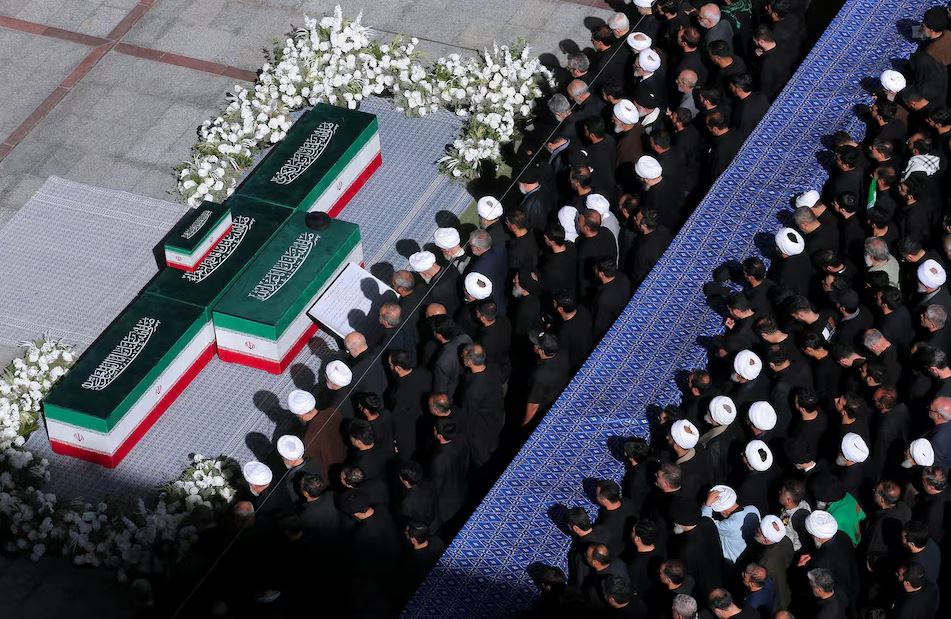
The ceasefire emerged from desperate circumstances. The 2026 Iran war began on February 28 when the United States and Israel launched large-scale strikes on Iran, including the assassination of Supreme Leader Ayatollah Ali Khamenei. This unprecedented escalation transformed regional tensions into a full-scale conflict that threatened global energy security and international stability.
Pakistan's mediating role reflects shifting power dynamics in South Asia and the Middle East. The ceasefire framework developed after intensive negotiations involving Pakistani military chief Asim Munir, US Vice President JD Vance, and Iranian Foreign Minister Abbas Araghchi. This configuration reveals how middle powers increasingly serve as essential diplomatic bridges when direct communication between adversaries becomes impossible.
Understanding Iran's 10-Point Proposal and Strategic Objectives
Iran's Supreme National Security Council outlined key elements including regulating passage through the Strait of Hormuz, terminating attacks on Iran and its regional proxy forces, withdrawal of US forces from the region, compensation to Iran, lifting of international sanctions and unfreezing of assets, and a binding UN resolution to secure any ultimate peace deal.
The proposal represents Iran's maximalist negotiating position, designed to establish leverage before substantive talks begin. Tehran's insistence on maintaining influence over Strait of Hormuz transit operations reveals the regime's determination to convert geographic advantages into long-term strategic assets. This waterway carries one-fifth of global oil supplies, making control over its operation an economic weapon of considerable power.
The nuclear enrichment component embedded within some versions of Iran's proposal claiming a right to nuclear enrichment strikes at the core disagreement between Washington and Tehran. This divergence exposes fundamental contradictions that no temporary ceasefire can resolve without addressing underlying security concerns on both sides.
The American Position and Competing Frameworks
Washington's approach reflects internal tensions between diplomatic engagement and coercive pressure. President Trump described the Iranian 10-point plan as a workable basis for negotiation, stating that almost all points of past contention had been agreed to between the United States and Iran. However, this optimistic framing contrasts sharply with the substantive gaps between the two sides.
The US 15-point plan reportedly included a 30-day ceasefire, dismantling of Iran's nuclear facilities, limits on Iran's missiles and reopening of the Strait of Hormuz, with the US offering to remove sanctions and provide support for electricity generation. Iran characterized this proposal as maximalist and unreasonable, highlighting the chasm between American demands and Iranian red lines.
The disconnect between public statements and actual negotiating positions creates dangerous ambiguity. Multiple versions of both the Iranian and American proposals circulated through diplomatic channels and state media, with discrepancies between Persian and English translations further complicating verification efforts. This confusion undermines confidence that either party fully understands what the other has committed to implementing.
Pakistan's Diplomatic Gambit and Regional Power Shifts
Pakistan's emergence as the primary mediator represents a calculated strategic repositioning. Islamabad possesses unique advantages for this role: maintaining functional relationships with both Washington and Tehran, understanding the regional security architecture, and having compelling economic incentives to stabilize energy markets.
Pakistani Prime Minister Shehbaz Sharif invited both delegations to Islamabad on April 10, 2026, to negotiate for a conclusive agreement to settle all disputes. This invitation transforms Pakistan's capital into the diplomatic center of gravity for resolving one of the 21st century's most dangerous confrontations.
The mediation effort also serves Pakistan's domestic interests. Successfully brokering a permanent peace agreement would elevate Pakistan's international standing while demonstrating that diplomatic alternatives exist to purely military approaches. However, failure could damage Pakistan's credibility and expose the limits of middle-power mediation in conflicts involving great powers with existential stakes.
The Lebanon Complication and Ceasefire Violation Concerns
Israel explicitly denied Lebanon's inclusion in the ceasefire, while Pakistani Prime Minister Sharif initially announced that Lebanon would be included. This fundamental disagreement created immediate implementation problems.
Israeli strikes continued in Lebanon on the morning following the ceasefire announcement, with Israel issuing forced evacuation threats near the southern city of Tyre. These actions prompted Iranian accusations that the ceasefire had been violated, with Iran's parliamentary speaker citing continued Israeli attacks on Lebanon among three violations.
The Lebanon dimension illustrates how regional conflicts interconnect in ways that resist compartmentalization. Hezbollah's involvement stems from retaliation for Israel's killing of Supreme Leader Khamenei on February 28 and Israel's violations of a previous Lebanon ceasefire from November 2024. Any sustainable resolution must address these linked conflicts rather than treating them as separable issues.
Strait of Hormuz Access and Global Economic Implications
Iran confirmed it will allow resumption of shipping across the Strait of Hormuz during the two-week period, easing a disruption that had sent global oil prices soaring. However, the mechanism for ensuring safe passage remains contested.
Iran's foreign minister stated that ships would be allowed through the strait over two weeks under coordination from Iran's military, effectively giving Tehran operational control over transit decisions. This arrangement provides Iran with leverage to influence negotiations by controlling energy flow timing and volume.
Reports indicated that two oil tankers passed through the strait after obtaining permission from Iran, but passage of further tankers was halted because of Israel's strikes on Lebanon. This immediate linkage between Lebanese events and Hormuz access demonstrates how Iran intends to use chokepoint control as negotiating leverage across multiple fronts simultaneously.
The global economy cannot sustain prolonged uncertainty about Hormuz access. Energy markets require predictability for pricing and supply chain planning. Iran's ability to weaponize this vulnerability creates asymmetric leverage that compensates for conventional military disadvantages relative to the United States.
Prospects for Permanent Resolution and Critical Variables
Several factors will determine whether these talks produce lasting stability or merely postpone renewed conflict.
First, the nuclear enrichment question remains unresolved. Iran enriches uranium to nearly 60 percent purity after its Natanz facility was bombed in 2021, approaching the 90 percent level required for atomic weapons. Washington demands complete cessation of enrichment activities while Tehran insists on sovereign rights to nuclear technology for peaceful purposes. Without creative compromise on verification mechanisms and enrichment limits, this impasse could torpedo broader negotiations.
Second, sanctions relief represents a fundamental Iranian objective that Washington can grant only incrementally and conditionally. Iran's economy has suffered under comprehensive sanctions for years, creating domestic pressure on the regime to secure tangible economic benefits from any agreement. However, American domestic politics constrain the administration's ability to lift sanctions without ironclad verification of Iranian compliance with nuclear restrictions.
Third, regional proxy forces introduce complexity that extends beyond bilateral US-Iran relations. Iranian support for Hezbollah, various Iraqi militias, Houthi forces in Yemen, and other aligned groups throughout the Middle East forms a core component of Tehran's strategic depth. American demands for dismantling these relationships conflict with Iran's regional security strategy.
The Fragility of Diplomatic Progress Under Deadline Pressure
Vice President JD Vance described the ceasefire as a fragile truce, pointing to divisions within the Iranian regime as complicating negotiations. This assessment accurately captures the precarious nature of diplomatic progress achieved under threat of imminent military escalation.
The two-week timeframe creates artificial urgency that may hinder rather than facilitate durable solutions. Complex conflicts involving nuclear programs, regional security architectures, and decades of mutual antagonism cannot be resolved through rushed negotiations motivated by deadline pressure. However, the alternative of indefinite military confrontation carries catastrophic risks that justify extraordinary diplomatic efforts despite unfavorable odds.
Internal Iranian politics further complicate negotiations. Hardline factions within Iran's political establishment oppose any accommodation with the United States on principle, viewing the ceasefire as capitulation rather than tactical pause. These voices will scrutinize any emerging agreement for concessions that compromise Iranian sovereignty or strategic interests.
Implications for Global Diplomatic Architecture
This crisis tests fundamental assumptions about international conflict management. The United Nations Security Council remained marginal throughout the conflict escalation and ceasefire negotiation, highlighting the limitations of multilateral institutions when permanent members have divergent interests. China and Russia both maintained relationships with Iran that prevented unified Security Council action, forcing the United States to pursue parallel diplomatic tracks.
Pakistan's successful mediation, if sustained, could establish precedents for middle-power conflict resolution that bypass traditional great-power diplomatic channels. This development might reshape how international crises are managed in an increasingly multipolar world where regional powers possess both capability and incentive to mediate disputes affecting their vital interests.
However, the ceasefire's fragility also demonstrates the limits of mediation when underlying power imbalances and irreconcilable objectives persist. Without addressing fundamental security concerns that drive both American and Iranian behavior, even the most skilled diplomatic intervention can only postpone rather than prevent resumed confrontation.
Conclusion: Navigating Uncertainty in High-Stakes Negotiations
The US-Iran ceasefire talks scheduled for Islamabad represent a critical opportunity to step back from the precipice of broader regional war. However, success remains uncertain given the substantive gaps between the parties, the complexity of interconnected regional conflicts, and domestic political constraints on both sides.
Effective diplomacy requires realistic assessment of achievable objectives rather than maximalist demands that guarantee impasse. Both Washington and Tehran must demonstrate flexibility on core issues while protecting essential national interests. Pakistan's mediating role can facilitate communication and proposal refinement, but ultimately only direct agreement between the principal parties can produce sustainable peace.
The international community's stake in successful resolution cannot be overstated. Continued conflict threatens global energy security, regional stability, and the broader nonproliferation regime. These talks will test whether diplomacy can succeed where military pressure has failed, providing critical lessons for managing great power competition in an era of renewed geopolitical rivalry.