What Did the European Union Just Approve for Ukraine?
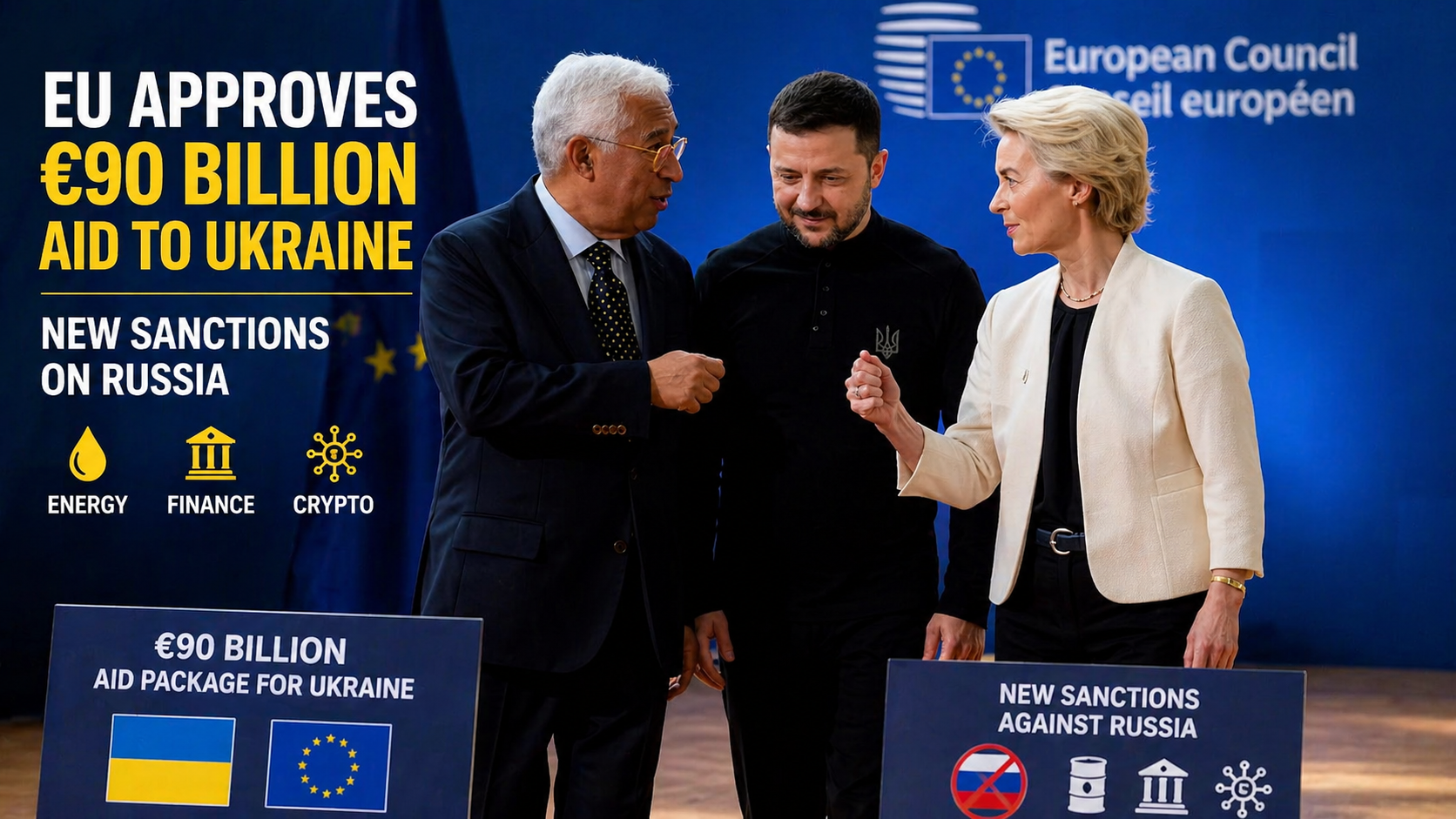
The European Union has given final approval to a 90-billion-euro loan for Ukraine and a new round of sanctions on Russia, in a significant boost for Kyiv after a prolonged political row.
The 90-billion-euro loan is a crucial lifeline for cash-strapped Ukraine amid Russia's invasion, intended to help cover the country's financial needs in 2026 and 2027, with two-thirds allocated to defense and the remainder to budgetary support.
President Volodymyr Zelensky confirmed the package, stating: "This package will strengthen our army, make Ukraine more resilient, and enable us to fulfill our social obligations to Ukrainians, as set out in law."
This was not a smooth or inevitable outcome. It required months of political grinding, a pipeline crisis, and an election in Hungary to finally get across the line. The approval matters not just for what the money buys but for what it signals: that European political will to sustain Ukraine has survived its most serious internal test.
Who Blocked the EU Aid Package and Why?
Hungary's outgoing Prime Minister Viktor Orban, backed by Slovakia, vetoed the loan in March over a dispute with Kyiv over a damaged oil pipeline. Orban accused Ukraine of deliberately delaying repairs to the Druzhba pipeline, which carries oil to Hungary and Slovakia, both of which are heavily dependent on Russian oil.
Orban, who lost to a centre-right challenger, Peter Magyar, in elections on April 12, had the power to block the loan even though Hungary, along with Slovakia and the Czech Republic, secured exemptions meaning none of the three countries will participate in the joint borrowing.
The measures were signed off after Hungary and Slovakia dropped their objections when Ukraine restarted oil flows following repairs to the damaged Druzhba pipeline.
Having covered veto politics across multiple EU legislative cycles, I can say this episode reflects a recurring tension inside the bloc: a small number of member states with particular economic dependencies can hold broader strategic decisions hostage until bilateral grievances are addressed. The Druzhba pipeline was the lever. Magyar's electoral defeat of Orban removed the hand holding it.
How Is the 90 Billion Euro Loan Structured?
The EU will provide Ukraine with two interest-free loans of 45 billion euros each in 2026 and 2027, with 28 billion euros reserved for military spending and 17 billion euros for general budget needs each year.
Ukraine aims to receive the first tranche between May and June 2026. Zelensky stated the funds will be directed to arms production, the procurement of necessary weapons from partners, and the preparation of the energy sector and critical infrastructure for the next winter.
In addition, the European Union, together with the European Investment Bank, allocated another 600 million euros for restoring infrastructure, energy, and development projects. This is one of the largest EU support packages for Ukraine during the entire conflict.
The structure is deliberate. Splitting disbursement across two years gives the EU leverage and accountability without leaving Kyiv financially exposed in any single fiscal period.
What Is the EU's 20th Sanctions Package Against Russia?
The Council of the European Union on April 23 approved its 20th sanctions package against Russia, introducing wide-ranging restrictions on the country's energy revenues, financial system, military-industrial complex, and trade, alongside 120 new individual listings, described by the Council as the largest package of listings in two years.
The new round of economic punishment for the Kremlin targets Russia's energy, banking, and trade sectors. It represents the 20th sanctions package since Russia launched its full-scale invasion of Ukraine in 2022.
EU foreign policy chief Kaja Kallas confirmed the resolution of the political deadlock, stating: "Russia's war economy is under growing strain, while Ukraine is getting a major boost."
What Does the 20th Sanctions Package Target Specifically?
The 20th package is the most technically comprehensive the EU has issued. It moves beyond headline designations and targets the underlying architecture that Russia uses to evade earlier restrictions.
Energy and the Shadow Fleet
The 20th package introduces 36 designations encompassing both the upstream and downstream segments of the Russian energy sector, including exploration, extraction, refining, and transportation of oil. An additional 46 vessels are now subject to a port access ban and a ban on the provision of a broad range of maritime transport services, bringing the total number of designated vessels to 632.
The package also introduces mandatory due diligence checks for the sale of tankers, bans the provision of maintenance and related services for Russian liquefied natural gas tankers and ice-breakers, and from January 2027 it will be illegal to provide LNG terminal services to Russian entities. The ports of Murmansk and Tuapse in Russia, and the oil terminal at the port of Karimun in Indonesia, have been added to the restricted ports list.
Banking and Financial Measures
The package includes a transaction ban on 20 Russian banks and restrictions on four foreign institutions accused of helping Moscow bypass sanctions.
Financial measures extend the EU market exclusion to 20 additional Russian banks, bringing the total to 70 sanctioned banks, and target 4 third-country banks.
Cryptocurrency and Digital Finance
The 20th package includes a total sectoral ban on carrying out exchanges with any Russian crypto asset service provider as well as any decentralised platforms enabling crypto trading. New measures prohibit the use of the cryptocurrency RUBx, a rouble-backed stablecoin, as well as the digital rouble, a digital currency under development by the Central Bank of Russia, which is being set up to enable sanctions circumvention.
Military-Industrial Complex
The 20th package designates 58 companies and associated individuals involved in the development and manufacturing of military goods, such as drones. The EU has also designated 16 entities based in China, the United Arab Emirates, Uzbekistan, Kazakhstan, and Belarus which have provided dual-use goods or weapons systems to the Russian military-industrial complex.
Anti-Circumvention Tool Activated for the First Time
The package pairs its measures with the largest individual listings in two years, 120 further individual designations, and activates the EU's anti-circumvention tool for the first time, signalling that the EU is now treating evasion architecture itself as sanctionable.
The package activates the anti-circumvention tool for the first time against the Kyrgyz Republic, targeting it for systematic drone and missile component re-exports.
This activation is a genuine escalation in enforcement doctrine. For 16 years of reporting on sanctions policy, the question was always whether the EU would go after the intermediaries, not just the principals. Now it is.
Who Are the Key Political Figures Behind This Decision?
EU foreign policy chief Kaja Kallas led the diplomatic push, declaring on social media: "Deadlock over."
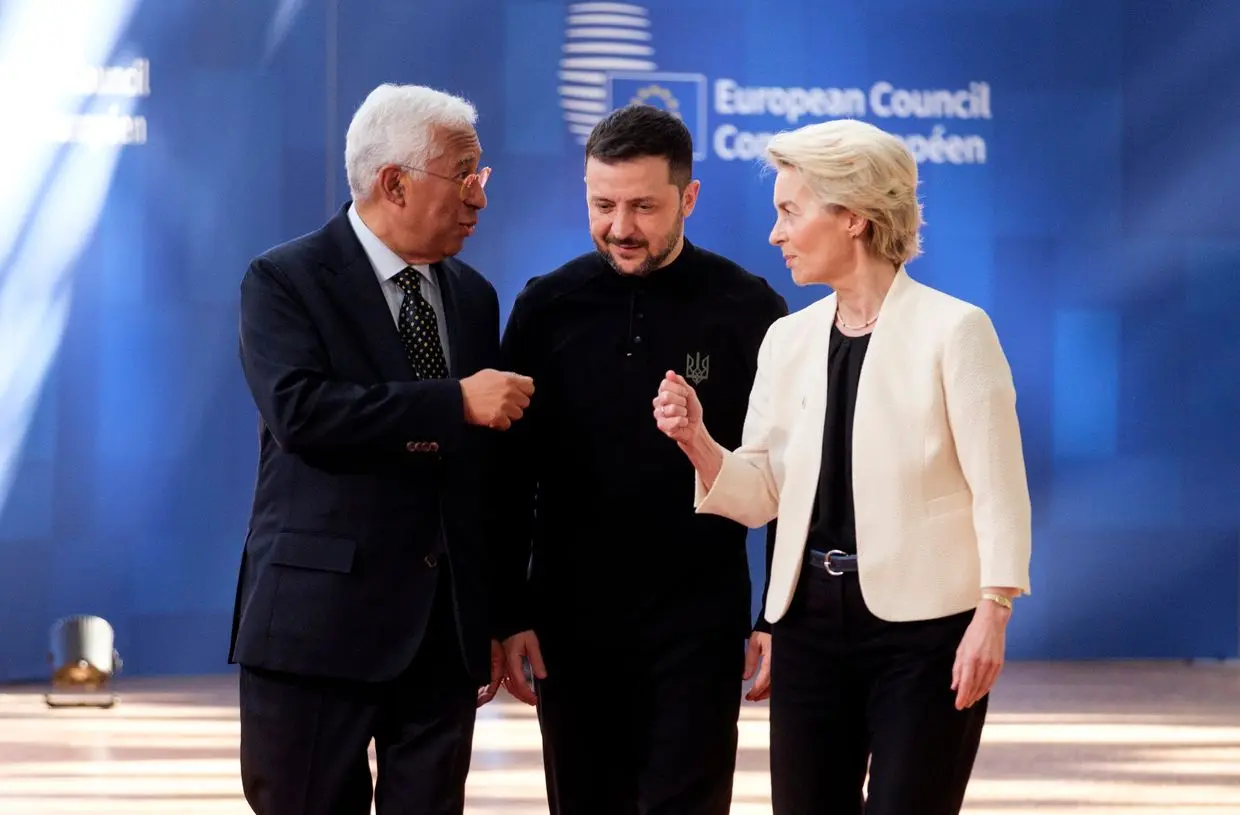
Ukraine's President Zelenskyy was present at the EU Summit in Ayia Napa, Cyprus on April 23, where the deal was formally announced.
Orban's heavy election defeat after 16 years in power had fuelled EU hopes that the funds would be unlocked. Officials had expressed concern that the bloc might have to wait until Peter Magyar took office in May before approval could be secured.
Sweden's Minister for Foreign Affairs, Maria Malmer Stenergard, welcomed the package but immediately called for work on a 21st sanctions package to begin, stating: "Even tougher measures against Russian energy exports, such as a ban on providing services to all ships leaving Russian ports with oil, gas or coal" should be pursued next.
What Is the Broader Strategic Context of This Decision?
Caught between Russia's war at home and mounting geopolitical turbulence abroad, Ukraine is unlikely to see a major turnaround anytime soon. Former Foreign Minister Dmytro Kuleba stated: "2026 will be another year Ukraine will have to survive."
The row had held up EU support for Ukraine at a time when the United States has largely cut Kyiv off and eased sanctions on Russian oil exports amid the U.S.-Israeli war on Iran.
Oil revenue is the linchpin of Russia's economy, allowing Putin to pour money into the armed forces without worsening inflation for everyday people and avoiding a currency collapse.
The convergence of these factors makes this week's approval more consequential than any individual tranche of European aid in the past two years. The United States has stepped back. Europe has stepped forward. That is not a small thing.
What Are the Remaining Challenges and Limitations?
Despite the scale and ambition of both the loan and the sanctions package, significant constraints remain.
The shadow fleet problem has grown faster than designations can address it. Even with 632 vessels now listed, Russia continues to operate ageing tankers through jurisdictions that do not enforce EU or G7 restrictions. The Indonesian Karimun Oil Terminal designation is notable precisely because it represents an attempt to reach beyond EU borders, but enforcement at that distance is far harder than enforcement in European ports.
Russia's shadow crypto infrastructure has also been under sustained pressure, with Grinex, Garantex's direct successor, halting operations in April 2026. Sanctioned entities' illicit on-chain volume surged 694 percent to 104 billion dollars in 2025.
In 2025 and the first quarter of 2026, Russian strikes damaged 209 locomotives, 239 passenger carriages, and 371 freight wagons, as well as 86 railway bridges and 50 stations, underlining how relentless Russian military pressure on Ukrainian infrastructure continues regardless of EU financial commitments.
The money and the sanctions are necessary. They are not, on their own, sufficient to alter the trajectory of this war.