Two Policy Shifts in 24 Hours Just Reshaped the Global Energy Market
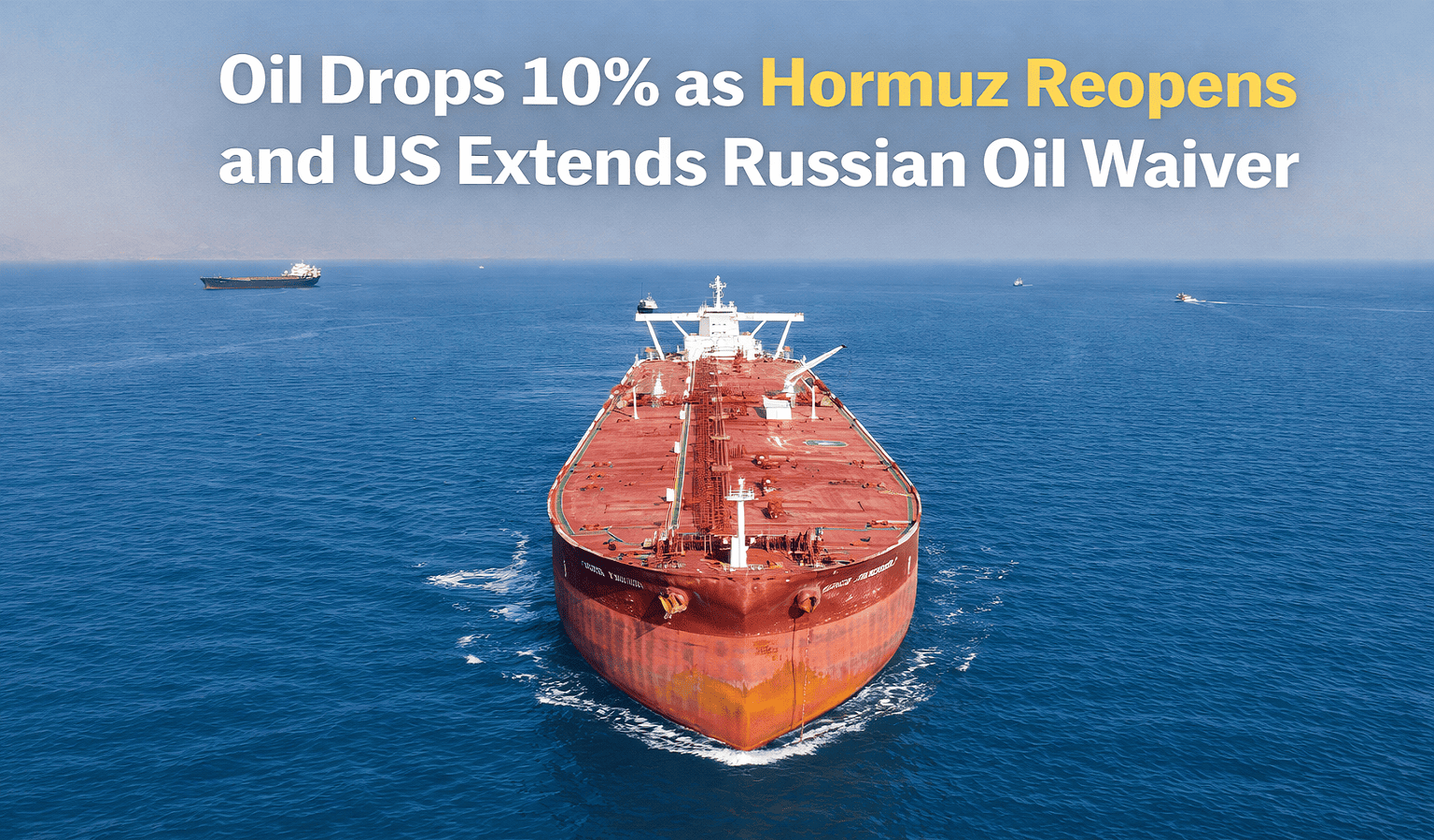
In a dramatic 24-hour sequence that traders will be dissecting for months, two major developments collided on Friday to send crude oil prices tumbling by double digits. Iran announced it was reopening the Strait of Hormuz to all commercial vessels, and the US Treasury Department issued a fresh 30-day sanctions waiver on Russian oil, reversing a position its own secretary had stated publicly just 48 hours earlier. Together, these moves delivered the sharpest single-day relief to global energy markets since the US-Iran war began in late February.
What Happened on April 17 and April 18
US crude oil plunged 11.4% to $83.85 per barrel, its lowest level since March 10, while international Brent crude slid 9% to $90.38 per barrel. Friday was the second largest one-day drop since the war began for both US and Brent crude oil.
Iranian Foreign Minister Abbas Araghchi posted on X that the passage for all commercial vessels through the strait is declared completely open, as a ceasefire appears to be holding in Lebanon. He said it would stay open for the remaining period of the ceasefire.
On the Russian oil front, the reversal was equally abrupt. The US Treasury Department extended its pause on sanctions on Russian oil shipments to ease shortages from the Iran war, days after Secretary Scott Bessent ruled out such a move. The so-called general license means US sanctions will not apply for 30 days on deliveries of Russian oil that has been loaded on tankers as of Friday. It extended a similar 30-day license issued in March for Russian oil that had been loaded by March 11.
The latest move allows for the purchase of oil and petroleum products that have been loaded onto any vessel as of Friday, through 12:01 am on May 16. It prolongs an earlier easing of sanctions that expired on April 11. On Wednesday, Bessent had told reporters that the US would not make such an extension for Russian oil or Iranian oil.
The policy U-turn in Washington is significant. It tells energy markets that when supply pressure is severe enough, geopolitical posturing gives way to economic necessity.
Who Benefits Most From Falling Oil Prices
The market reaction was immediate and broad-based. The S&P 500 leaped 1.2% to an all-time high and closed out a third straight week of big gains, its longest streak since Halloween. The Dow Jones Industrial Average surged as many as 1,100 points. A freer flow of oil could take pressure off prices not only for gasoline but also for groceries and all kinds of other products that get moved by vehicles. It could even ultimately help people pay less on credit-card interest and mortgage bills.
Airlines and cruise operators were among the clearest winners. Companies with big fuel bills soared to some of Wall Street's biggest gains. United Airlines flew 7.1% higher, and Southwest Airlines climbed 5.1%. Royal Caribbean Group gained 7.3%, and Carnival rose 7%.
The relief was equally felt across European markets, which had been under acute stress. A day earlier, the head of the International Energy Agency had said that Europe has maybe six weeks or so of remaining jet fuel supplies. That warning, delivered just 24 hours before the Hormuz announcement, underscores how close global energy supply chains had come to a breaking point.
Who Remains Cautious Despite the Rally
Not everyone is treating this as a turning point. Questions remain about how the Strait will be administered and by whom. Major shipping companies signaled that returning to normal transit will require more than a political announcement.
Maersk said in a statement that since the outbreak of the conflict, they have followed the guidance of security partners in the region, and the recommendation so far has been to avoid transiting the Strait of Hormuz.
The EU's position pointed to a longer structural concern. The EU's top diplomat, Kaja Kallas, said that under international law, transit through waterways like the Strait of Hormuz must remain open and free of charge, and warned that any pay-for-passage scheme will set a dangerous precedent for global maritime routes.
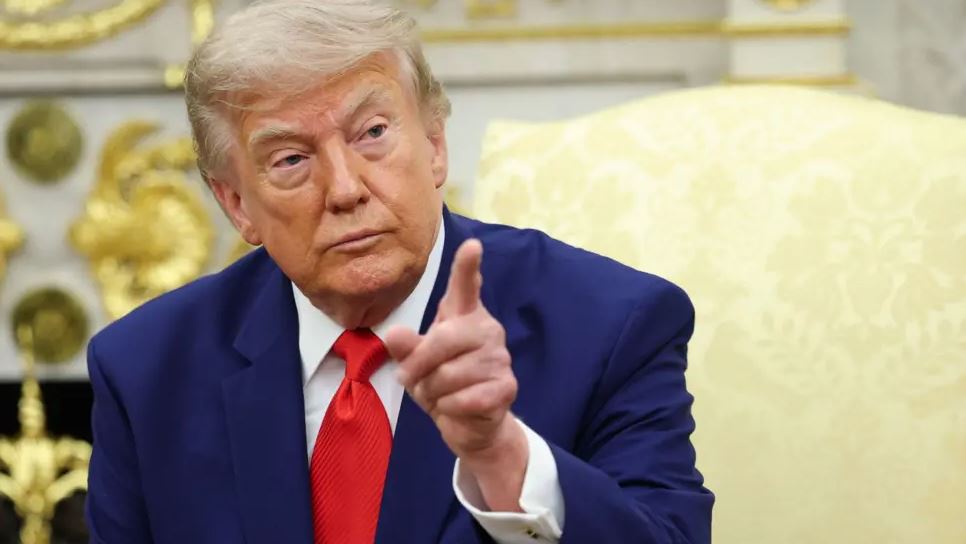
Minutes after the Iranian foreign minister's announcement, Trump said on his social media network that the US Navy's blockade of Iranian ports remains in full force until both sides reach a deal on the war. He also said that should go very quickly in that most of the points are already negotiated.
Oil prices, while sharply lower, also have not returned to pre-war levels. To be sure, oil remains above its $70 price from before the war, indicating some caution is still embedded in financial markets. Several times since the war began, optimism on Wall Street has quickly swung to doubt about a possible end to the fighting.
How Severe Was the Hormuz Crisis for Global Trade
To understand why Friday's price drop was so dramatic, it is necessary to understand the scale of disruption that preceded it.
Shipping traffic through the Strait of Hormuz has been largely blocked by Iran since February 28, 2026, when the United States and Israel launched an air war against Iran. Until the conflict, the Strait of Hormuz was open and about 25% of the world's seaborne oil trade and 20% of the world's liquefied natural gas passed through it.
Daily transits dropped from an average of 103 vessels in the last week of February to single digits within weeks, effectively bringing flows close to a standstill. Oil prices surged sharply, while natural gas prices rose steeply across both Europe and Asia, where prices roughly doubled.
Beyond energy, the blockade threatened global food systems in ways that will not resolve as quickly as an oil price chart.
The Strait of Hormuz carries a significant share of the world's energy and agricultural inputs. Disruptions since the outbreak of hostilities are already constraining flows of oil, gas, and fertilizer for newly planted staples, with ripple effects reaching far beyond the Middle East.
Fertilizer prices rose sharply, with Middle East granular urea increasing by 19% in the first week of March, while Egyptian urea prices surged by 28%. FAO projections indicate that global fertilizer prices could average 15 to 20% higher in the first half of 2026 if the crisis persists.
Even if the Strait of Hormuz opens soon, restarting production and transport for fertilizers and their components could take weeks, weeks that Northern Hemisphere farmers simply do not have.
What the Russian Oil Waiver Tells Us About US Energy Policy
The extension of the Russian oil sanctions waiver is a window into the difficult trade-offs the Trump administration has been managing since the war began. Sanctioning Russia over Ukraine while simultaneously needing Russian oil to offset an Iran-driven supply shock places Washington in a position that is economically and diplomatically uncomfortable.
The extension underscores how the fallout from the Iran war has boosted Moscow's ability to profit from its energy exports, which had been restrained since the invasion of Ukraine.
The previous waiver of sanctions had made available 140 million barrels of Russian oil already loaded on ships to global markets as prices soared against the backdrop of the US war with Iran. The general license issued does not authorise any transaction involving a person, entity, or joint venture located in Iran, North Korea, Cuba, or parts of Ukraine.
US gasoline prices have jumped, putting pressure on households ahead of key midterm elections this year. That political context explains why economic pragmatism overruled the Treasury Secretary's own public statements within 48 hours.