Why India Is Pushing UN Reform Through the BRICS Platform
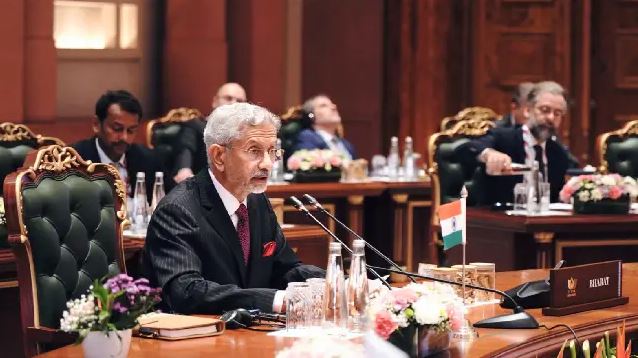
Indian External Affairs Minister S. Jaishankar used his address at the BRICS Summit to deliver one of the most direct calls yet for structural reform of the United Nations, arguing that the current architecture of global governance no longer reflects the realities of a multipolar world. His remarks were not diplomatic formality. They represented a calculated strategic message directed at both the Global South and permanent Security Council members resistant to change.
Jaishankar's core argument centers on representational legitimacy. The UN Security Council, structured around a post-World War II settlement, excludes the world's most populous nation, the African continent, and Latin America from permanent membership. In his assessment, this is not an institutional inconvenience but a structural failure that undermines the Council's authority to speak for humanity on matters of war, peace, and international law.
Key points from his BRICS address included:
- The current UNSC composition reflects 1945 power dynamics, not 2025 geopolitical realities
- Nations representing the majority of the world's population lack permanent representation
- Reform delays weaken multilateral credibility and push nations toward parallel frameworks
- BRICS, as a bloc, must collectively champion institutional reform rather than work around broken systems
How Jaishankar Framed the Reform Argument at BRICS
The Legitimacy Deficit in Global Institutions
Jaishankar did not limit his critique to the Security Council. He identified a wider legitimacy deficit across Bretton Woods institutions, including the IMF and World Bank, where voting structures continue to favor historically dominant economies over emerging ones. His argument was that piecemeal reform proposals have repeatedly failed because the countries benefiting from the current structure have little institutional incentive to change it.
At BRICS, he found a receptive audience. The bloc's expanding membership, which now includes major economies across Africa, the Middle East, and South Asia, gives his reform agenda a broader coalition than India could assemble alone. The summit provided a forum where calls for UNSC expansion carry collective weight rather than appearing as bilateral Indian lobbying.
India's Strategic Positioning Within BRICS
India's push for UN reform through BRICS reflects a deliberate positioning strategy. New Delhi is simultaneously maintaining its strategic autonomy, deepening ties with the Global South, and applying pressure on Western-dominated institutions without formally aligning with the Russia-China axis within the bloc. Jaishankar's address demonstrated this balance precisely. He advocated for reform using the language of equity and representation, framing India not as a challenger to the existing order but as a constructive corrective voice within it.
This approach matters because it:
- Distances India from perceptions of opportunistic anti-Western posturing
- Builds credibility with African and Southeast Asian nations seeking institutional voice
- Positions New Delhi as a reform leader rather than a spoiler
What Jaishankar's Call Means for the Future of Multilateralism
The significance of Jaishankar's remarks extends beyond the BRICS chamber. When a senior minister of India's standing uses a multilateral summit to frame UN reform as urgent rather than aspirational, it signals that patience with incremental dialogue is running out. India has been a candidate for permanent UNSC membership for decades. The G4 grouping, comprising India, Germany, Japan, and Brazil, has advanced reform proposals repeatedly, each time meeting procedural resistance from veto-holding members.
What is different now is the geopolitical context. The war in Ukraine exposed the Security Council's paralysis when a permanent member is the aggressor. The Gaza conflict reinforced perceptions of selectivity in how international humanitarian law is applied and enforced. These failures have amplified the reform argument among nations that previously accepted slow progress as an acceptable cost of multilateral engagement.
BRICS, with its expanding footprint, is increasingly the platform through which dissatisfaction with Western-led institutions is being channeled into structured political demand.