Who Runs the International Monetary Fund and What Is Its Purpose?
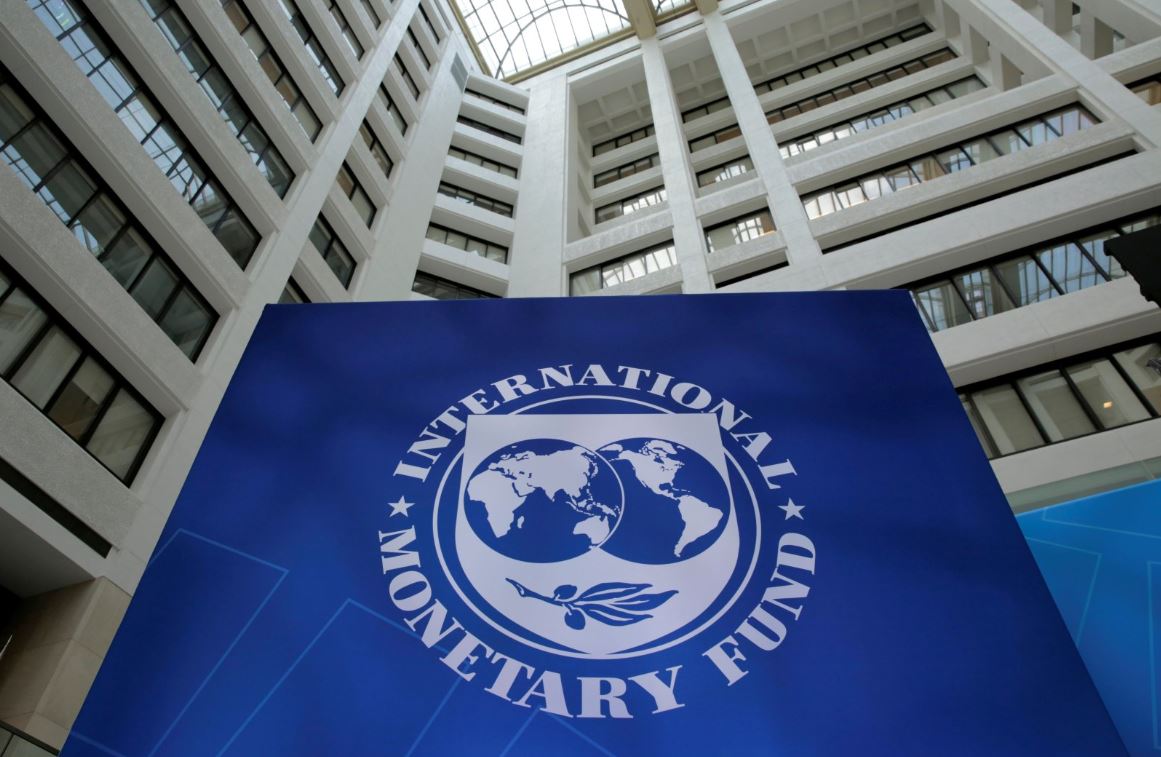
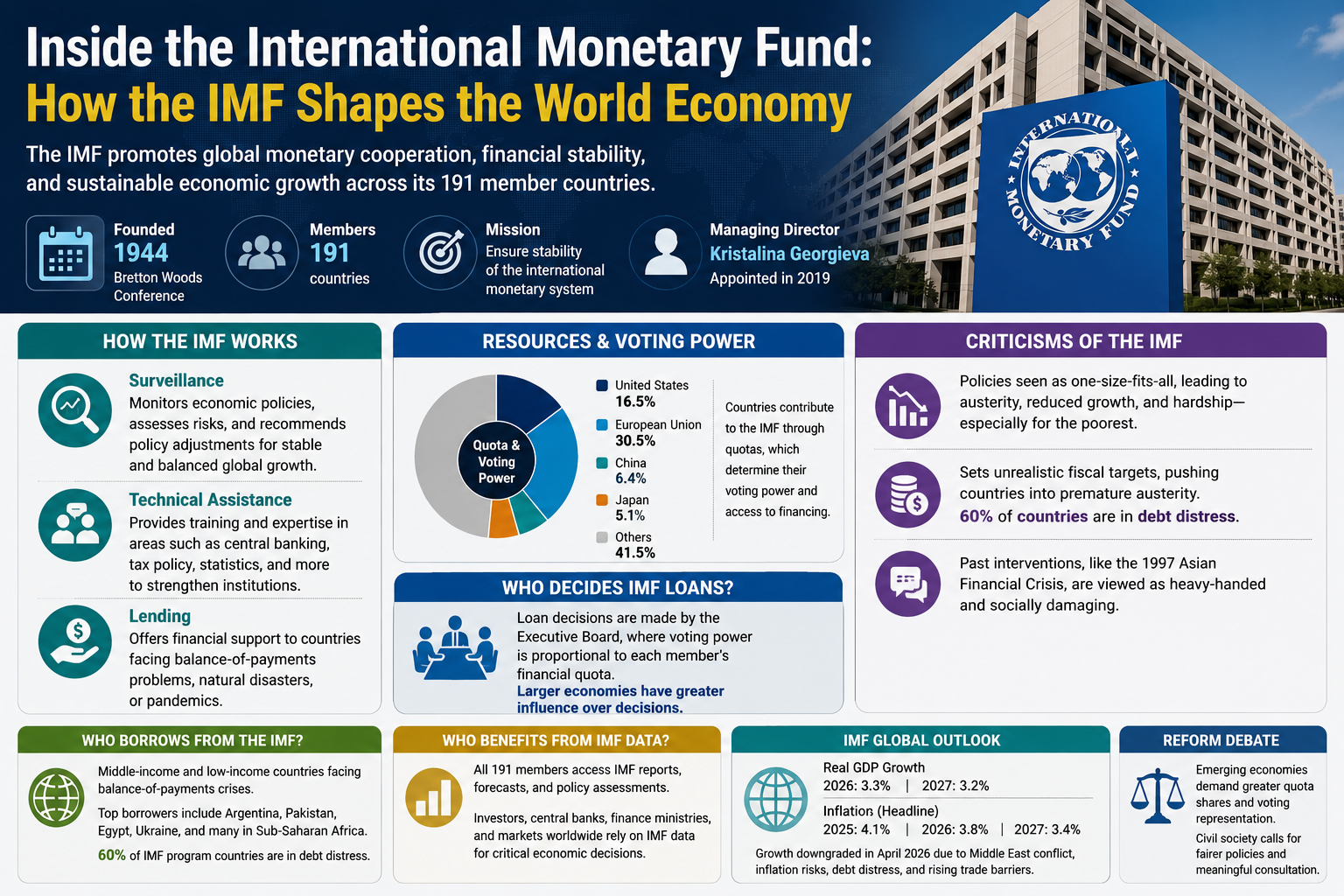
The IMF is a global organisation with 191 member countries. It focuses on increasing monetary cooperation between countries and works to bring about financial stability and ease trade worldwide. It was introduced during the Bretton Woods Conference of 1944 to prevent an economic crisis like the one in the 1930s from recurring. The IMF's main role is to ensure the stability of the international monetary system, which is the system of exchange rates and international payments that allows countries to conduct financial transactions with each other.
The head of the International Monetary Fund as of 2025 is Kristalina Georgieva. She was appointed to the position in 2019 and is known for her work on poverty and sustainable development. Leadership is supported by a professional staff of economists, financial analysts, and policy advisers drawn from across its membership. Historically, the managing director has been a European national, though that convention is increasingly contested by emerging economies seeking broader representation at the top of global financial institutions.
Who Controls the IMF's Resources and Voting Power?
Through a quota system, countries contribute funds to a pool from which they can borrow if they experience balance-of-payments problems. A country's quota also determines its voting power. This architecture means the United States, the largest quota holder, retains substantial influence over IMF decisions, a structural reality that critics from the Global South have long identified as a source of institutional bias favoring wealthy creditor nations over vulnerable borrower economies.
How Does the IMF Actually Influence National Economies?
The main mission of the IMF is to stabilize the international monetary system. It does this by providing surveillance, technical assistance, and lending. The IMF monitors the economic and financial policies of its members to identify risks that may destabilize the global financial system, reviewing and assessing policies at the country, regional, and global levels.
On surveillance, the IMF analyzes member country policies to determine how consistent they are with the goal of sustained and balanced global growth. As part of this process, the IMF identifies potential risks and recommends appropriate policy adjustments to sustain economic growth and promote financial stability.
On technical assistance, the IMF shares its expertise with member countries by providing technical assistance and training in areas such as central banking, monetary and exchange rate policy, tax policy and administration, and official statistics. The objective is to help improve the design and implementation of members' economic policies, including by strengthening skills in institutions such as finance ministries, central banks, and statistical agencies.
On lending, IMF financing helps member countries tackle balance-of-payments problems, stabilize their economies, and restore sustainable economic growth. It can also be made available in response to natural disasters and pandemics.
Who Criticizes the IMF and Why?
The institution is not without serious, well-documented opposition. Critics contend that IMF policy prescriptions provide uniform remedies that are not adequately tailored to each country's unique circumstances, and that these standard, austere loan conditions reduce economic growth and deepen and prolong financial crises, creating severe hardships for the poorest people in borrowing countries.
The Fund continues to set unrealistic fiscal targets, pushing governments into premature austerity under the guise of debt sustainability. Sixty percent of countries are currently in debt distress, raising serious questions about the ability of Fund programmes to assist states in escaping recurrent debt crises.
In Southeast Asia, particularly during the 1997 Asian Financial Crisis, IMF interventions in countries such as Indonesia and Thailand were considered heavy-handed, enforcing structural reforms and liberalisation policies that arguably deepened economic hardship in the short term. These episodes shaped a generation of policymakers in developing economies who now approach IMF engagement with considerable caution.
What Is the IMF Currently Forecasting for the Global Economy?
The IMF forecasts global real GDP growth of 3.3 percent and 3.2 percent for 2026 and 2027 respectively. The revision reflects stronger-than-expected momentum in late 2025, particularly in economies benefiting from technology investment and fiscal support. The IMF projects global headline inflation to decline from 4.1 percent in 2025 to 3.8 percent in 2026 and further to 3.4 percent in 2027, supported by easing energy prices, softening demand, and improving supply conditions.
In April 2026, the fund downgraded its global growth forecast for 2026 due to inflationary shocks and energy infrastructure damage caused by the conflict in the Middle East. Geopolitical risk, debt distress in lower-income nations, and rising trade barriers now sit alongside inflation and monetary tightening as the primary variables the IMF is tracking in its near-term assessments.