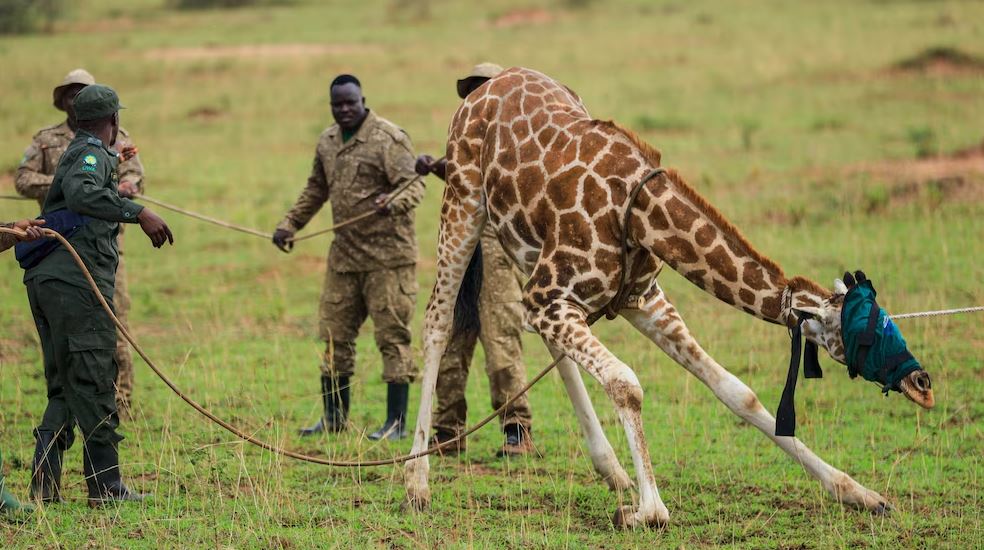
Rangers in Uganda's Murchison Falls National Park have completed a landmark wildlife translocation, moving 12 endangered Nubian giraffes roughly 106 kilometers to the Ajai Wildlife Reserve. The operation, led by the Uganda Wildlife Authority (UWA), is designed to protect the species from mounting pressure tied to oil drilling activity inside the park.
The relocation reflects a growing tension across East Africa: balancing energy development with biodiversity protection in some of the continent's most ecologically sensitive habitats.
Why the Nubian Giraffes Were Moved
Murchison Falls National Park sits atop an estimated 40 percent of Uganda's known oil reserves. Since 2023, TotalEnergies has operated the Tilenga drilling project within park boundaries, and recent months have brought a noticeable increase in heavy machinery movement through giraffe habitat.
According to Patrick Atimnedi, UWA's Assistant Commissioner for Veterinary Services, the goal is to establish a second, geographically separate giraffe population before drilling-related disruption intensifies.
Key drivers behind the relocation include:
- Expanding oil and gas infrastructure within the park.
- Increased vehicle and equipment traffic near giraffe territory.
- Long-term habitat fragmentation risk.
- A strategy to reduce reliance on a single population if drilling causes significant ecological damage.
The Translocation Process
Moving Earth's tallest land mammal is a logistically demanding task. Veterinary teams sedated each giraffe before rangers secured the animals with cloth coverings over their eyes to reduce stress. The giraffes were then loaded onto specialized trucks for the journey northwest to Ajai Wildlife Reserve, near Arua.
Ajai spans 166 square kilometers and once supported a diverse wildlife population before poaching and insecurity devastated it in the early 1980s. Introducing giraffes there is part of a broader ecological restoration effort for the reserve.
A Species on the Rebound
Nubian giraffes were once widespread across northeast Africa. Just over a decade ago, fewer than 200 remained in Uganda. Coordinated conservation work, including earlier translocation efforts across the Nile within Murchison Falls itself, has helped the population recover meaningfully since then.
What This Means for Conservation and Tourism
Officials say the project supports three goals at once: protecting the giraffes, strengthening genetic diversity by establishing a second population, and diversifying tourism opportunities beyond Murchison Falls.
For a country increasingly dependent on oil revenue, spreading wildlife populations across multiple protected areas also functions as a hedge against future environmental disruption.