The body overseeing the U.S.-brokered ceasefire in Gaza will ask the United Nations Security Council to press the Hamas militant group to disarm, according to a report seen by the Associated Press on Tuesday. The development marks a significant escalation in international diplomatic pressure as the fragile truce, now over seven months old, risks total collapse.
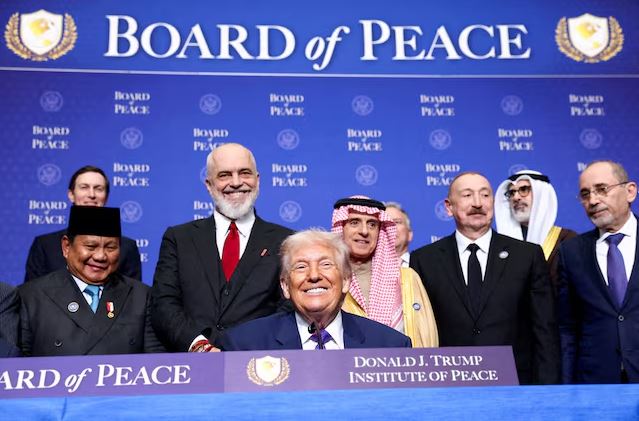
The report by the Board of Peace, an international body set up by U.S. President Donald Trump and tasked with overseeing the ceasefire between Hamas and Israel, is expected to be discussed by the Security Council on Thursday when it meets on the situation in the Middle East.
What the Board of Peace Report Says
The report states: "At this stage, the principal obstacle to full implementation of the ceasefire remains Hamas' refusal to accept verified decommissioning, relinquish coercive control, and permit a genuine civilian transition in Gaza."
Hamas rejected the report in a statement, saying it contains "fallacies." A diplomat familiar with the report confirmed its authenticity, speaking on condition of anonymity because it has not been made public.
Key elements of Trump's 20-point ceasefire plan that remain unimplemented:
- Hamas must surrender its weapons and destroy its vast network of tunnels.
- Israeli forces must withdraw from Gaza.
- A new technocratic Palestinian government must be installed.
- An international security force must be deployed.
- Reconstruction of the battered Palestinian enclave must commence.
The board's report to the Security Council states plainly: "Reconstruction cannot commence where weapons have not been laid down."
Ceasefire Stalled Since October: Mladenov Speaks Out
Nickolay Mladenov, the top diplomat overseeing the U.S.-brokered ceasefire in Gaza, acknowledged that the truce was stalled, saying the deadlock over disarming Hamas had paralyzed reconstruction of the war-battered territory.
Mladenov expressed frustration with the status quo that has emerged since the ceasefire was reached last October and said his office is addressing violations by both sides on a daily basis. He repeatedly cited the disarmament issue as a central sticking point, saying Hamas' obligation to give up its arsenal is "not negotiable" and that progress on all other issues, including reconstruction, Israeli troop withdrawals, and the establishment of a new Palestinian government, was being held up.
Mladenov also left room for a political future for Hamas under strict conditions:
- He said: "We are not asking Hamas to disappear as a political movement. A political party that disavows armed activity can compete in national Palestinian elections."
- The Board of Peace has translated Trump's original plan into a 15-point detailed implementation roadmap that has been discussed with Hamas representatives in Cairo many times.
- Two versions of the proposal were presented, the second revised specifically to address concerns raised by Palestinian factions.
Hamas Position and the Weapons Standoff
Hamas has not accepted the disarmament terms. Its position rests on several disputed points:
- Hamas has said an interim administration, including a police force, is needed to restore order in parts of Gaza it controls until a technocratic committee takes over.
- The group has sought to differentiate between heavy weapons such as rockets and light weapons like rifles and pistols.
- Hamas has said it is willing to hand over government power to the transitional committee, but it is reluctant to give up its arsenal, including rockets, anti-tank missiles, and explosives.
- Hamas has sought to link any demilitarization to Israeli troop pullbacks.
Mladenov said Hamas is "consolidating its grip" on parts of Gaza it controls, imposing taxes on residents and blocking relief efforts to build temporary housing for displaced people.
The Human Cost Behind the Diplomatic Deadlock
The political stalemate has a devastating human dimension that cannot be separated from the negotiating postures of any party involved.
Israel's offensive has killed over 72,724 Palestinians, including at least 846 since the ceasefire took hold last October. The truce envisioned Hamas handing over its weapons, Israeli forces withdrawing, and rebuilding destroyed swaths of the coastal enclave after more than two years of war.
The UN Security Council previously approved a resolution endorsing Trump's Gaza peace plan, with 13 members voting in favour and Russia and China abstaining. The measure supports deploying an international stabilization force and outlines steps toward a ceasefire, including the disarmament of Hamas and the creation of a transitional committee of Palestinian technocrats.
Why This UNSC Push Matters for the Future of Gaza
The Board of Peace escalating to the Security Council signals that quiet diplomacy has reached its limits. Several broader dynamics are now in play:
- The Security Council session on Thursday will test whether the international body can exert meaningful pressure on a non-state armed group.
- An earlier plan submitted by Mladenov envisioned gradual disarmament over an eight-month, multiphase process, with disarmament proceeding in parallel with staged Israeli withdrawal and reconstruction.
- A deadlocked Gaza blocks not just reconstruction but also any credible path to Palestinian statehood.
- The absence of verified disarmament effectively freezes every other element of the peace architecture Trump has staked diplomatic capital.
The coming Security Council session will reveal whether multilateral pressure can move a deeply entrenched standoff, or whether the Gaza ceasefire framework will remain, as Mladenov himself has admitted, paralyzed by the single unresolved variable of Hamas disarmament.