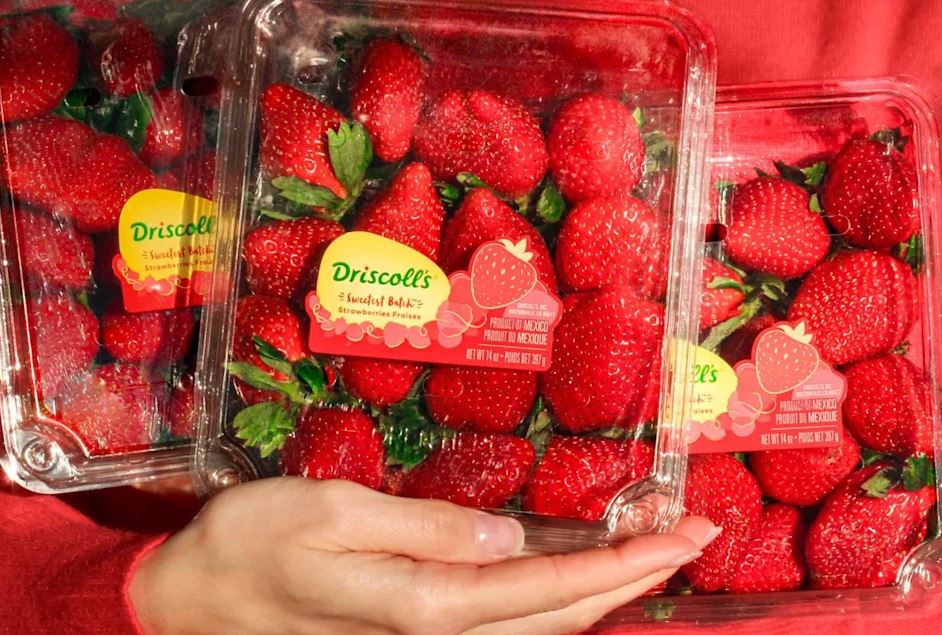
Driscoll's, the world's largest berry company, is facing a federal class-action lawsuit accusing it of hiding pesticide-linked PFAS contamination while marketing its strawberries as safe, sustainable, and "only the finest." The case, filed in the U.S. District Court for the Northern District of California, puts corporate environmental branding under direct legal scrutiny.
What the Driscoll's Lawsuit Alleges
Six shoppers across four states filed the 65-page complaint on June 26, 2026. The plaintiffs claim Driscoll's violated consumer protection laws by failing to disclose the presence of pesticide compounds linked to per- and polyfluoroalkyl substances, commonly known as PFAS or forever chemicals.
Core allegations include:
- Undisclosed PFAS-related pesticide residue on conventional strawberries.
- False advertising tied to "rigorous food safety and quality standards" claims.
- Violation of California's Consumer Legal Remedies Act.
- Systematic greenwashing of farming and manufacturing practices.
The complaint centers on testing commissioned by consumer advocacy group Mamavation, publicized in May 2026. Lab results reportedly identified 12 pesticides on conventional Driscoll's strawberries, eight of them classified as PFAS. Notably, Driscoll's organic strawberries tested negative for any pesticide residue.
Why PFAS Contamination Matters
PFAS compounds are known as forever chemicals because they resist breakdown, persisting in the environment and human tissue for years, sometimes centuries. According to the National Institute of Environmental Health Sciences, exposure has been linked to kidney and testicular cancer, liver damage, immune suppression, and developmental harm.
The Greenwashing Angle
The lawsuit does not only target contamination. It argues Driscoll's built a premium brand identity on sustainability messaging that plaintiffs say misrepresented actual farming practices. The complaint quotes company language describing environmental performance as "inseparable" from economic performance, alongside claims of third-party audits and water monitoring.
Plaintiffs argue this messaging created a false sense of safety that justified premium pricing, while omitting known pesticide risks tied to PFAS chemistry.
Driscoll's Response
Driscoll's has strongly denied the allegations, stating that its growers operate in full compliance with U.S. Environmental Protection Agency and Food and Drug Administration standards. The company disputes the independent testing methodology and maintains its food safety claims are accurate.
The case remains at an early stage, and the allegations have not been proven in court.
What Comes Next
The lawsuit seeks class-action status on behalf of consumers in Illinois, New York, New Jersey, and Massachusetts who purchased conventional Driscoll's strawberries. Legal experts note that greenwashing litigation tied to PFAS has expanded significantly across the food and consumer goods sectors in recent years, as regulatory scrutiny of forever chemicals intensifies.