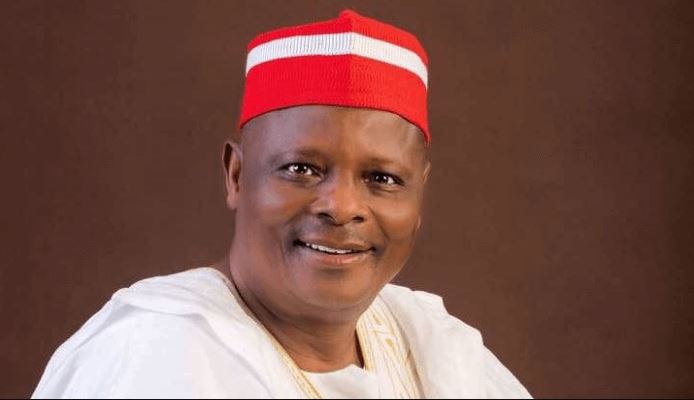
Nigeria's opposition politics entered a consequential new phase on Monday, March 30, 2026, when Senator Rabiu Musa Kwankwaso formally registered with the African Democratic Congress (ADC) in Kano, completing a defection that political observers across the country have called one of the most strategically significant party moves since the 2023 general elections. The development, which followed his resignation from the New Nigeria Peoples Party (NNPP), is not merely a change of party card. It is a signal that Nigeria's fragmented opposition is finally attempting to do what it could not accomplish three years ago: consolidate behind a single platform capable of challenging President Bola Tinubu and the ruling All Progressives Congress (APC) in 2027.
Who Is Rabiu Kwankwaso and Why Does His Move Matter
Kwankwaso is a former two-term governor of Kano State, a former Minister of Defence, and the NNPP's 2023 presidential candidate. He is also the founder and supreme leader of the Kwankwasiyya Movement, a grassroots political structure that has for years mobilised voters at the ward and local government levels across Kano and broader northern Nigeria. His red-cap base is not symbolic. It is an organised, loyal constituency that moves with him across party platforms, and that pattern continued on Monday when the Kwankwasiyya Movement directed members nationwide to register with the ADC immediately.
In announcing his resignation, Kwankwaso stated that he was departing the NNPP with immediate effect, expressing that the decision was not an easy one given his deep involvement with the party as its national leader and presidential candidate. He was, however, direct about his reasoning. He explained that the prevailing climate required repositioning and that he had found it necessary to identify with another platform that offered the best opportunity to effect change in the country.
Political analysts suggest that the move could strengthen the ADC's profile nationally, especially in the northern geopolitical zones where Kwankwaso enjoys a strong following through the Kwankwasiyya Movement.
What Is the ADC and Who Else Is Already Inside
The African Democratic Congress is not a new party, but it has repositioned itself in recent months as a clearing house for opposition interests. The party has attracted figures such as former Minister of Transportation Rotimi Amaechi and former Osun State Governor Rauf Aregbesola, positioning itself as a hub for opposition consolidation. Former Senate President David Mark serves as ADC National Chairman, and his presence at Kwankwaso's registration ceremony in Kano underlined the political weight the party is deliberately projecting.
At the event, Mark described Kwankwaso's defection as more than a political realignment, calling it a deliberate response to growing calls by Nigerians for a cohesive and formidable opposition capable of safeguarding democratic values. He added that the ADC now represents a rallying platform for a broad-based national movement anchored on inclusion, integrity, competence, and progress. Mark also extended an invitation to other political parties, civil society organisations, and youth groups to form a united coalition, emphasising that strengthening democracy requires collective effort and sacrifice.
Former Sokoto State Governor Aminu Tambuwal was also present at the Kano registration event, confirming that the ADC is drawing from multiple political traditions and regional interests in its coalition-building exercise.
How the 2023 Vote Split Created the Blueprint for 2027
To understand why Kwankwaso's defection matters at a structural level, one must revisit the 2023 results. The Independent National Electoral Commission declared Tinubu the winner with 8,794,726 votes, ahead of Atiku Abubakar who received 6,984,520 votes, Peter Obi who secured 6,101,533 votes, and Kwankwaso who finished with 1,496,687 votes. The combined opposition total was well above what Tinubu received, yet the absence of a single platform proved decisive.
Opposition figures have long argued that fragmentation cost them victory in 2023, when Atiku, Obi and Kwankwaso ran on separate platforms. Their combined votes exceeded that of the APC candidate, but the lack of a single banner proved decisive. The renewed cooperation under the ADC is therefore driven by electoral arithmetic as much as by shared ideology. If those votes can be consolidated without significant leakage, the opposition's mathematical case for 2027 becomes credible.
At the heart of the unfolding coalition is a fresh push by three of the opposition's most formidable figures, Atiku Abubakar, Peter Obi and Kwankwaso, to close ranks under a common platform and mount what could become the stiffest challenge yet to President Tinubu.
What Happens to the NNPP Following Kwankwaso's Exit
The NNPP was constructed almost entirely around Kwankwaso's personality and northern appeal. His departure raises legitimate questions about the party's continued relevance on the national stage. Multiple sources disclosed that while the development jolted the NNPP leadership, not all key figures in the party are willing to follow the former governor to his new political platform, a situation that could trigger internal realignments within the NNPP.
However, the NNPP's response was more measured than expected. NNPP National Publicity Secretary Ladipo Johnson confirmed that despite the defection of Kwankwaso, the party would continue to contest elections, adding that the NNPP would be in alignment with the ADC toward the presidential elections and possibly some national elections, while maintaining its own candidates further down the ballot.
This nuanced position suggests that even the NNPP recognises that the 2027 presidential battle will require cross-party cooperation. The party is effectively acknowledging that it cannot challenge the APC alone at the federal level while preserving its identity and structure for sub-national contests.
The latest development comes amid a deepening rift between Kwankwaso and Kano State Governor Abba Yusuf, who was long regarded as a key beneficiary of the Kwankwasiyya Movement. Yusuf recently defected from the NNPP to the APC alongside several lawmakers and political appointees, a move Kwankwaso publicly opposed and described as a betrayal.
Where Does the ADC Go From Here on Presidential Candidate Selection
One of the most consequential unresolved questions in the ADC coalition is how the party will select its presidential candidate when three heavyweight politicians each carry their own presidential ambitions and voter bases. The ADC has said it is working to adopt a consensus approach in selecting its presidential candidate for the 2027 poll, with the National Publicity Secretary confirming that indirect primaries are no longer on the table as stipulated under the amended Electoral Act, leaving direct primaries and consensus as the two available options.
There is already speculation of a possible alliance that could produce an Obi-Kwankwaso presidential ticket, though no formal announcement has been made by any of the three principals. Managing the ambitions of Atiku, Obi and Kwankwaso simultaneously will require sustained negotiations and, ultimately, a compromise that all three camps can sell to their respective supporters.
Political parties in Nigeria are often plagued by internal crises, defections, and litigations, particularly during primary elections. For the ADC, managing the ambitions of three heavyweight politicians while maintaining party cohesion will be a delicate balancing act. Yet supporters argue that the stakes are high enough to compel compromise.
Why the APC's Growing Dominance Is Accelerating Opposition Urgency
The speed of this coalition-building exercise is not incidental. It is a direct response to the APC's expanding footprint across the country. The momentum behind the ADC coalition reflects growing concern over the steady migration of politicians to the APC, with several heavyweight states now governed by the ruling party, fuelling anxieties about shrinking political space for alternatives.
ADC National Publicity Secretary Bolaji Abdullahi recently urged those sitting on the political fence to take a decisive stand, noting that Nigeria needs a strong, credible, and organised opposition. His party's appeal is framed not as a recruitment drive for politicians but as a democratic necessity in a system where single-party dominance historically leads to weakened accountability.
The emerging coalition reflects a broader shift in Nigeria's political landscape, where traditional party loyalties are increasingly being challenged by issue-based politics and voter dissatisfaction. The rise of movements like the Obidient Movement has demonstrated the potential of grassroots mobilisation, particularly among young voters. Economic hardship, fuel subsidy removal fallout, and governance concerns have amplified public pressure for a credible opposition alternative.