Washington Said No Ebola on US Soil. So It Found Another Country to Take It.
The Trump administration has said it "cannot and will not allow" any cases of Ebola to enter the country, unlike during the 2014 to 2016 Ebola outbreak in West Africa when several infected US nationals were treated on US soil.
What the administration did instead was quietly arrange for Americans exposed to Ebola abroad to be quarantined in Kenya. A US administration official disclosed on Wednesday that the US was planning to send Americans exposed to Ebola to a new facility in Kenya rather than flying them home. The official spoke on condition of anonymity. It was unclear where in Kenya the facility would be built or whether the Kenyan government had formally signed off on the plan.
That last line deserves more attention than it has received. A sovereign government appears to have been in talks to host a biocontainment facility for foreign nationals without completing a public consent process, without parliamentary oversight, and without telling its own medical community. Kenya's courts and doctors moved faster than its government did.
The pushback was immediate and came from multiple directions at once:
- Kenyan High Court Judge Patricia Nyaundi barred the government from admitting anyone exposed to or infected by Ebola under the planned agreement until a challenge brought by the Katiba Institute legal advocacy group was resolved, with the next hearing set for June 2.
- The Kenya Law Society asked the court to nullify any agreements signed between the US and Kenya, citing public health risks, a lack of public participation, and a finding that Kenya lacks the high-containment infrastructure required to safely manage such a facility.
- The Kenyan doctors' union issued a 48-hour strike notice on Thursday, warning that the US had made clear it would not allow Ebola on its own soil and Kenya should not become a dumping ground.
- The Katiba Institute's lawsuit stated that the quarantine plan raises grave constitutional concerns regarding the rights to life, health, fair administrative action, public participation, and parliamentary oversight.
The Outbreak Behind the Deal: A Virus With No Vaccine and Over 1,000 Suspected Cases
To understand why Washington was scrambling for a quarantine solution outside US borders, you need to understand what is actually happening in Congo right now.
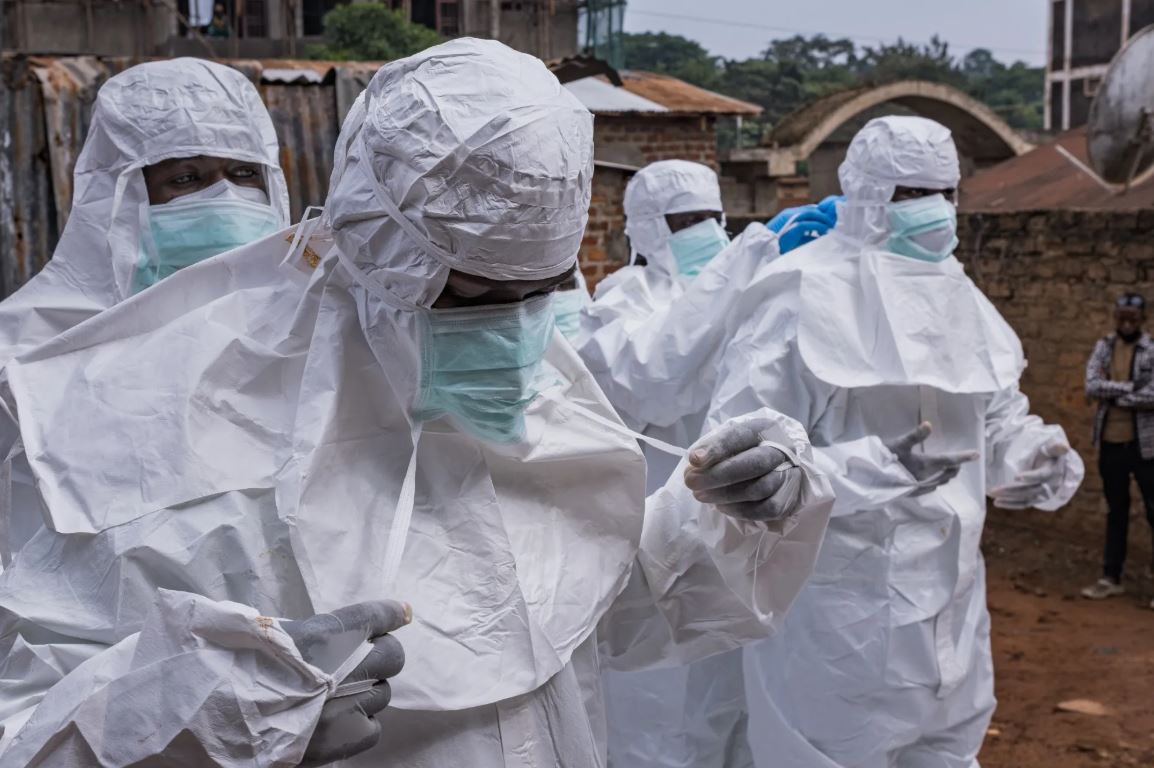
In northeastern Congo, health workers with scant supplies have been struggling to contain an outbreak of the Bundibugyo virus, a kind of Ebola that has no approved treatment or vaccine. The Congolese government confirmed more than 1,000 suspected cases, with at least 220 deaths, since it declared an outbreak on May 15.
The virus had been spreading undetected for weeks before the official declaration, and the WHO suspects the true scale is considerably larger than reported numbers indicate. The virus has also reached neighboring Uganda, which confirmed seven cases and one death.
The US State Department said on Thursday it would commit $13.5 million toward Kenya's Ebola preparedness efforts. The timing of that announcement, one day after the quarantine facility plan became public and one day before the court suspended it, reads less like a public health commitment and more like a financial inducement attached to a deal that was already facing serious resistance.
I have covered global health accountability for nearly two decades. The pattern here is familiar: a wealthy government moves fast on a bilateral arrangement that benefits its own citizens, does not adequately consult the host country's public institutions, and then offers money when the arrangement attracts scrutiny. The $13.5 million figure is not Ebola preparedness funding. It is the price tag of the ask.
Kenya's Legal System Moved in 48 Hours. Its Government Took Weeks to Say Anything.
The speed of Kenya's judicial and civil society response stands in direct contrast to how the Kenyan government handled the disclosure.
The planned facility in Kenya was due to be staffed by members of the US Public Health Service, a uniformed branch of the Department of Health and Human Services. That detail means this was not a temporary field hospital. It was a permanent US government-staffed biocontainment installation on Kenyan territory, operating under terms the public had not seen and parliament had not reviewed.
The Kenya Law Society's submission to the court was direct: Kenya lacks the high-containment infrastructure required to safely manage such a facility, which exposes the public to serious health risks.
Davji Atellah, chairperson of the Kenyan doctors' union, did not use diplomatic language. "As the vanguard of Kenya's healthcare system, we are utterly disgusted by the government's apparent willingness to trade national biosecurity and the lives of its citizens for foreign aid," he said.
That statement from a sitting union chair, directed at his own government in public, tells you something about how serious the domestic rupture is. This is not a story about a court injunction. It is a story about a government that agreed to something it could not defend publicly, and got caught before it could finalize the paperwork.
The court returns on June 2. By then, the Kenyan government will need to explain not just whether this deal was legal, but whether it was ever honest about what it had agreed to.