Leipzig Got a New Colleague in December, and It Runs on Wheels
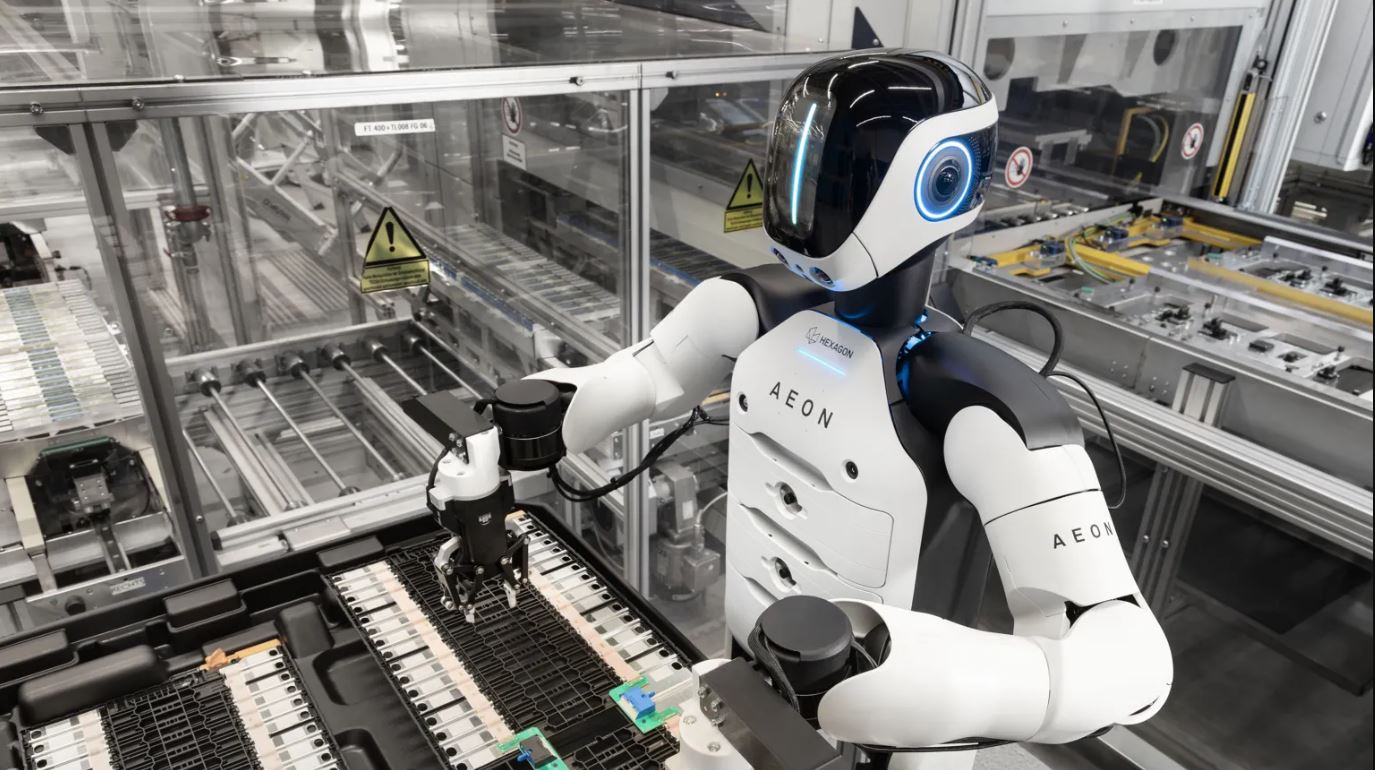
A new colleague arrived on the shop floor at BMW's Leipzig plant. It stands 1.65 metres tall, weighs 60 kilograms, and instead of feet, its legs end in wheels. Its name is AEON.
The announcement, made on March 9, 2026, comes backed by hard data from a prior US trial. In 2025, BMW ran a ten-month pilot at its Spartanburg, South Carolina plant using Figure AI's Figure 02 robot. The humanoid supported production of over 30,000 BMW X3s, working 10-hour shifts and moving a total of over 90,000 components.
Leipzig is not a test for curiosity. It is where BMW applies what Spartanburg taught it, at the first European automotive plant to run physical AI on a live production line.
AEON uses 22 sensors, self-swapping batteries, and four layers of physical AI including imitation learning, where just 20 demonstrations are enough to train autonomous operation. That last figure is worth sitting with. Twenty demonstrations. Most industrial robot qualification processes run for weeks. The learning curve here is genuinely different from anything the automotive sector has used before.
The rollout follows a deliberate sequence:
- AEON made its operational debut at Plant Leipzig in December 2025, following a theoretical assessment and laboratory testing phase.
- A further test run is planned from April 2026 to ensure full integration into existing series production.
- The full pilot phase launches in summer 2026, with two AEON units working simultaneously across two use cases.
- BMW expects both units to be in production by year-end 2026.
The Man Who Championed This Is About to Become BMW's CEO
There is a detail in this story that the technology coverage keeps burying under robot specifications.
The executive leading this initiative, Milan Nedeljković, BMW's Board Member for Production, has been named the company's incoming CEO, effective 14 May 2026. His promotion was announced in December 2025, making the Leipzig deployment one of the last major announcements from his tenure as production chief, and an early signal of the priorities he will bring to the top job.
"Digitalisation improves the competitiveness of our production, here in Europe and worldwide," Nedeljković said at a public demonstration in Munich in early March 2026. That sentence reads differently when you know the person saying it is three months away from running the whole company.
BMW established a Centre of Competence for Physical AI in Production to evaluate technology partners against defined maturity and industrialisation criteria. Partners are tested theoretically first, then in lab settings using real BMW production use cases, and finally on the factory floor. The process is methodical enough that the Leipzig pilot carries institutional weight, not just engineering curiosity.
The robot at the centre of the Leipzig pilot, AEON, was developed by Hexagon Robotics, the humanoid robotics unit of Hexagon, headquartered in Zurich. Hexagon itself is a long-standing partner of BMW Group in sensor technology and software, with net sales of approximately €5.4 billion. That existing relationship explains why the gap between AEON's public unveiling in June 2025 and its live factory deployment in December 2025 was only six months. The relationship did the qualification work before the press release existed.
What the Industry Gets Wrong About Humanoid Robots in Car Factories
Most coverage frames AEON as a workforce story. Will it take jobs. Will workers push back. What do the unions think. Those are real questions with real answers coming, but they miss the more immediate commercial argument BMW is actually making.
AEON's human-like torso allows a wide variety of grippers, hand elements, and scanning tools to be flexibly docked, which is precisely what BMW needs for multifunctional deployment across different production environments. The competitive value is not headcount reduction. It is flexibility. A fixed robot does one task at one station. AEON moves between stations, switches tools, and handles jobs that change. That matters most in high-mix, lower-volume production, exactly the kind BMW does at Leipzig across multiple vehicle lines.
The global humanoid robot market is projected to reach $4 to $5 billion in 2026, growing at roughly 38 to 50 percent compounded annually as automotive and logistics industries scale pilot programs. BMW is not entering this market to save on wages in 2026. It is buying operational experience at a point in the cost curve where that experience will be worth significantly more in 2029 and 2030 than the pilot costs today.
I have covered enough manufacturing technology cycles to know that the companies that run real pilots at genuine industrial scale during the expensive early years tend to hold advantages that late movers cannot close with money alone. BMW ran 30,000 vehicles through a humanoid robot pilot before most of its European competitors had written the business case for trying.
The question worth asking now is not whether AEON works. The Spartanburg data says it does. The question is which other European automaker runs its own Leipzig by the end of 2027, and which ones are still in the committee stage when that window closes.