What Happened and Why It Matters
President John Dramani Mahama has approved the immediate evacuation of 300 Ghanaians from South Africa following a resurgence of xenophobic attacks targeting foreign nationals. This is not a routine consular operation. It is a direct government response to a deteriorating security situation that has alarmed multiple African nations and drawn international condemnation.
Ghana's Foreign Affairs Minister, Samuel Okudzeto Ablakwa, confirmed the evacuation on Tuesday, saying President John Mahama granted presidential approval for the evacuation exercise.
How the Evacuation Was Triggered
The evacuees had registered with Ghana's High Commission in Pretoria in response to a prior advisory from the Ministry of Foreign Affairs.
- Foreign Minister Ablakwa stated that the distressed Ghanaians had complied with the Ministry's earlier directive to remain vigilant and maintain contact with Ghanaian diplomatic officials.
- Ghana's embassy urged its citizens to remain cautious, avoid public gatherings, and close shops or businesses in Durban ahead of a planned protest.
- Ablakwa earlier condemned the attacks during the Ghana-Sierra Leone Permanent Joint Commission for Cooperation in Accra, describing them as "naked hatred and baseless xenophobia," and urged South African authorities to protect foreign nationals.
South Africa's Position on the Attacks
The South African Government rejected claims of targeted xenophobic violence against African nationals, stating that while isolated incidents occurred, authorities acted swiftly to contain them and enforce the law.
- President Cyril Ramaphosa said recent protests and criminal acts against foreign nationals were not government policy and described them as "isolated acts of criminality."
- South African authorities have said illegal immigration is a problem while condemning the violence and vowing in April to crack down on xenophobic attacks.
- South African authorities rejected claims that foreigners were being attacked, saying widely shared videos on social media were fake.
Root Causes of Xenophobic Violence in South Africa
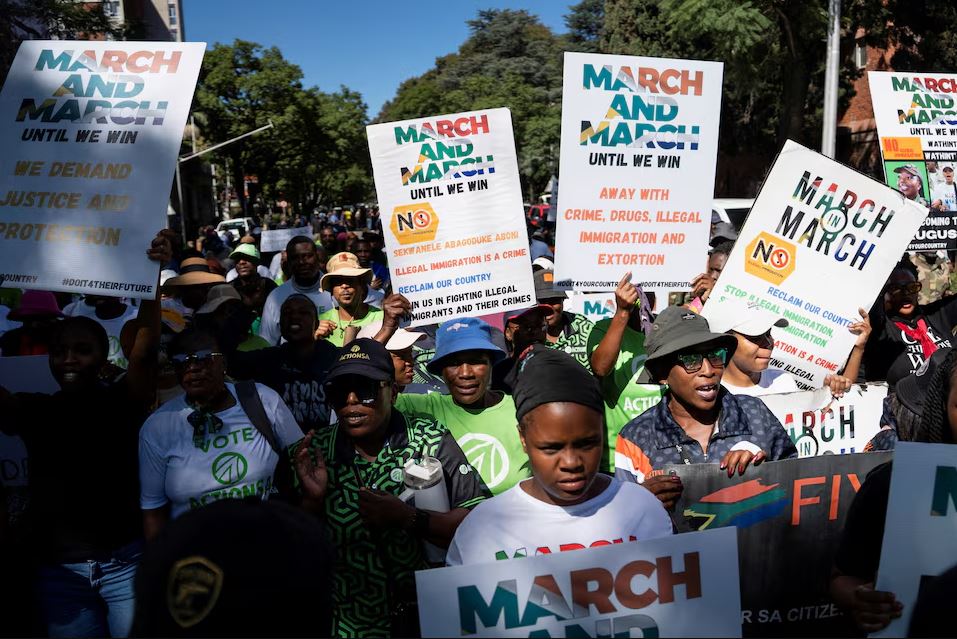
South Africa is Africa's leading economy and is home to more than three million foreigners, making up just over five percent of the population. But unemployment is running at 30 percent, fuelling tensions with migrant workers.
- Protests have drawn thousands of South Africans calling for the deportation of undocumented migrants, arguing that illegal immigration affects jobs, housing, and crime.
- Xenophobic violence has erupted in cycles over the last two decades. Sixty-two people were killed in 2008, and violent clashes also erupted in 2015, 2016, and 2019.
Ghana's Diplomatic Response and African Union Push
Ghana has moved beyond bilateral diplomacy to raise this crisis at the continental level.
- Ghana formally petitioned the African Union Commission to place the issue of xenophobic attacks against African nationals in South Africa on the agenda of the Eighth Mid-Year Coordination Meeting of the African Union, scheduled from June 24 to 27, 2026, in El Alamein.
- Ghana described recurring attacks on African migrants in South Africa as a matter of urgent continental concern, undermining African solidarity and unity, particularly given the continent's historical support for South Africa during the anti-apartheid struggle.
- Ghana and Nigeria have summoned South African diplomats over concerns about the alleged mistreatment of their nationals.
- Ghana has engaged the South African Government diplomatically, receiving assurances that investigations would be conducted and measures taken to restore calm.
Which Other African Countries Are Affected
Ghana is not acting alone. Other African countries, including Nigeria, Kenya, Malawi, Lesotho, and Zimbabwe, have also issued warnings to their citizens in South Africa.
The United Nations has also stepped into the spotlight on South Africa's escalating xenophobia crisis, with UN Secretary-General Antonio Guterres raising serious concerns over reports of xenophobic violence.