How a Garage Startup in Bellevue Became a $2.26 Trillion Global Machine
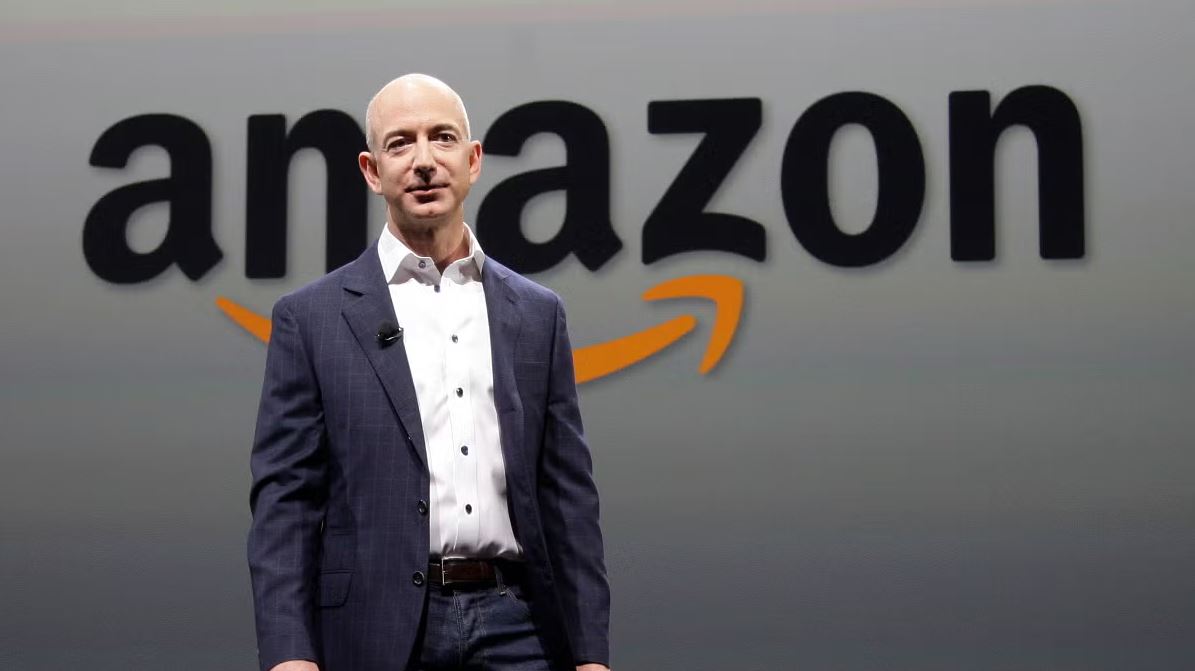
The Amazon story began in 1994 in Jeff Bezos's garage in Bellevue, Washington. Founded on the principle of "Get Big Fast," the company went public in 1997 at a split-adjusted price of just $1.50 per share. While the dot-com crash of 2000 devastated many of its peers, Amazon survived by relentlessly focusing on customer experience and long-term value over short-term profits, a philosophy famously articulated in Bezos's 1997 Letter to Shareholders.
The mid-2000s marked the company's first major pivot. In 2005, Amazon launched Prime, a loyalty program that would eventually become the bedrock of its retail ecosystem. More significantly, in 2006, it launched AWS, essentially inventing the modern cloud computing industry by externalizing the infrastructure it had built for its own retail operations.
That long-term thinking paid off at a scale few analysts originally projected:
- Bezos's net worth is estimated at approximately $290 billion in 2026, keeping him firmly inside the top tier of the global rich list.
- His fortune is driven primarily by Amazon shares, supplemented by Blue Origin, The Washington Post, Bezos Expeditions, real estate, and a large pool of liquid wealth built through years of strategic Amazon stock sales.
- Bezos owns approximately 8.2% of Amazon as of a May 2026 company filing, making him one of the largest individual shareholders of any company in the world.
- He currently holds the title of Founder and Executive Chairman at Amazon, guiding its board and CEO while ensuring the company's long-term strategic direction.
Why Bezos Is Betting on AI, Space, and Engineering to Define His Next Chapter
Project Prometheus: His Most Significant Operational Return Since Amazon
Jeff Bezos is officially returning to hands-on leadership as co-CEO of a new artificial intelligence venture called Project Prometheus, which focuses on AI for engineering and manufacturing of computers, automobiles, and spacecraft. This marks his most significant operational role since he stepped down as Amazon's chief executive in 2021.
This is the first time Bezos has taken a formal operational role in a company since stepping down as Amazon CEO in July 2021. With the new startup, Bezos is entering a crowded AI market with several smaller firms attempting to break through while racing against industry heavyweights such as Microsoft-backed OpenAI, Meta, and Google.
The return is consistent with a pattern of founders re-engaging directly with technology as AI reshapes competitive dynamics across every sector they have built or funded.
Amazon's AI-First Strategy and Bezos's Influence on AWS
Bezos has said that 95% of his time at Amazon is focused on AI, and the company is currently building approximately 1,000 AI applications internally, including a multimodal model capable of processing images, video, and text.
His long-held belief in building durable platforms rather than chasing short-term gains is reflected in Amazon's willingness to spend heavily today to secure future dominance. AI workloads require enormous upfront investment in compute, storage, and networking, but once embedded into customer operations, they tend to be sticky and difficult to replace, a dynamic that strongly favors hyperscale providers like AWS.
Key elements of this AI-first commercial strategy include:
- Amazon is building a supercomputer using its own chips alongside Anthropic, the AI startup that it has invested $8 billion in, to gain an edge against its Big Tech rivals.
- Amazon has simultaneously tightened discipline across its retail operations, slowing warehouse growth, optimizing delivery routes, and introducing more automation into fulfillment centers to redirect resources toward higher-return AI segments.
- Amazon's market capitalization stood at approximately $2.26 trillion in 2026 as the company attempts to prove it can maintain startup agility while managing the complexities of a global conglomerate.
Blue Origin and the Long Game in Space Infrastructure
Founded in 2000, Blue Origin was created to address one of humanity's most enduring challenges: how to expand into space in a way that is sustainable, affordable, and scalable over the long term. Guided by its Latin motto, "Gradatim Ferociter," meaning "Step by Step, Ferociously," Bezos approaches space development with patience, precision, and an unwavering focus on sustainability.
Blue Origin completed its first orbital launch with the New Glenn rocket in 2025 and successfully reached orbit. In November, the company successfully landed its booster back on Earth after helping launch two probes to Mars as part of NASA's Escape and Plasma Acceleration and Dynamics Explorers mission.
In January 2026, Blue Origin announced it would pause its fully reusable New Shepard suborbital flights for at least two years to accelerate development of lunar landing capabilities, aligning with the Trump administration's executive order establishing American space superiority goals including lunar and Mars exploration objectives.
What Bezos's Empire Means for Global Markets, Investors, and the AI Economy
The Bezos story in 2026 is no longer simply about Amazon's stock price. It is about the simultaneous convergence of AI infrastructure, private space commercialization, and advanced manufacturing, three sectors where Bezos has placed foundational long-term bets that are only now beginning to yield strategic returns.
As AI continues to accelerate, both Blue Origin and SpaceX are exploring the idea of moving the infrastructure that powers it to space, a concept that could reshape the economics of AI compute at a planetary scale.
Bezos has conceded that Blue Origin is not yet profitable, and told The New York Times that while it is not a very good business yet, he believes it will eventually become the best business he has ever been involved in.
For market analysts tracking capital allocation in the technology sector, the Bezos portfolio offers several forward-looking signals:
- His co-CEO role at Project Prometheus signals that AI for physical manufacturing is the next frontier beyond software and cloud.
- Amazon's $8 billion commitment to Anthropic positions it as the most credible rival to Microsoft's OpenAI relationship in enterprise AI infrastructure.
- Blue Origin's pivot from space tourism toward lunar infrastructure aligns with government contract opportunities worth hundreds of billions over the next decade.
- Amazon's combination of AI investment discipline and retail cost optimization positions it to extract higher margins from a leaner operational base while compounding returns through AWS.