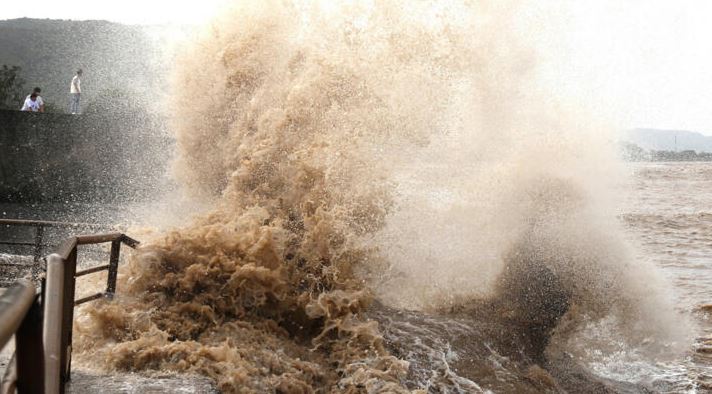
Typhoon Bavi tore through the East China Sea this week, forcing one of the largest coastal evacuations of the year and grounding hundreds of flights across Taiwan, Japan, and mainland China. The storm made landfall in Zhejiang Province late Saturday night, closing out a week of extreme weather that has already strained emergency systems across the region.
This was not an isolated event. Bavi struck just over a week after Typhoon Maysak hit southern China, and it followed a stretch of flooding that had already killed dozens of people and burst a reservoir dam. For coastal communities from Okinawa to Sarangani, the storm added another layer of stress to an already exhausting season.
What Happened When Bavi Made Landfall
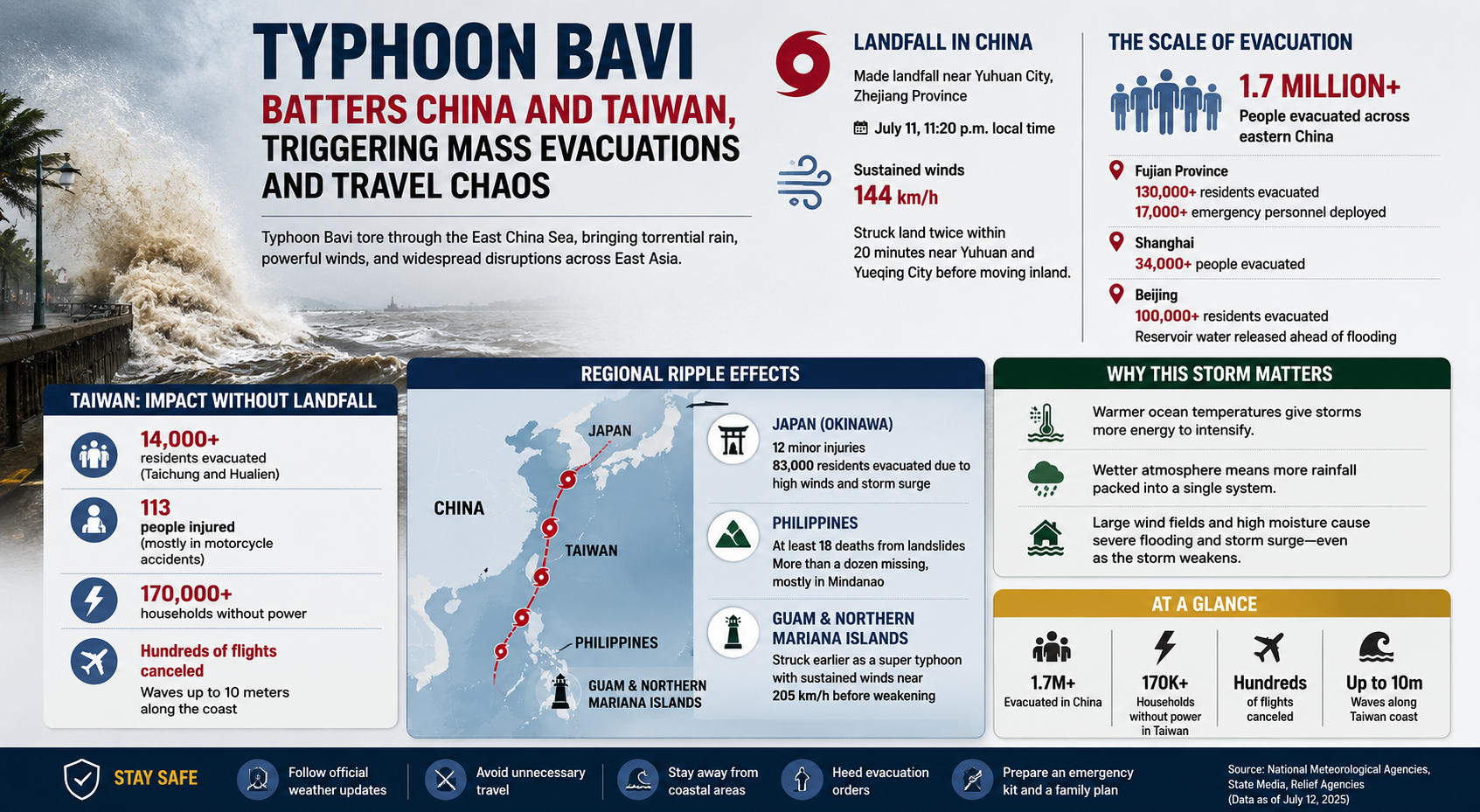
Bavi came ashore near Yuhuan City in Zhejiang Province at roughly 11:20 p.m. local time on July 11, with sustained winds near 144 kilometers per hour. State media reported that the storm struck land twice within twenty minutes, first at Yuhuan and then again near Yueqing City, before continuing inland and gradually losing strength.
Evacuations Across Eastern China
Chinese authorities moved fast. Officials evacuated more than 1.7 million people ahead of landfall, one of the largest pre-storm evacuations China has carried out in recent years.
- Fujian Province evacuated more than 130,000 residents and deployed over 17,000 emergency personnel.
- Shanghai moved roughly 34,000 people out of coastal and high-risk zones.
- Beijing evacuated more than 100,000 residents as reservoir operators released water ahead of expected flooding.
Flights, rail service, ferries, and schools were suspended across the affected provinces, and China's national weather agency issued its first Red Rainstorm Warning of the year alongside an orange typhoon alert.
Taiwan Felt the Storm Without a Direct Hit
Bavi passed north of Taiwan rather than making landfall there, but the island still absorbed heavy damage. More than 14,000 residents were evacuated, most from Taichung and Hualien. At least 113 people were injured, largely in motorcycle accidents on rain-slicked roads. Power outages hit more than 170,000 households, and hundreds of flights were canceled as the Central Weather Administration warned of waves up to 10 meters along the coast.
Regional Ripple Effects
Bavi's reach extended well beyond the two countries named in its path.
- Japan: Okinawa Prefecture recorded 12 minor injuries and evacuated nearly 83,000 residents as the storm's outer bands brought high winds and storm surge to the Ryukyu Islands.
- Philippines: Bavi enhanced the seasonal southwest monsoon, triggering landslides that killed at least 18 people and left more than a dozen missing, mostly in Mindanao.
- Guam and the Northern Mariana Islands: The storm struck earlier as a super typhoon with sustained winds estimated near 205 kilometers per hour before weakening on its path toward East Asia.
Why This Storm Matters Beyond the Headlines
Bavi's track illustrates a pattern climate scientists have flagged for years: storms that retain unusually large wind fields and heavy moisture loads even as their core intensity weakens. That combination is why a typhoon downgraded from super typhoon status could still force evacuations on the scale of nearly two million people.
Warmer ocean surface temperatures give storms more energy to draw on, and a wetter atmosphere means more rainfall packed into a single system. Neither factor alone explains Bavi, but together they help explain why rainfall totals reached the 600 to 900 millimeter range in Taiwan's mountainous regions, an amount that would overwhelm drainage systems built for an earlier climate.
For emergency planners across East Asia, the practical lesson is straightforward. Storm intensity forecasts matter less than storm size and moisture content when it comes to protecting lives. Bavi weakened before landfall, yet it still displaced more people than many stronger storms have in the past.