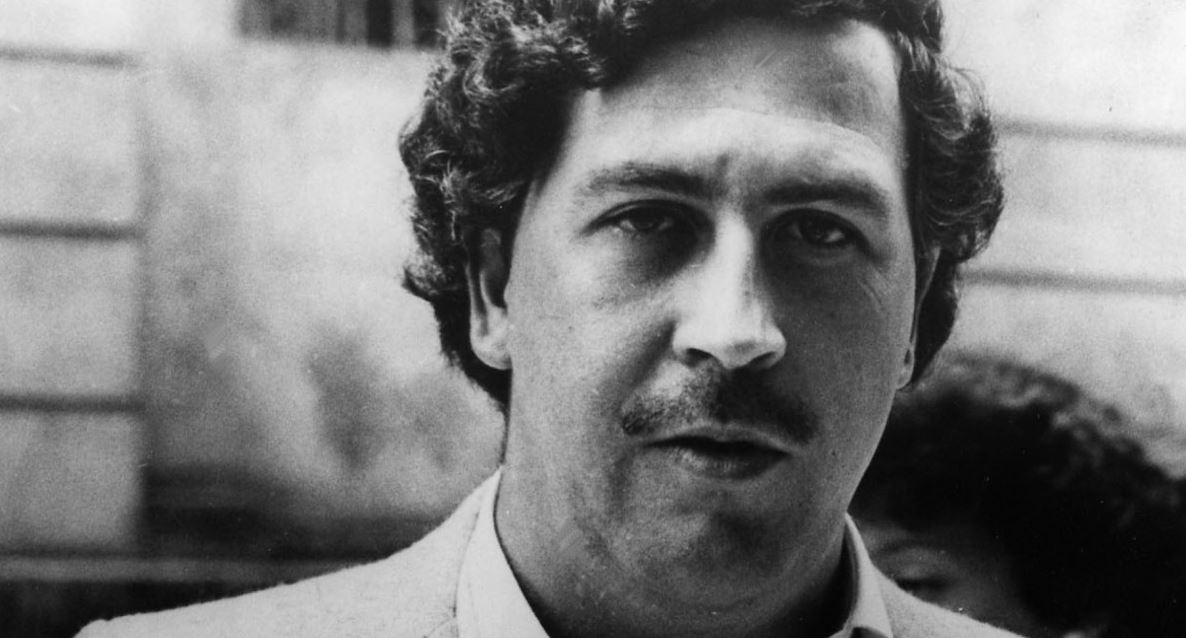
Pablo Escobar built one of the most profitable criminal enterprises in modern history, then lost it in a war he started against his own government. His story is not just about cocaine trafficking. It is about how a single trafficker exploited weak institutions, bought loyalty at every level of society, and forced a nation to fight back at enormous cost.
This report separates verified history from myth, and explains why Escobar's legacy still shapes drug policy debates today.
Who Was Pablo Escobar
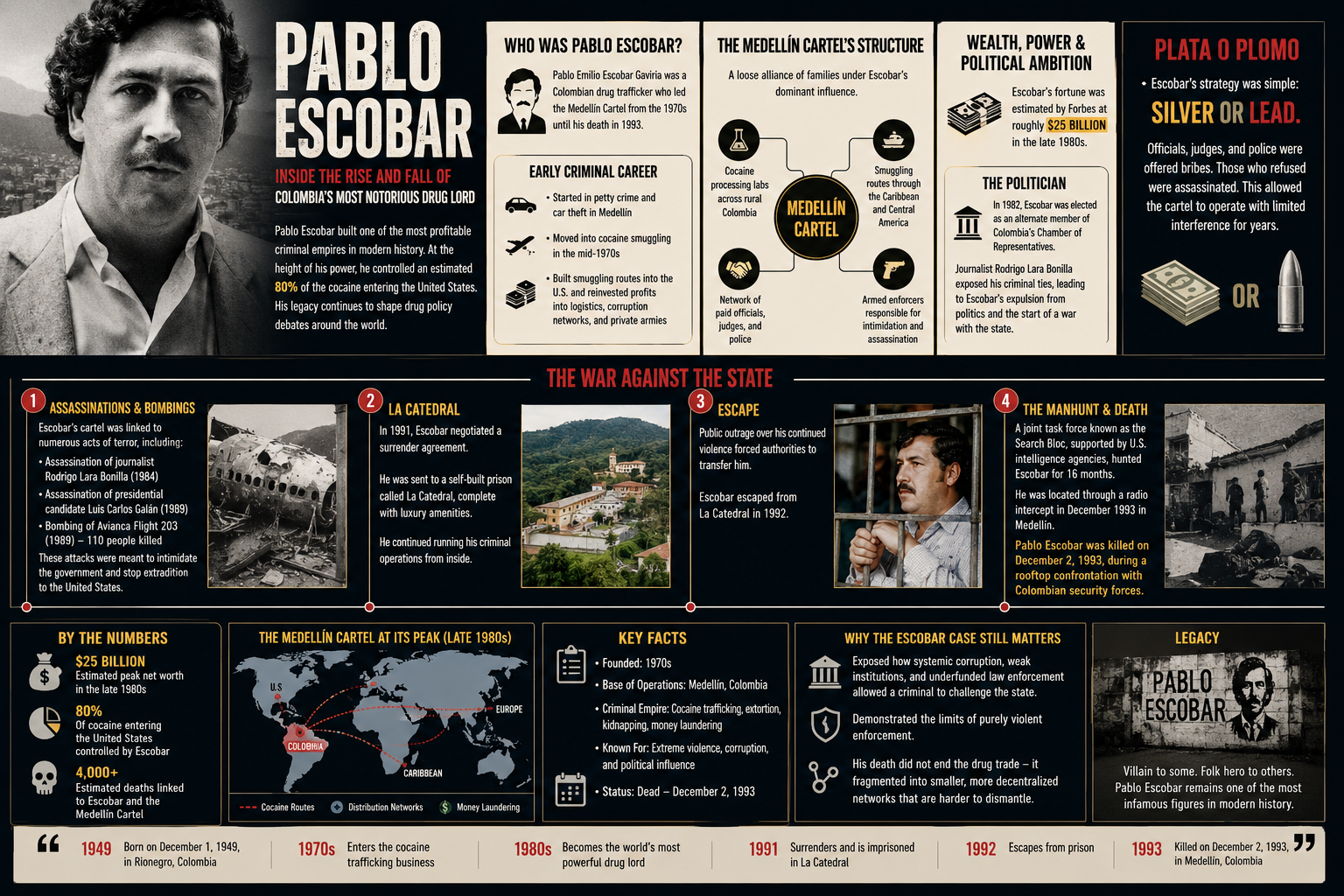
Pablo Emilio Escobar Gaviria was a Colombian drug trafficker who led the Medellin Cartel from the 1970s until his death in 1993. At the height of his operation, Escobar controlled an estimated 80 percent of the cocaine entering the United States.
Early Criminal Career
Escobar started in petty crime and car theft in Medellin before moving into cocaine smuggling in the mid-1970s. He identified an underserved market, built smuggling routes into the United States, and reinvested profits into logistics, corruption networks, and private armies.
The Medellin Cartel's Structure
The cartel was not a single organization but a loose alliance of trafficking families under Escobar's dominant influence. Key elements included:
- Cocaine processing labs across rural Colombia
- Smuggling routes through the Caribbean and Central America
- A network of paid officials, judges, and police
- Armed enforcers responsible for intimidation and assassination
Wealth, Power, and Political Ambition
Escobar's fortune was estimated by Forbes at roughly 25 billion dollars during the late 1980s, making him one of the wealthiest individuals in the world at the time.
The Politician
In 1982, Escobar was elected as an alternate member of Colombia's Chamber of Representatives, using the position to seek legal immunity and legitimacy. Journalist Rodrigo Lara Bonilla publicly exposed his criminal ties, which led to Escobar's expulsion from politics and marked the start of an open war between Escobar and the Colombian state.
Plata o Plomo
Escobar's operating strategy became known as plata o plomo, meaning silver or lead. Officials, judges, and police were offered bribes, and those who refused faced assassination. This approach allowed the cartel to operate with limited interference for years.
The War Against the State
By the mid-1980s, Escobar's conflict with the Colombian government escalated into open violence.
Assassinations and Bombings
Escobar's cartel was linked to the assassination of Lara Bonilla in 1984, presidential candidate Luis Carlos Galan in 1989, and the bombing of Avianca Flight 203, which killed 110 people. These attacks were aimed at intimidating the government into abandoning extradition treaties with the United States.
La Catedral
In 1991, Escobar negotiated a surrender agreement that placed him in a self-built prison called La Catedral, which included luxury amenities and minimal security. He continued running his criminal operations from inside until public outrage over his continued violence forced authorities to attempt a transfer, prompting his escape in 1992.
The Manhunt and Death
After his escape, a joint task force known as the Search Bloc, supported by American intelligence agencies, tracked Escobar for 16 months.
Final Days
Escobar was located through a radio intercept in December 1993 in Medellin. He was killed during a rooftop confrontation with Colombian security forces on December 2, 1993. His death did not end cocaine trafficking through Colombia; it fragmented the market among smaller, less visible organizations.
Why the Escobar Case Still Matters
Escobar's rise exposed how systemic corruption, weak judicial independence, and underfunded law enforcement can allow a single criminal network to challenge state authority. His downfall also demonstrated the limits of purely violent enforcement, since cartel fragmentation after his death led to new, more decentralized trafficking networks that proved harder to dismantle.