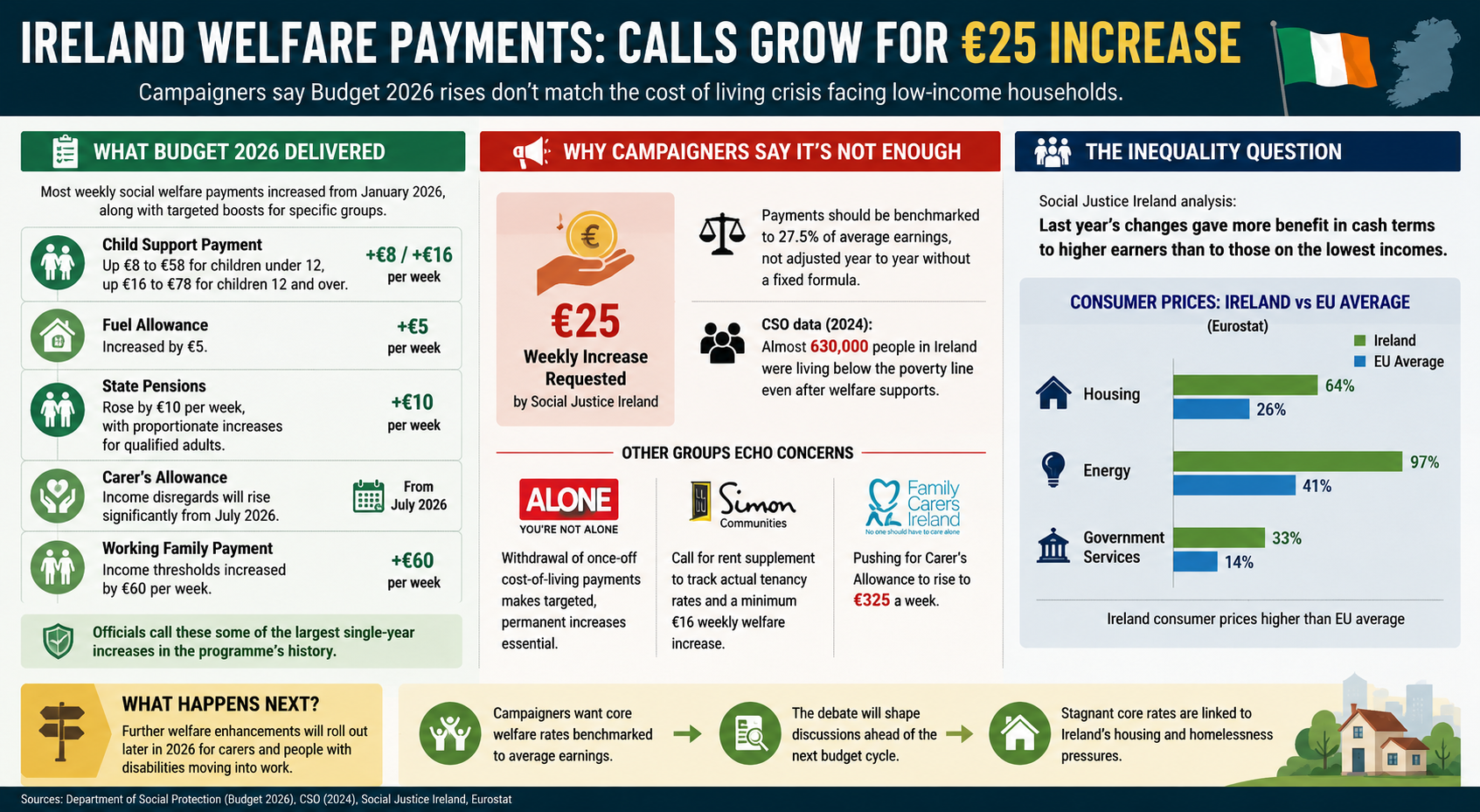
Ireland's welfare system is back under scrutiny as poverty campaigners, opposition politicians, and community groups push the government to go further than Budget 2026's core increases. Despite a €28.9 billion social protection package, advocacy groups argue the rises still leave low income households falling behind rising rent, energy, and food costs.
What Budget 2026 Actually Delivered
The government increased most weekly social welfare payments by €10 from January 2026, alongside targeted boosts for specific groups.
- Child Support Payment rose by €8 to €58 for children under 12, and by €16 to €78 for children aged 12 and over.
- Fuel Allowance increased by €5 to €38 per week.
- State pensions rose by €10 per week, with proportionate increases for qualified adults.
- Carer's Allowance income disregards will rise significantly from July 2026.
- Working Family Payment income thresholds increased by €60 per week.
Officials describe these as some of the largest single year increases in the programme's history. Critics say the scale still does not match the scale of the cost of living crisis.
Why Campaigners Say It Is Not Enough
Social Justice Ireland has called for a €25 weekly increase in core welfare rates, arguing payments should be benchmarked to 27.5 percent of average earnings rather than adjusted year to year without a fixed formula. The organisation points to CSO data showing that even after welfare supports, close to 630,000 people in Ireland were living below the poverty line in 2024.
Michelle Murphy of Social Justice Ireland told an Oireachtas committee that welfare payments remain inadequate to guarantee a minimum essential standard of living. Other groups echoed the concern.
- Alone, which supports older people, warned that withdrawing once off cost of living payments makes targeted, permanent increases essential.
- Simon Communities called for rent supplement to track actual tenancy rates and a minimum €16 weekly welfare increase.
- Family Carers Ireland asked for Carer's Allowance to rise to €325 a week.
The Inequality Question
Beyond adequacy, campaigners are raising a fairness issue. According to Social Justice Ireland's Budget analysis, last year's changes to tax and welfare delivered more benefit in cash terms to higher earners than to those on the lowest incomes, a pattern they say Budget 2026 needs to reverse rather than repeat.
Eurostat comparisons cited by the group show Ireland's consumer prices running well above the EU average across housing, energy, and government services, which compounds the effect of any shortfall in payment increases for those on fixed or low incomes.
What Happens Next
The government has signalled that further welfare enhancements will roll out later in 2026, particularly for carers and people with disabilities moving into work. Whether ministers move on the broader benchmarking demand is likely to shape debate ahead of the next budget cycle, especially as poverty campaigners continue to link stagnant core rates to Ireland's housing and homelessness pressures.