
The Iranian strike on Amazon's cloud computing facility in Bahrain on April 1, 2026 is not simply another episode in a rapidly escalating regional war. It is a strategic signal that the battlefield has been permanently extended into the global digital infrastructure. For analysts who study power dynamics and asymmetric warfare, this moment deserves careful, sober reading.
This is not a conventional military engagement. This is infrastructure war, and the rules of that war are still being written.
What Happened in Bahrain on April 1, 2026
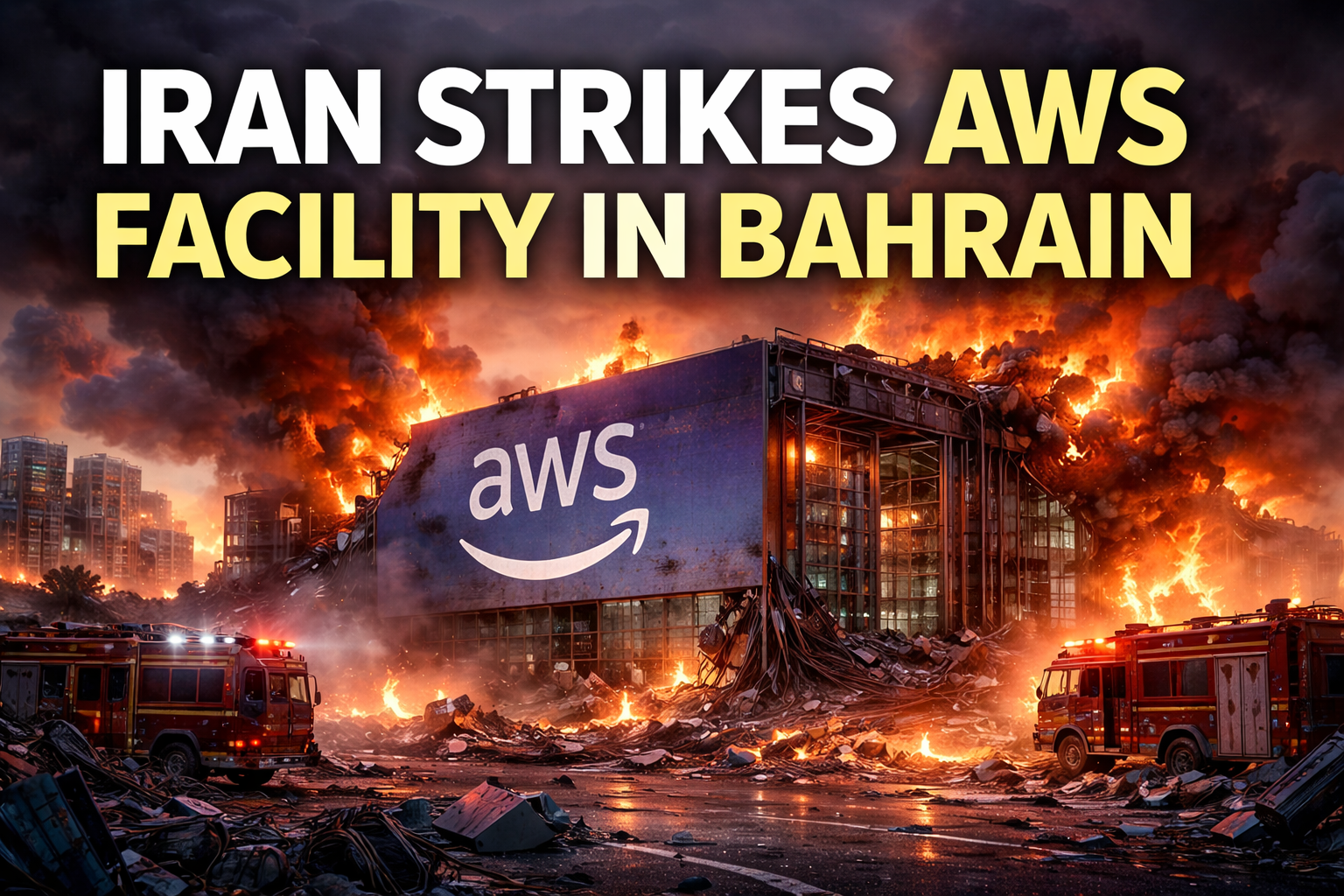
Amazon's cloud computing operations in Bahrain were damaged following an Iranian strike, the Financial Times reported on Wednesday, in what marks a further escalation in attacks on commercial technology infrastructure linked to US firms in the Gulf.
Bahrain's Interior Ministry said earlier that civil defense teams were extinguishing a fire at a facility of a company as a result of the Iranian aggression, but did not identify the company or provide details on the extent of the damage.
The facility is part of a key regional cloud hub that supports digital and enterprise services across the Middle East. Reports suggest that the disruption is linked to AWS operations hosted through the Bahrain Telecommunications Company, the country's largest telecom operator, whose facilities in Hamala support cloud and connectivity infrastructure used by major global providers.
Within a rough three-week timeframe, the Middle Eastern facilities of Amazon's cloud services business suffered from Iranian strikes on at least four separate occasions, with three of those strikes landing in Bahrain. The attacks marked the first time the data centers of an American tech giant were targeted in military action.
Who Ordered the Strike and Why
To understand the targeting logic behind these attacks, the IRGC's own statements are the most instructive source.
The IRGC stated that since the main element in designing and tracking assassination targets is American ICT and AI companies, in response to these operations, the main institutions effective in terrorist operations will be legitimate targets. The IRGC added that companies actively participating in terrorist plots will be targeted for retaliation against any terrorist attack.
The Guard warned on Tuesday that 18 tech companies would be considered as legitimate targets in retaliation for U.S. and Israeli strikes on Iran, stating that from now on, for every assassination, an American company will be destroyed.
Amazon and Alphabet were awarded a $1.2 billion contract in 2021 from the Israeli government to work on Project Nimbus, which provided Israel with core tech infrastructure. These companies and Microsoft grant Israel virtually government-wide access to their cloud and AI technologies, according to a 2025 report from a UN rapporteur.
This is the core of Iran's targeting rationale: not that these companies are incidental civilian infrastructure, but that they are, in Tehran's framing, active participants in military and intelligence operations supporting US and Israeli forces.
Who Else Is Now in the Crosshairs
The Bahrain strike on Amazon was not an isolated event. It was the first confirmed execution of a publicly announced targeting list.
Seventeen major corporations were listed as targets: Cisco, HP, Intel, Oracle, Microsoft, Apple, Google, Meta, IBM, Dell, Palantir, Nvidia, JP Morgan Chase, Tesla, GE, Spire Solution, and Boeing. The Emirati company G42 was also listed. Tehran said that the looming strikes are in retaliation for U.S. assassinations in Iran and for some of these companies' involvement in U.S. defense contracts.
Several locations highlighted by the IRGC were in Dubai, United Arab Emirates, and in Tel Aviv, Israel. In Tel Aviv, the list includes the main offices of defense technology company Palantir, as well as offices belonging to Amazon and Microsoft, along with Nvidia's engineering and development center.
The breadth of this targeting list is analytically significant. Iran is not targeting military bases alone. It is targeting the entire technology supply chain that it believes enables American and Israeli military superiority, from AI inference systems to cloud-based command and control infrastructure.
What This Reveals About Iran's Strategic Doctrine
Commercial data centers enable most of the technology that runs the modern world, including AI systems. Disrupting them is key to disrupting the military and society of a country. Given that AWS provides and operates many of the commercial data centers where the cloud lives, it is likely that its data centers will continue to be targeted in conflict.
The IRGC framed this as part of a broader shift in the ongoing regional conflict, describing it as an expansion from conventional military engagement to an infrastructure war. The companies operate offices, cloud service facilities, and data centers across Israel and Gulf states, including Dubai and Abu Dhabi, which are critical to both commercial and governmental operations in the region.
From a geopolitical doctrine standpoint, Iran is executing a form of compellence strategy, using strikes on high-value commercial infrastructure to raise the economic and reputational cost of continued US and Israeli military operations. The message is deliberate: American corporate exposure in the Gulf is now a lever of pressure, not merely a business risk.
Who Bears the Consequences: Civilians, Markets, and Gulf States
The strategic calculus of targeting cloud infrastructure carries severe second and third-order consequences that extend far beyond the tech companies themselves.
On March 1, Iranian drone strikes hit two AWS-linked data centers in the United Arab Emirates and damaged a third facility in Bahrain. Those incidents caused service disruptions affecting banking systems, payment platforms, and other digital services across the Gulf.
Previous AWS disruptions caused reported outages of apps and digital services in the UAE.
Iranian strikes have killed civilians in the broader region, including a Bangladeshi national in the UAE on the same day as the latest Bahrain strike.
Gulf economies that have invested heavily in digital transformation, fintech ecosystems, and AI-driven governance now face a structural vulnerability. When cloud infrastructure becomes a military target, the entire digital economy of the region is held hostage.
Who Is Watching: The Broader Geopolitical Stakes
Trump has issued mixed messages on the future of the conflict. Secretary of State Marco Rubio said that the finish line in the war is near. Trump has repeatedly said he is in talks with Iranian leaders aimed at ending the war.
According to the US Joint Chiefs of Staff chairman, US troops have begun flying B-52 bombers over Iranian territory for the first time since the war began. The US military has struck more than 11,000 targets inside Iran and is now focused on destroying supply chains vital to Tehran's missile, drone, and ship-building facilities.
Meanwhile, Iran has effectively shut down traffic through the vital Strait of Hormuz since mid-March, which connects the Persian Gulf to the Gulf of Oman.
The closure of the Strait of Hormuz, the targeting of Gulf digital infrastructure, and the systematic strikes on American tech assets form a coherent Iranian strategy: to impose maximum economic disruption on US allies and partners while framing the conflict as defensive and proportionate before a global audience.