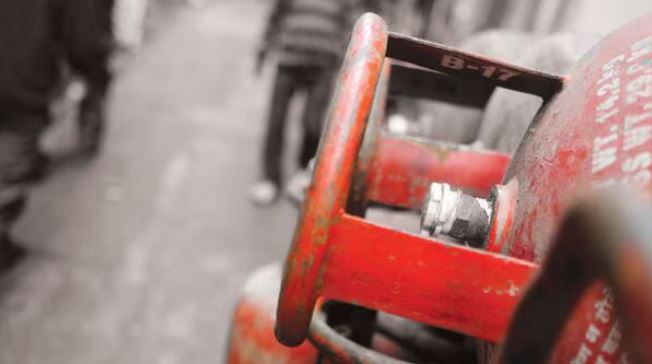
India imports roughly 67 percent of its LPG requirements, with about 90 percent of these imports transiting through the Strait of Hormuz. The ongoing Iran war has turned that single dependency into a full-blown national energy crisis, shutting commercial kitchens, triggering emergency government orders, and forcing India to pivot hard toward alternative supply routes. What follows is not a temporary blip. It is a structural reckoning with how dangerously concentrated India's energy import chain has become.
What Is Happening to India's Gas Supply Right Now
Who Controls the Chokepoint and Why It Matters
The Strait of Hormuz is a narrow maritime passage between Iran to the north and Oman and the UAE to the south, linking the Persian Gulf with the Gulf of Oman and the Arabian Sea. It faces severe shipping disruptions amid Iranian threats to moving vessels and is particularly critical to India's LNG imports from the Gulf region.
The US-Iran conflict has pushed the Strait of Hormuz to a de facto closure through insurance withdrawal, putting at risk roughly 20 percent of global oil supply alongside critical volumes of jet fuel, LPG, and LNG serving Asian and European markets. This is no longer a geopolitical risk premium in the abstract. Supply is being disrupted in real time.
Roughly 13 million barrels per day passed through the Strait of Hormuz in 2025, representing about 31 percent of all seaborne crude flows, according to energy consulting firm Kpler. A prolonged closure of the strait would likely lead to a further surge in oil prices, with some analysts seeing oil crossing 100 dollars per barrel.
What Happened to Qatar's LNG Production
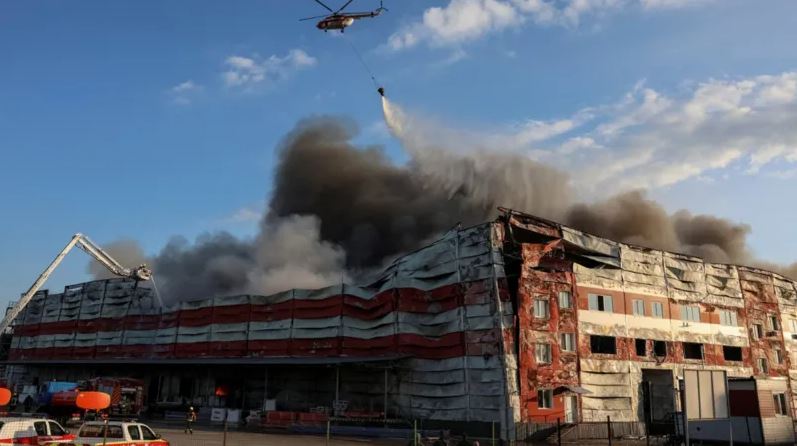
Last week, QatarEnergy halted LNG production after attacks on its facilities by Iran. The impact was visible soon after. Indian gas companies reduced supplies of natural gas to industrial consumers. On March 3, Petronet LNG Ltd (PLL), India's largest LNG importer, issued a force majeure notice to QatarEnergy and its offtakers, including GAIL (India), Indian Oil Corporation (IOCL), and Bharat Petroleum Corporation (BPCL). On March 5, GAIL said it was assessing potential supply curtailments that may need to be imposed on downstream customers, as allocation of LNG quantities under PLL's contract with QatarEnergy had been reduced to zero by PLL since March 4.
Qatar and the United Arab Emirates account for 53 percent of India's LNG imports, according to Kpler data. India faces the largest combined exposure in the region. More than half of its LNG imports are Gulf-linked, and a significant share is Brent-indexed, so a Hormuz-driven crude spike would simultaneously lift oil import costs and LNG contract prices. That creates a dual physical and financial shock.
Who Has Been Hit Hardest Inside India
What the Commercial LPG Crisis Looks Like on the Ground
India's hospitality sector is facing a growing crisis as shortages of commercial cooking gas threaten to disrupt operations at restaurants and hotels across the country. Industry bodies have warned that thousands of eateries could be forced to temporarily shut down if supplies of liquefied petroleum gas are not restored quickly.
Sagar Daryani, president of the National Restaurant Association of India (NRAI), described a crisis situation that will lead to the closure of many restaurants over the next few days. He added that 90 percent of restaurants in India rely on LPG cylinders to run their kitchens. The industry was already facing low demand and high costs, but if the LPG supply issues persist, it would lead to closure of business and job losses. The NRAI represents over 500,000 restaurants across India. India's restaurant industry generates an annual turnover of over 5.7 trillion rupees and employs over 8 million people.
According to the Hotel Owners Association of Mumbai (AAHAR), approximately 8,000 hotels in the city are affected by the crisis. The organisation claims that approximately 20 percent of hotels have already closed, and if the supply of commercial gas cylinders does not return to normal in the next two to three days, approximately 4,000 to 5,000 more hotels could close.
Nearly 10,000 establishments will shut down across India's southernmost state, Tamil Nadu, according to M. Ravi, president of Chennai Hotel Association. He added that this would include the majority of small and medium-sized restaurants.
What the Price Impact Looks Like for Consumers
The supply crunch has inevitably led to price increases. The cost of a 14.2 kg non-subsidised domestic cylinder has been hiked by 60 rupees, bringing the price in Delhi to 913 rupees. Simultaneously, the price of a 19 kg commercial cylinder has surged by around 115 rupees. Weekly LPG imports are estimated to have fallen by nearly 30 percent.
Due to high demand and low supply, LPG cylinders are now reportedly being black-marketed. People have claimed that a cylinder costing 910 rupees is being sold in the market for 2,000 rupees, and many are being forced to buy it because cylinders are not available at agencies even after waiting for 10 days.
What the Industrial Sector Is Facing Beyond Hospitality
Adani Total Gas, the city gas joint venture of Adani Group and France's TotalEnergies, nearly tripled gas prices for large industrial consumers following disruptions to LNG supplies. Natural gas plays a crucial role across several manufacturing sectors in India, particularly where it is used as a feedstock or high-efficiency fuel. Fertilisers remain the single largest consumer of natural gas in India, according to the IEA's India Gas Market Report: Outlook to 2030. Government data indicate that the fertiliser sector accounts for roughly 30 to 35 percent of the country's gas consumption, as gas is used to produce ammonia and urea.
Durai Palanisamy, chairman of Southern India Mills Association, said that all textile processing factories use LPG commercial cylinders for the singeing process and there is no alternative for it. This will come to a standstill, he said.
What the Government Has Done in Response
Who Issued the Emergency Orders and What They Cover
A Ministry of Petroleum and Natural Gas order issued on March 9, 2026 has halted the supply of commercial LPG cylinders by directing oil marketing companies to prioritize domestic cooking gas distribution and supply LPG exclusively to domestic consumers. The order invoked the Essential Commodities Act, 1955, and the Petroleum Products (Maintenance of Production, Storage and Supply) Order, 1999, to ensure uninterrupted supply of fuel to Indian households. The Centre has directed all domestic and SEZ oil refining companies, including petrochemical complexes, to maximise the production of specific chemical streams like Propane, Butane, and Propylene to be used solely for LPG.
Refineries are directed to maximise domestic LPG production for household use. Priority supply of up to 100 percent is designated for domestic piped natural gas, transport CNG, and essential pipeline operations. Fertiliser plants receive 70 percent allocation, while other industrial consumers and tea industries obtain 80 percent of their six-month average consumption.
The Centre has also invoked the Essential Commodities Act (1955) to treat natural gas supply as a priority allocation at 100 percent of the average six-month consumption baseline. The notification, published in the Gazette, has additionally ordered refineries to ramp up LPG production and redirect the additional output entirely to domestic supply.
What the 25-Day Inter-Booking Rule Means for Households
The ministry has prioritised domestic LPG supply to households and introduced a 25-day inter-booking period to avoid hoarding and black marketing. Non-domestic supplies from imported LPG are being prioritised to essential non-domestic sectors such as hospitals and educational institutions.
To curb panic-buying and hoarding, a mandatory 25-day inter-booking period has been implemented for domestic consumers, an increase from the previous 21-day gap. This measure is designed to prevent households from booking cylinders more frequently than needed, thereby stabilising demand. Officials noted that booking patterns had become erratic, with some consumers attempting to book refills in as little as 15 days.
What the Committee on Commercial Supply Will Do
Union Petroleum Minister Hardeep Singh Puri has established a three-member committee, comprising Executive Directors from IOC, HPCL, and BPCL, tasked with reviewing the grievances of restaurants, hotels, and catering associations. The genuine requirement of restaurant associations for commercial LPG will be met, a government source stated, noting that the committee will re-prioritise supplies based on verified operational needs.
The Gujarat government has announced a 50 percent reduction in gas supply for certain industrial uses to safeguard domestic LPG availability. State Energy Minister Rushikesh Patel said the measure aims to prevent panic and ensure households do not face shortages. For fertiliser and milk processing, there is about a 40 percent reduction, Patel told reporters in Gandhinagar.
How India Is Securing Alternative Supply
What Non-Hormuz Routes India Has Activated
As India struggles to receive shipments from West Asia, the country has secured additional supplies of liquefied petroleum gas (LPG) and liquefied natural gas (LNG) which do not pass through the Strait of Hormuz, a top government official confirmed. Both LPG and LNG supplies are likely to reach India soon. Indian oil companies have increased crude oil supplies from non-Hormuz routes in the last ten days.
Government sources confirmed that India increased its import of gas from non-Strait of Hormuz routes to 70 percent from 55 percent earlier. All refineries are working at 100 percent capacity. LPG production has been increased by 10 percent. Sources said that stock used to reach distributors in about 2.5 days, and it continues to take the same amount of time.
What the Russian Oil Pivot Means for India's Energy Balance
Since the beginning of the West Asia war, Indian refiners have significantly ramped up purchases of Russian oil stranded at sea. The US authorities also issued a 30-day waiver, which expires on April 4, for India to buy sanctioned and non-sanctioned Russian oil to ensure energy availability.
The conflict is materially improving Russia's competitive position in crude oil markets. With Middle East barrels facing logistical disruption, India faces strong incentives to deepen reliance on Russian supply, given proximity and established logistics.
LNG can also come from Australia, the US, and other places. However, it is not easy to immediately get a cargo, bring it to a regasification terminal, and push it into the pipeline network. So there will definitely be a crisis period in between. A large portion of gas goes to fertilizer plants, so planners and policymakers will likely prioritise supply to minimise disruption.
What India's Existing Inventory Position Looks Like
As of March 3, 2026, a government official confirmed that India holds 25 days of crude oil and 25 days of diesel and petrol inventory. Crude stocks have improved in recent days as companies secured supplies from non-Hormuz routes. All retail outlets across the country have been dispensing fuel, with refineries operating at full capacity.
What the Broader Economic and Political Consequences Are
What This Crisis Reveals About India's Energy Vulnerability
India imports 88 percent of its oil requirements, making the crude oil environment extremely critical. India imports more than 5 million barrels of crude per day, and almost half of it comes through the Gulf route via the Hormuz chokepoint. When refineries divert more crude to produce LPG, it means some capacity gets diverted away from petrol and diesel. Ultimately, the same refinery infrastructure produces multiple outputs. So it becomes a complex balancing act.
A sustained Hormuz blockade would amplify both energy import costs and current account pressures for India. About 60 percent of India's oil imports come from the Middle East, according to UBP. India faces the largest combined exposure in the region.
What the Election Arithmetic Adds to the Policy Pressure
The price of cooking gas is a hotly debated issue during elections. Five Indian states, including Assam, Tamil Nadu, Kerala, West Bengal, and Puducherry, are due to go to the polls in the first half of 2026. This political context explains why the central government's response has been unusually swift and why state chief ministers from Tamil Nadu to Karnataka have written directly to the Prime Minister. A cooking gas crisis in an election cycle is not merely an energy management problem. It is a direct political liability.
What State Governments Are Saying
Karnataka Deputy Chief Minister D.K. Shivakumar said that the entire country is facing disruption, with hotels wanting to close because they do not have gas. He warned that all prices will shoot up, and everyone has to look at alternatives like firewood, electric stoves, or kerosene stoves.
Tamil Nadu CM M.K. Stalin has reached out to the Prime Minister, seeking support for the hospitality sector alongside efforts to ensure the safety of Indian citizens and fishermen in the affected Gulf regions. Karnataka CM Siddaramaiah has formally urged the Union Minister to address the unintended shortage in Bengaluru, highlighting the threat to the city's food service industry.