What Is at Stake Right Now
The Scale of the Threat Is Without Precedent
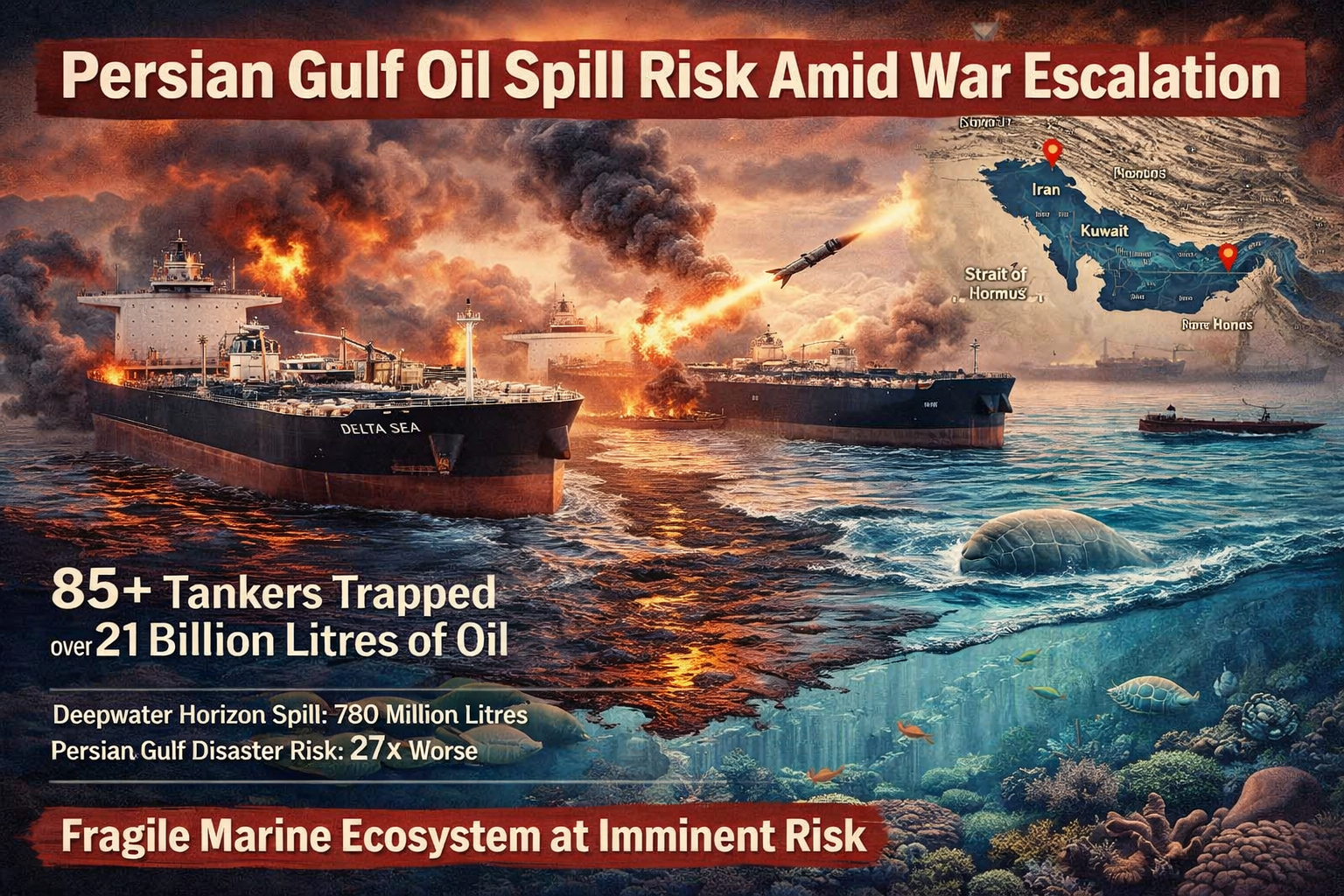
More than 85 large oil tankers are currently trapped in the Persian Gulf. Following attacks launched on Iran by Israel and the United States on February 28, Iran restricted access to the strategically important Hormuz Strait. Ongoing hostilities and disrupted vessel position signals have dramatically increased the risk of oil spills. In total, the tankers currently blocked in the Persian Gulf are carrying, as of March 12, 2026, at least 21 billion litres of oil.
To understand the magnitude of that figure: the Deepwater Horizon disaster, the worst accidental marine oil spill in history, released approximately 780 million litres into the Gulf of Mexico. The tankers now sitting motionless in the Persian Gulf are collectively holding roughly 27 times that volume in a body of water with far less capacity to absorb, dilute, or recover from contamination.
This is not a hypothetical risk. A sea drone strike on the oil tanker Sonangol Namibe, anchored near Mubarak Al Kabeer Port in Kuwait, caused an oil spill that posed an environmental risk. By March 12, the United Kingdom Maritime Trade Operations had received reports of 16 attacks on shipping and four suspicious incidents in the Persian Gulf since the start of hostilities. Every attack on a laden tanker is a potential ecological detonation.
The Persian Gulf Ecosystem: Fragile, Unique, and Already Under Stress
A Marine Environment Science Cannot Afford to Lose
The Persian Gulf is not the barren petrochemical corridor that its reputation might suggest. It is a semi-enclosed sea of roughly 241,000 square kilometres, averaging just 35 metres in depth, connected to the wider Indian Ocean only through the 56-kilometre-wide Strait of Hormuz. Approximately 60 species of reef-building coral have been documented in the Gulf, including the endemic Acropora arabensis, found nowhere else on Earth. The Persian Gulf hosts the world's second-largest dugong population, heat-adapted coral communities, and over 700 fish species.
The Strait of Hormuz and the adjacent waters of the Persian Gulf and the Gulf of Oman are home to sensitive ecosystems such as coral reefs, mangrove forests, and seagrass meadows that provide vital habitats for numerous species. The Strait of Hormuz is the only maritime connection between the Persian Gulf and the Arabian Sea and plays a crucial role in the exchange of water and nutrients as well as serving as a migration route for marine mammals.
Why This Ecosystem Is Especially Vulnerable to Oil Contamination
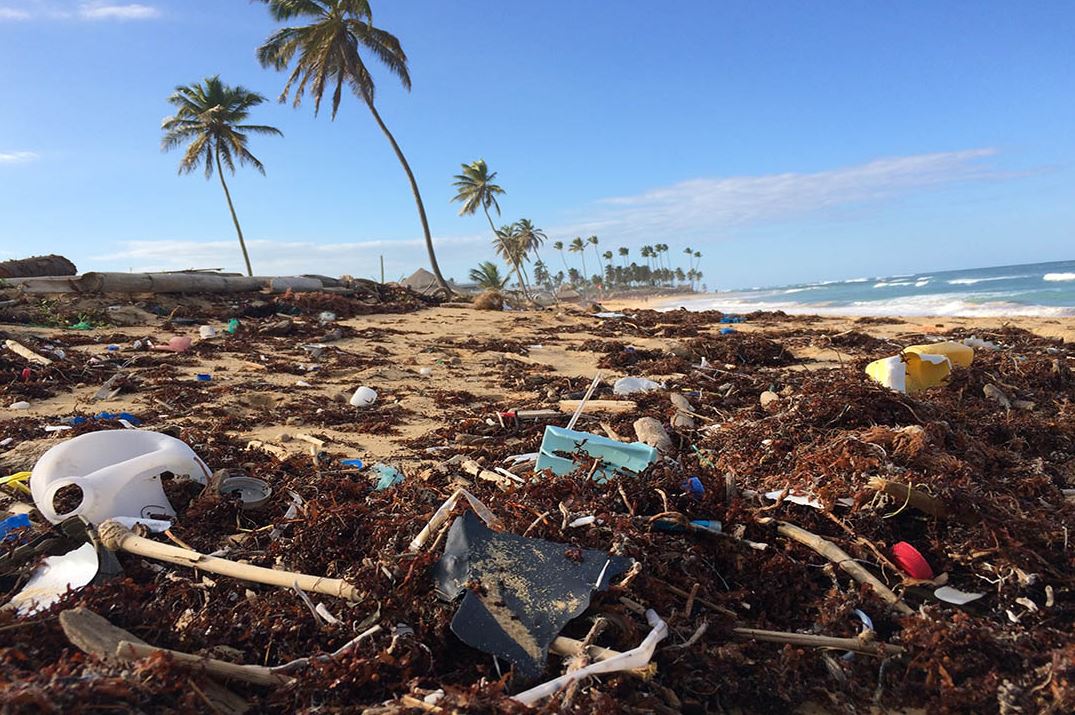
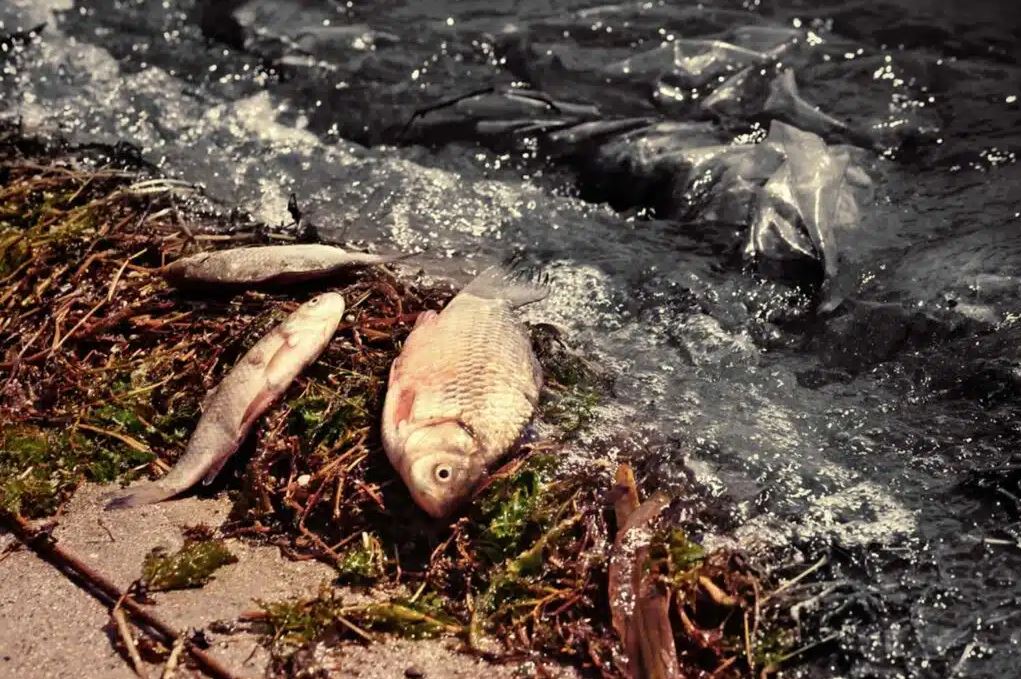
The Persian Gulf is a shallow, semi-enclosed basin with a water turnover time estimated at three to five years. Pollutants that enter the system do not disperse into the open ocean. They circulate, settle, and persist. Oil pollution from various sources can enter the Persian Gulf and threaten the life of this ecosystem and cause the loss of marine life. Since nearly 60 percent of worldwide oil is transferred through the Persian Gulf, oil contamination is inevitable. Oil pollution is unmanaged in the Persian Gulf, and many corals, sponges, and mangrove forests face destruction, with biodiversity set to be considerably reduced.
Sensitive habitats such as coral reefs, seagrass beds, and fish and marine spawning grounds are highly vulnerable to oil pollution, and their destruction could alter the ecological structure of the region for decades.
What a Major Spill Would Actually Do to the Gulf
The Three Scenarios Scientists Fear Most
Environmental risk analysts have identified three distinct pathways through which the current crisis could produce a catastrophic marine oil spill.
The first scenario is the direct targeting of oil tankers. A missile strike, drone attack, or the explosion of a naval mine beneath a tanker's hull could rupture its cargo tanks and cause a major spill at sea. If a large tanker were to sink, millions of barrels of oil could be released into the marine environment. The second scenario is the destruction of oil terminals and coastal pipelines. These facilities, located at various points around the Persian Gulf, could, if damaged, become direct sources of oil leakage into coastal waters. The third scenario is an increase in maritime collisions under wartime conditions. Disruptions in navigation systems, changes in shipping routes, and abnormal congestion in maritime traffic could all increase the likelihood of ship collisions that, in the case of oil tankers, could have far-reaching environmental consequences.
What Greenpeace Simulations Reveal
Greenpeace data experts used software from the Norwegian Meteorological Institute to calculate which regions of the Persian Gulf would be particularly threatened by an oil spill. The simulations assumed a spill of 50,000 tonnes of oil, as in tanker accidents often only part of the cargo enters the water. The locations of the simulated oil spills were based on the current positions of five tankers as well as historical weather and current data. An oil spill could destroy these unique ecosystems and the livelihoods that depend on them for decades.
The simulations make clear that in the Persian Gulf's confined, shallow, and slow-circulation basin, a single major spill would not stay localised. Oil would spread across national boundaries, reaching coral reef systems, seagrass beds, and mangrove coastlines throughout the region within days.
Desalination Plants: The Hidden Human Catastrophe
The environmental threat extends directly to human survival infrastructure. Many of the countries along the Persian Gulf coast depend on desalination plants for their drinking water supply. Large-scale oil pollution could disrupt the operation of these facilities and jeopardise water supply for millions of people, especially in the southern part of the Gulf. Large-scale oil pollution could also paralyse the region's fisheries for a long time and threaten the livelihoods of thousands of people in fishing communities across coastal countries.
The 1991 Gulf War Spill: A Scientific Warning Already Ignored
History's Largest Deliberate Oil Spill and Its Lessons
The Gulf War oil spill was the second largest oil spill in history, resulting from the Persian Gulf War in 1991. The amount of oil spilled was approximately 4,000,000 US barrels. In the months following the spill, most clean-up was targeted at recovering oil, and very little clean-up was done on Saudi Arabia's highly affected beaches. Many studies since 1991 have concluded that the spill is responsible for environmental damage to coastline sediments and marine species and ecosystems.
The recovery data from that disaster is both instructive and sobering. Fifty percent of the salt-marsh and mangrove vegetation was destroyed by the oil. A year after the spill, new mangrove seedlings started to recolonise the oiled sediments. By 1995 most salt-marsh areas showed clear signs of recovery. However, in some isolated pockets of low-energy mudflats there was hardly any indication of improvement.
Some researchers found that marshlands and mud tidal flats continued to contain large quantities of oil over nine years later, and full recovery is likely to take decades. The 1991 spill involved approximately 4 million barrels. The tankers currently stranded in the Persian Gulf are collectively holding the equivalent of more than 130 million barrels. The scale difference is not incremental. It is civilisational.
The Clean-Up Capacity Problem: A Region Unequipped for What Is Coming
The Insurance Market Has Already Signalled the Unthinkable
Global insurers, brokers, and shipping companies are concerned about an environmental catastrophe if an oil tanker sinks in the Persian Gulf. What the region does not have is the kind of sophisticated oil clean-up industry and technology that is readily available in the United States. That expensive pollution risk has not yet been addressed by the global insurance market, which does not have the data to calculate business disruption claims.
Major maritime insurers including Gard, Skuld, and the London P&I Club have formally cancelled war-risk cover for the Persian Gulf and Strait of Hormuz. Iran and proxies are relying on shadowy dark fleets, aging tankers that disable transponders for covert ship-to-ship oil transfers, bypassing sanctions and blockades. This raises oil spill and accident dangers in contested waters.
The dark fleet dimension compounds the ecological risk significantly. Vessels that operate with disabled transponders cannot be monitored, tracked, or assisted in an emergency. A spill from a dark fleet tanker in contested waters could go undetected and uncontained for critical hours.
The Broader Context: Fossil Fuel Dependency as an Environmental Risk Multiplier
Why This Crisis Keeps Happening
The US-Israel attack on Iran and subsequent strikes by Iran on neighbouring Gulf countries has shown once again that our dependence on fossil fuels is a constant threat to peace, security, and prosperity. Greenpeace is calling on all parties to de-escalate tensions and pursue peaceful, diplomatic solutions and on governments everywhere to urgently shift away from fossil fuels towards distributed renewable energy systems where the risks of conflict are reduced rather than amplified.
Flows through the Strait of Hormuz in 2024 and the first quarter of 2025 made up more than one quarter of total global seaborne oil trade and about one fifth of global oil and petroleum product consumption. Around one fifth of global liquefied natural gas trade also transited the Strait of Hormuz in 2024, primarily from Qatar.
The concentration of this volume through a single 56-kilometre-wide chokepoint is not a natural inevitability. It is the structural consequence of decades of fossil fuel infrastructure built without consideration for ecological fragility or geopolitical instability.
What Must Happen Now
The Scientific and Environmental Community's Position
Greenpeace Germany's environmental analysis, produced using satellite imagery and Norwegian Meteorological Institute modelling software, represents the most detailed public simulation of a spill scenario currently available. Their conclusion is unambiguous: this is an ecological ticking time bomb and represents an enormous risk that further increases instability and human suffering in the region.
The Regional Organisation for the Protection of the Marine Environment, the intergovernmental body responsible for environmental protection in the Persian Gulf and Gulf of Oman, currently has no mechanism for conducting emergency clean-up operations in an active war zone. Neither does any other international body. The ecological exposure is total and the response capacity is essentially zero.
Economic impacts, both globally and for the region, will depend on the duration, intensity, and geographic scope of the tensions. Continued monitoring is essential to assess evolving risks and their potential impacts. Many developing countries already face high debt service burdens, limited fiscal space, and constrained access to finance. In this context, rising energy, transport, and food costs could strain public finances and increase pressure on household budgets, potentially heightening economic and social pressures.
What is missing from that analysis, and from almost every official response to this crisis, is any serious reckoning with the ecological dimension. The Persian Gulf's marine ecosystem is not a footnote to the energy disruption story. It is a casualty in the making.