Why Iran targeted the United Arab Emirates on February 28, 2026, but not all the countries affected by Operation True Promise 4 were treated the same; therefore, among those Gulf states affected, the UAE suffered the most and for the longest amount of time. This occurred because of purposeful strategic design related to five overlapping dimensions of geostrategic logic necessary to effectively evaluate this conflict.
The Trigger: What Set Everything in Motion
A look at Iran's reasoning for the strike against the UAE can be gained by examining the ongoing assaults taken by Tehran. On February 28 of 2026 the U.S. and Israel conducted a coordinated attack against all forms of the Iranian regime, targeting key nuclear facilities, military infrastructure, and leadership. The U.S. Government has declared diplomatic relations between themselves and Iran have been exhausted and that a nuclear armed Iran poses an inacceptable threat to U.S. national security interests.
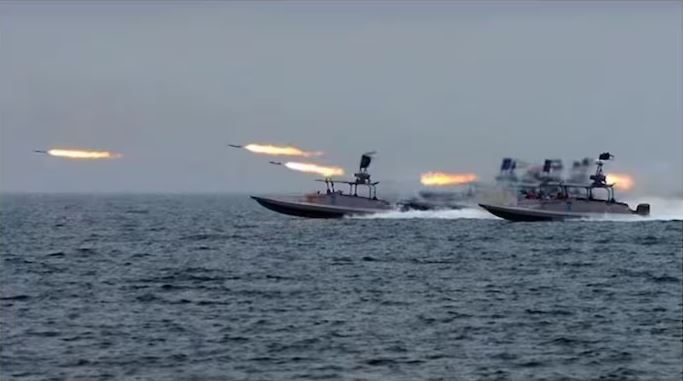
The immediate and catastrophic results in Tehran from the U.S. coordination was the death of the Supreme Leader of Iran, Ayatollah Ali Khamenei, and members of his family; along with many members of senior command of the Iranian Revolutionary Guard Corp (IRGC); and the destruction of a good portion of Iran's military infrastructure. The Islamic Republic had declared the U.S. operation as a brutal air assault and so on the same day that the air assault occurred, the Islamic Republic activated its Operation True Promise 4. True Promise 4 represented a much broader scope of Iranian retaliatory actions than any previous Iranian retaliatory actions and included attacks against both Israel and U.S. bases across three countries simultaneously.
On February 28, 2026 alone, Iran launched an estimated 137 missiles and 209 drones against the UAE. This is a significant number of drone and missile attacks against a single country in one day and begs explanation.
The UAE Hosts America's Most Strategically Valuable Gulf Assets
Iranian Foreign Minister Abbas Araghchi has made it clear that Iran's positions regarding attacks on nations around the Persian Gulf are aimed primarily at the US presence in these countries and not so much at the nations themselves. To add to our knowledge of Iranian motives, the IRGC views any nation that hosts American military bases to be a belligerent—regardless of that nation's own political position.
A case in point is Al Dhafra Air Base in the United Arab Emirates (UAE). Although Al Dhafra is located south of Abu Dhabi, it is the primary staging area for US Air Force operations in the region, conducting reconnaissance missions, as well as projecting military capabilities. In response to the joint US-Israeli airstrikes against Iranian infrastructure, Iran retaliated with missile and drone attacks specifically targeting Al Dhafra, causing direct damage to UAE territory as a consequence of these attacks.
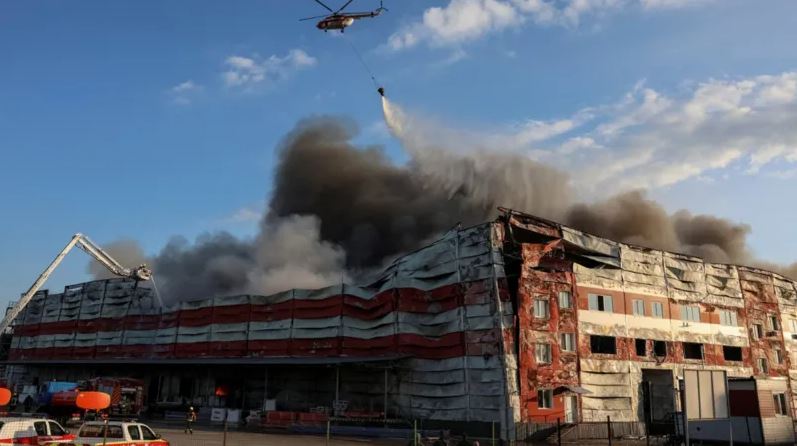
In addition to Al Dhafra, the US Navy regularly uses Jebel Ali Port and its free zone in Dubai—while neither of them are official US naval installations—as the largest port of call in the entire Middle East for US Navy Carrier Strike Groups and vessels. In turn, Iran's attacks quickly expanded to include civilian targets in Dubai and Abu Dhabi where a majority of all hotels, airports, and Jebel Ali Free Zone experienced either direct attacks or collateral damages from intercepted attacks.
The IRGC clearly stated that all of the U.S's assets throughout the area, would be utilized for the operation and that the operation would continue until the defeat of the enemy had occurred. In that operational framework (the operational framework for the IRGC), the concentration of U.S military bases in UAE made it an almost automatic primary Gulf target.
Shattering Dubai's Reputation as a Stable Global Hub
The attack carried out by Iran on civilian targets in Dubai is not just about a military attack; there is another strategic element to this escalation. The economy of Dubai has been developed around 1 major concept: stability. Approximately 75% of all economic activity in the UAE can be classified as non-oil based; all of which rely on Dubai being recognised as the most stable, secure, and open trading environment in the region.
Airports in Dubai ceased all flight operations. Major airline companies including Lufthansa, Qatar Airways, Etihad Airways, Air France, British Airways and Air India cancelled their flights into Dubai. The impact was not confined to only air travel; sea vessels operating in the Gulf received messaging that the Strait of Hormuz was closed; therefore, with no way to reach the Arabian Sea, they could not transport oil from the areas producing the largest amounts in the Gulf to the rest of the world.
Dubai considers itself a safe, secure city; however, it does not have any public bomb shelters. So, last night, many people had to stay overnight in underground parking garages to help protect their nervous children from hearing the bombs falling nearby. The image of families physically protecting themselves from bombs falling on them will cause long-term damage to the image of the UAE's "hub" model of development than physical destruction alone. Tehran appears to understand that challenging Abu Dhabi on the limits of its safety branding is a way for Tehran to economically, psychologically and strategically destroy Abu Dhabi without using military force.
Punishing the Abraham Accords and UAE-Israel Normalization
In September 2020, the UAE and Israel normalized their diplomatic relations through the signing of the Abraham Accords. During the current conflict, Abu Dhabi has attempted to maintain a careful balance of pragmatic neutrality; however, the IRGC of Iran believes that it is legitimate to attack any facility associated with both Israel and the United States. This action destroyed the differences between neutrality by the UAE and complicity with Israel.
The current confrontation has forced the UAE into a position that it has worked hard to avoid. On the one hand, the UAE has maintained its security partnership with the U.S. and has quietly aligned itself with Israel regarding many issues in the region. On the other hand, the UAE has invested heavily in building a more stable relationship with Iran. This includes increased trade between the two countries, re-establishment of diplomatic relations, and working together to prevent any increase in hostility between them. However, beginning with Iran's decision to view all countries that have established diplomatic relations with Israel as non-neutral, the dual position that had served Abu Dhabi well for many years became impossible to maintain. From Tehran's perspective, Abu Dhabi is now part of the same threat as Israel, no matter what any Emirati official says publicly.
Breaking the Unwritten Non-Aggression Understanding
The most significant aspect of Iran's targeting of the UAE from an analytical standpoint will likely be that it represents the deliberate destruction of a long-standing bilateral arrangement. Abu Dhabi and Tehran both had had an informal understanding for many years that was based on their mutual economic interests. Iran had substantial investments in Dubai's real estate and trade industries, and the UAE had taken steps to reduce tensions with Iranian arms and diplomatic back channels. Prior to the attacks, both Saudi Arabia and the UAE had actively encouraged the United States not to take any military action against Iran.
The UAE condemned Iran's missile attacks as a clear violation of both sovereignty and international law. Anwar Gargash, a diplomatic advisor to the UAE president, labelled Iran's behaviour as irrational, and stated that by failing to respond to GCC diplomatic efforts, Iran has completely cut themselves off from their neighbours.
There is no possibility of restoring that bilateral partnership now, since the total number of strikes Iran launched on the UAE in 2026 far surpassed anything that had been seen previously in both the total number and level of precision against both military and civilian targets. Diplomatically, there is no way for these two nations to re-establish their relationship until at least another generation has passed.
A Multi-State Chaos Strategy to Force a Ceasefire
The regional campaign by Iran has a longstanding strategic doctrine that is evident in its behaviour over the past several decades. When there is high-pressure existentially, Iran tries to create the entire neighbourhood into crisis and force regional leaders to advocate to Washington for restraint from Iran's actions.
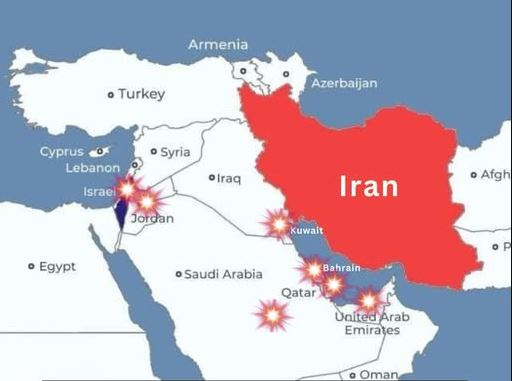
The other countries that Iran targeted were all members of the Gulf Cooperation Council (Bahrain, Jordan, Kuwait, Qatar, Saudi Arabia) and the only Gulf Cooperation Council nation that did not come under fire from Iran was the United Arab Emirates. However, all six of these countries, along with their partners and Arab allies, condemned Iran's actions as blatant violations of each nation's sovereignty and as an unacceptable escalation of regional security and stability issues.
Iran's simultaneous attack against all six Gulf states, rather than focusing solely on Israel and directly owned or leased U.S.-government assets, was a means for Iran to inflict pain on several wealthy Gulf states aligned with the West, and then leverage their significant financial and diplomatic capabilities to induce Washington to seek a cease-fire. The United Arab Emirates, being a globally accessible economy with deep ties to Washington, as well as strong links with most major European and financial centres, provided Iran with perhaps the most significant opportunity to use economic and diplomatic pressure to induce Washington.
The Scale Shift: How 2026 Differs from Every Previous Iranian Campaign
The particulars of this situation are important to understand when analyzing Iran's future behaviour. In response to the assassination of the commander of the IRGC-Quds force by US forces in January 2020, Iran launched some military action against the US and its coalition partners—their first action against US military bases in Iraq since 2011. The US and Israel's retaliations against Iran in June 2025 prompted some retaliation from Iran but to a much lesser extent than previous instances. After the attacks against Israel in June 2025, Iran would conduct a limited response to the US strikes but only against the US military base in Qatar. The attack consisted of 14 missiles and advance warning was provided to Qatari officials prior to the strike.
In 2026, however, this behaviour changed dramatically. Iran executed a coordinated missile barrage against five US military installations throughout the region on February 28, as well as targeting airports, seaports, residential buildings and major commercial areas throughout the region at the same time as the attacks on US installations. The second of these attacks occurred on March 1, 2026 and once again proved to be successful. This time, though, Iran launched dozens of missiles and hundreds of drones against the United Arab Emirates. One Iranian drone struck Zayed International Airport in Abu Dhabi, killing one individual and wounding seven others.
In total, during this timeframe, Iran launched 165 ballistic missiles at the UAE. Of those 165 ballistic missiles, 152 were intercepted by UAE air defense systems and 13 landed in the Arabian Sea. Iran also launched 541 drones at the UAE, of which 506 were intercepted by UAE air defense systems, thereby permitting 35 drones to penetrate UAE air space. The fatalities that resulted from these attacks were sustained by individuals from Pakistan, Nepal and Bangladesh who were killed as a consequence of Iranian drones penetrating the airspace of the United Arab Emirates.
Shifting from an initial warning barrage of 14 missiles (in 2025), the regime instead chooses to engage in a sustained unheralded multi-day campaign of hundreds of missiles and drones across multiple (six) countries by 2026 is not only a significant qualitative increase but represents a dramatic change in Iran's strategic posture (i.e., a regime that regards itself as having little or no hope of self-preservation will not be measuring its capability).
What This Means Going Forward
Given present conditions, it’s unlikely that the UAE will resume normal relations with Iran in the near future. A consensus has developed among Arab Gulf leadership that the two biggest threats today are the expansionist nature of some regional players and the possible destabilization of Iran. The UAE's ability to continue using its established policy of hedging between Washington and Tehran is no longer possible because of actions taken by Iran. As a result, the UAE will focus on increasing its native military capabilities, strengthening its operational partnership with its western defence partners, and re-evaluating its regional posture in ways that will create ripple effects throughout Gulf security for years. It has ended the gentlemen's agreement; what's next?