What the Deal Covers
China has agreed to buy $17 billion per year of American farm goods through 2028, buying at an annualized rate of $17 billion per year for 2026 and at that level for 2027 and 2028, as announced by the White House following President Donald Trump's high-stakes summit in Beijing.
US Trade Representative Jamieson Greer confirmed that the purchase commitments are for "aggregate" agricultural products, meaning the figure could include additional soybean buys but also other commodities such as beef, grains, and dairy products.
Products covered under the agreement:
- Soybeans, corn, sorghum, and cotton.
- Beef, pork, poultry, and dairy products.
- Animal feed and timber.
- China also restored market access for US beef by renewing the expired listings of more than 400 beef facilities, and will resume imports of poultry from US states certified free of bird flu by the USDA.
As the cornerstone of the agreement, President Trump and President Xi chartered two new institutions to manage the bilateral economic relationship: the US-China Board of Trade and the US-China Board of Investment.
The Beijing Summit and Its Context
Both countries are looking to stabilize their economic relationship after last year's trade war, which briefly saw the two countries impose tariffs of over 100%.
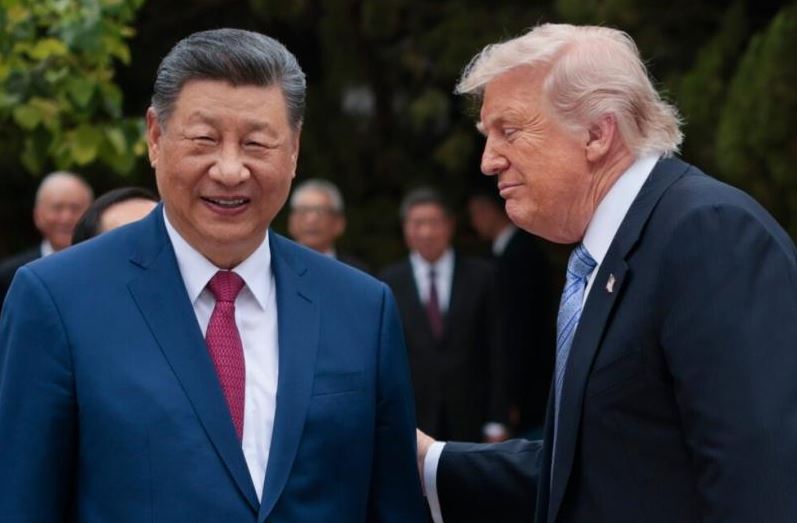
Trump's May 14 to 15, 2026, visit to Beijing represented a step toward greater stability and predictability in what analysts consider the world's most consequential bilateral relationship. China signaled its willingness to match US de-escalation on tariffs while also standing firm on issues including sanctions, technology controls, and critical minerals.
Xi called their meetings "historic" and a "landmark" and said the two sides "reached important common understandings on maintaining stable economic and trade ties, expanding practical cooperation in various fields, and properly addressing each other's concerns." Trump announced in Beijing that Xi will make a reciprocal visit to the US on September 24.
Key structural outcomes from the summit:
- The Board of Trade is a managed trade mechanism that could allow for tariffs to be reduced on some $30 billion in non-sensitive goods.
- The Board of Investment creates a formal forum for discussing investment-related issues between the two governments.
- The White House also cited China's agreement to an "initial purchase" of 200 Boeing aircraft.
- China indicated reducing tariffs would be part of the plans, but the US did not mention duties in its official readout.
How This Deal Compares to the Phase One Agreement
The $17 billion figure carries weight, but context matters for anyone tracking US-China agricultural trade over the past decade.
The Phase One trade deal, signed in January 2020, set targets closer to $30 billion in annual agricultural purchases. China was supposed to buy roughly $30 billion annually in US agricultural products but consistently fell short of the agreed benchmarks. Part of the gap was structural, as COVID-19 disrupted global supply chains starting in early 2020, right when the deal was supposed to kick in.
China also accelerated efforts to diversify its agricultural supply chains, turning to Brazil, Argentina, and other producers for soybeans and other commodities where US dominance had once seemed unshakeable. US farmers received billions in government subsidies to offset the damage from tariffs and unmet purchase commitments.
US agricultural exports to China in 2024 were valued at $24 billion, including $12 billion in soybeans, $1.4 billion in cotton, and $1.2 billion in sorghum, according to USDA data. Overall shipments to China fell to $8.3 billion in 2025 after the trade dispute escalated.
"Historically speaking, a $17 billion non-soybean ag commitment from China would move the US back at or near post-Phase One trade values," said No Bull Ag analyst Susan Stroud.
What Analysts Are Watching
To meet the $17 billion target, Beijing would have to sharply increase purchases of wheat, feed grains, meat, and non-food agricultural goods such as cotton and timber. Higher purchases of US farm goods are likely to come at the expense of exports from rival suppliers such as Brazil, Australia, and Canada.
Analysts at Brookings noted the readouts were thin on concrete commitments, and that the only real agreement visible on both sides was that the two sides will continue to talk about trade and investment issues, with little in the way of concrete timelines or an action plan.
Beijing's readout did not directly confirm the specific $17 billion agricultural commitment, saying instead that both sides would "promote expanded two-way trade" in agricultural goods.