What Happened at the Trump-Xi Beijing Summit
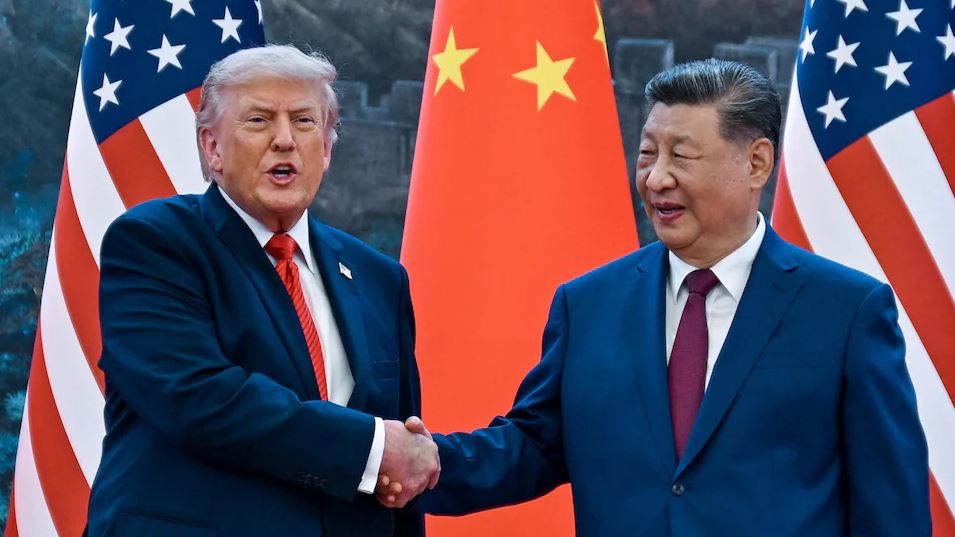
President Donald Trump arrived in Beijing for a high-stakes summit with Chinese President Xi Jinping, with both Washington and Beijing attempting to stabilize one of the world's most consequential rivalries without yielding on deeper strategic disputes.
The closed-door session lasted roughly two hours and fifteen minutes, after which the White House characterized the meeting as "good." That diplomatic understatement, however, conceals the structural gravity of what unfolded inside the Great Hall of the People.
Trump's two-day visit marks his first trip to China since 2017, arriving amid mounting tensions over trade, artificial intelligence, Taiwan, and the fallout from the ongoing war with Iran.
Key outcomes from Day One include:
- Both sides agreed that the Strait of Hormuz must remain open and free of obstruction
- Xi expressed interest in purchasing more U.S. oil to reduce Chinese dependence on Gulf shipping routes
- The two presidents discussed increasing Chinese purchases of U.S. agricultural products
- Trump invited Xi and his wife for a reciprocal visit to the White House on September 24
Why Taiwan Dominated the Strategic Agenda
Xi stressed to Trump that the Taiwan question is "the most important issue in China-U.S. relations," reiterating Beijing's position that Taiwan independence and peace in the Taiwan Strait are irreconcilable.
This language was deliberate and calibrated. Xi did not raise Taiwan as a peripheral concern. He placed it at the absolute center of the bilateral framework, signaling that no trade agreement, no rare earth deal, and no diplomatic warmth can substitute for U.S. movement on this core sovereignty claim.
A readout from China's foreign ministry spokesperson stated that if the Taiwan issue is handled properly, the bilateral relationship can maintain overall stability, but "otherwise, the two countries will have clashes and even conflicts, putting the entire relationship in great jeopardy."
What makes this warning analytically significant:
- U.S. focus on the Iran conflict may have drawn strategic attention away from the Pacific, potentially creating vulnerabilities for Taiwan that Beijing may seek to exploit
- U.S. lawmakers had raised concerns that Trump could make concessions to Xi on Taiwan, a self-ruling democracy that Beijing has vowed to control by force if necessary
- Taiwan's government responded directly, with a cabinet spokesperson stating that "China's military threat is the sole source of insecurity in the Taiwan Strait and the broader Indo-Pacific region"
After the summit, Secretary of State Marco Rubio sought to minimize the Taiwan dimension of the talks, saying U.S. arms sales to Taiwan "did not feature prominently" in the discussions and insisting that longstanding U.S. policy remained unchanged.
How Both Powers Are Playing a Longer Game
The summit's choreography tells its own story. Trump and Xi's meeting at the Great Hall of the People was followed by a visit to Beijing's Temple of Heaven, a site once frequented by Chinese emperors. The symbolism was unmistakable: China framing this as a meeting of equals on its own historical terms.
While the White House framed the summit as an opportunity for new economic agreements and "rebalancing" the U.S.-China relationship, analysts noted that Beijing's priorities are far broader and more long-term. "Trump arrives seeking headline deals and visible momentum ahead of the midterms," wrote Zongyuan Zoe Liu, senior fellow for China studies at the Council on Foreign Relations. "Xi is playing a longer game, focused on strategic patience rather than substantive compromise."
The asymmetry of readouts from both sides reinforces this gap. There was no mention of Taiwan in the American readout, which focused heavily on the Iran war and economic cooperation, while Beijing's readout led with Taiwan as the defining issue of the entire bilateral relationship.
Despite the tensions surrounding Taiwan, the public tone of the summit remained cordial, with both leaders emphasizing cooperation and economic opportunity. Trump called Xi a friend and a "great leader." Xi said the two countries "should be partners, not rivals." These are diplomatic performances. The structural competition between Washington and Beijing has not been resolved by two days of state banquets and tea meetings.