Four astronauts returned safely to Earth on April 10, 2026, after traveling 252,756 miles from home, shattering a record that stood for more than half a century. The Artemis II mission has rewritten the boundaries of human exploration, sending Reid Wiseman, Victor Glover, Christina Koch, and Jeremy Hansen farther into the cosmos than any person before them.
Breaking Apollo 13's 56-Year Distance Record
On April 6, 2026, at 12:56 p.m. CDT, the Artemis II crew surpassed the previous distance record set by Apollo 13 in 1970, when that mission's crew reached 248,655 miles from Earth during their harrowing journey. The new benchmark represents more than just numbers on a chart. It symbolizes humanity's renewed commitment to deep space exploration after decades of operating exclusively in low Earth orbit.
The moment carried profound emotional weight. Before breaking the record, the crew received a prerecorded message from the late astronaut Jim Lovell, Apollo 13's commander, welcoming them to his "old neighborhood" and encouraging them to enjoy the view. Lovell's message, delivered shortly before his death in August 2025, served as a symbolic passing of the torch between generations of lunar explorers.
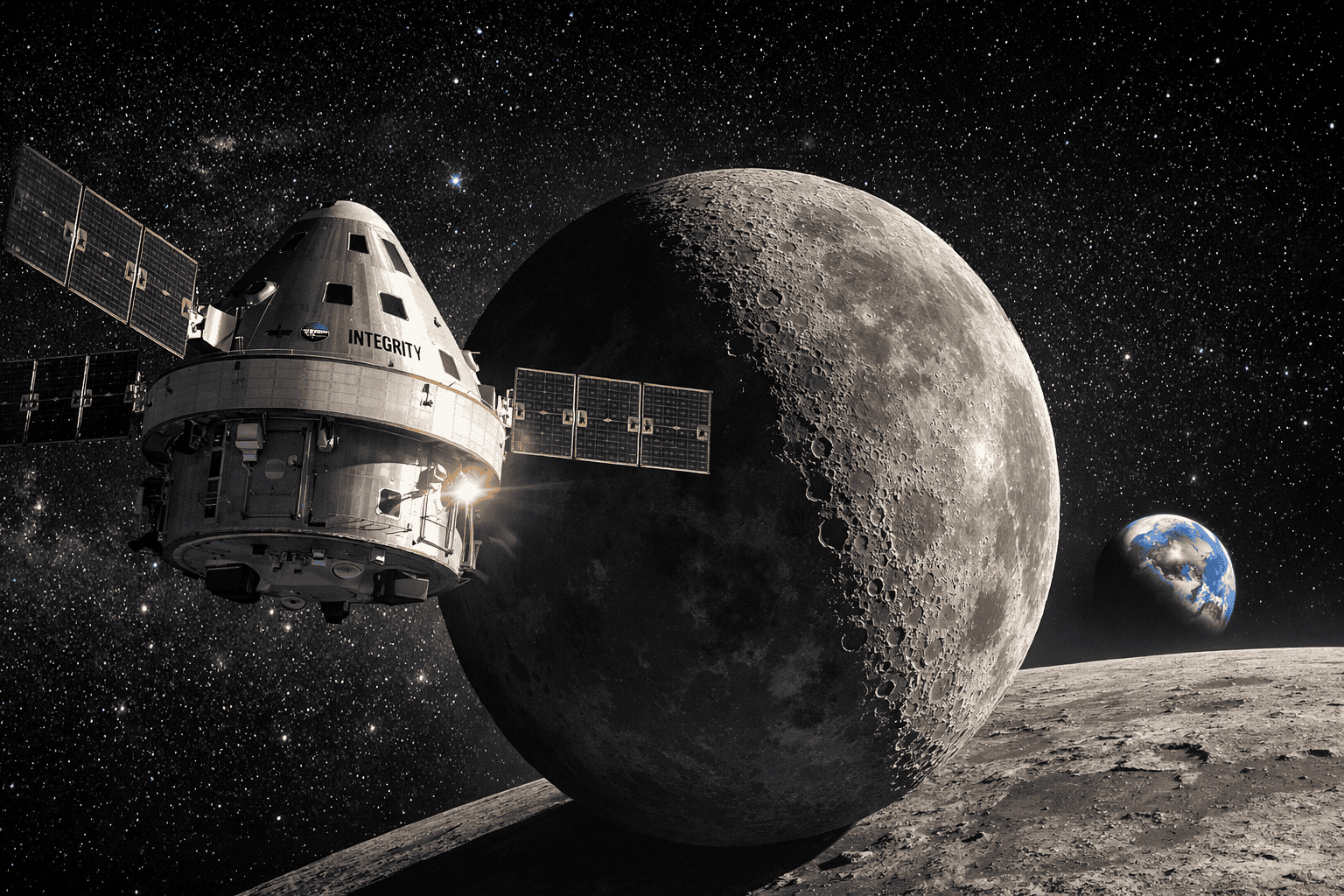
Speaking from the Orion spacecraft named Integrity, Canadian astronaut Jeremy Hansen acknowledged their predecessors, stating they would continue their journey even farther before Earth's gravity pulled them back, while challenging future generations to ensure this record would not stand long.
The Historic 10-Day Lunar Flyby Mission
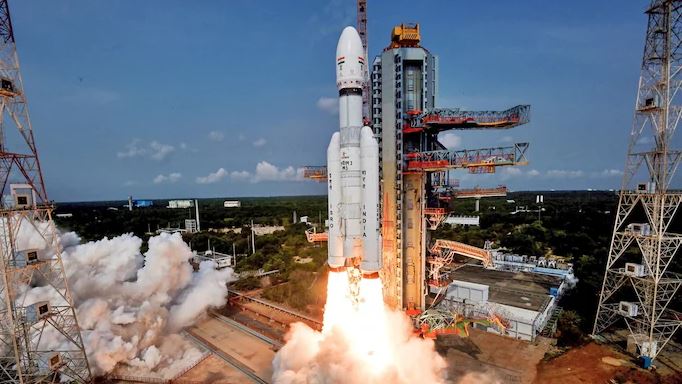
NASA's Orion spacecraft launched successfully on April 1, 2026, aboard the Space Launch System rocket from Kennedy Space Center in Florida. The mission followed a free-return trajectory around the Moon, similar to the path flown by Apollo 13, designed to bring the crew home safely even if propulsion systems failed.
The crew splashed down at 5:07 p.m. PDT on April 10 off the coast of San Diego, completing a nearly 10-day journey that covered 694,481 total miles. During their lunar approach, the spacecraft passed within 4,070 miles of the lunar surface, providing unprecedented opportunities for scientific observation and photography.
The flyby produced some of the mission's most dramatic imagery. Crewmembers witnessed "Earthset" as Earth slipped behind the Moon, followed by "Earthrise" as our planet reappeared over the lunar horizon, echoing the famous Earthrise photograph captured by Apollo 8 in 1968.
Testing Critical Systems for Future Moon Missions
Artemis II was not simply about distance. The crew conducted a full in-flight evaluation of Orion, testing life support systems, manual spacecraft controls, and critical systems to confirm the capsule can sustain humans in deep space. These validations are essential for upcoming missions that will land astronauts on the lunar surface.
Astronauts performed manual spacecraft operations, evaluated navigation and propulsion systems, conducted proximity operations activities, and participated in science activities including lunar surface observations and human health studies. Every test generated valuable data that engineers will use to refine operations for Artemis III and subsequent missions.
The mission included the ARCHeR payload, with crew members wearing movement and sleep monitors to study real-time health and behavioral information. Scientists collected saliva samples to analyze immune system responses to radiation, isolation, and deep space conditions, building knowledge crucial for future Mars expeditions.
A Milestone for Diversity and Inclusion
The Artemis II crew represents a watershed moment for representation in space exploration. Victor Glover became the first person of color, Christina Koch the first woman, and Jeremy Hansen the first non-U.S. citizen to travel beyond low Earth orbit and around the Moon. Commander Reid Wiseman also holds the distinction of being the oldest person to complete such a journey.
Dr. Lori Glaze, acting associate administrator at NASA, emphasized that the crew's dedication extends beyond breaking records to fueling hope for a bold future, including establishing a permanent lunar base and eventually reaching Mars.
The mission generated widespread global attention, giving rise to the term "Moon joy" as people around the world celebrated this inclusive achievement in human spaceflight.
International Collaboration in Deep Space
The mission showcased extensive international partnerships fundamental to the Artemis program. Four CubeSat payloads from Artemis Accords signatory nations flew aboard the mission, including Germany's TACHELES, Argentina's ATENEA, South Korea's K-RadCube, and Saudi Arabia's SHAMS satellite. These payloads studied radiation effects, electrical components for lunar vehicles, and space weather conditions.
The crew conducted a 15-minute audio call with astronauts aboard the International Space Station, noting they collectively represented the humans furthest ever from one another, underscoring the expanding human presence across the solar system.
The Farthest From Humanity Record
While the crew set the record for distance from Earth, they achieved another remarkable milestone that went largely unnoticed. Physicist Jonathan McDowell calculated that the crew's "farthest from humanity" moment actually occurred about 40 minutes before reaching maximum distance from Earth, because astronauts aboard the International Space Station and China's Tiangong space station were not on the planet's surface.
At the critical moment, China's Tiangong station was 419,643 kilometers from Integrity, while the ISS was 419,581 kilometers away. This calculation highlights how humanity's presence in space has expanded since the Apollo era.
Clearing the Path to Lunar Surface Operations
NASA Administrator Jared Isaacman praised the crew for demonstrating extraordinary skill, courage, and dedication while pushing Orion, the Space Launch System, and human exploration farther than ever before. As the first astronauts to fly this rocket and spacecraft combination, the crew accepted significant risk to gain knowledge essential for future missions.
Isaacman described Artemis II as just the "opening act" for America's return to the Moon, initiating a lunar relay race that will lead NASA and international partners to establish a Moon base and eventually reach Mars.
The mission encountered minor challenges that provided valuable learning opportunities. A small helium leak in the European Service Module was detected, and while it did not affect mission safety, engineers gathered data to better characterize system behavior in flight. Such real-world testing is impossible to replicate on Earth.
Understanding the Distance Versus Mileage Distinction
An interesting technical nuance emerged in discussions about the mission's records. While Artemis II set the record for maximum distance from Earth at 252,760 miles, Apollo 17 still holds the record for total mission miles traveled at 1,484,933.8 miles, due to its 12-day duration and 75 hours spent on the lunar surface.
This distinction matters because Artemis II went farther outward than any earlier crewed mission but completed a flyby rather than entering lunar orbit or landing. Both metrics measure different aspects of space exploration, with distance measuring how far humans traveled from Earth, while total mileage reflects mission complexity and duration.
What's Next for the Artemis Program
With Artemis II complete, focus now turns toward assembling Artemis III and preparing to return to the lunar surface, build a permanent base, and maintain a continuous human presence on the Moon. The successful completion of this test flight validates NASA's architecture for sustainable lunar exploration.
The approximately 10-day mission validated spacecraft systems, procedures, and performance in deep space environments, providing confidence that future crews can safely operate in the challenging conditions beyond Earth's protective magnetosphere.
The Moon base envisioned by NASA will serve as a proving ground for technologies and operational concepts needed for even more ambitious missions. Every lesson learned from Artemis II brings humanity closer to becoming a truly spacefaring civilization, with permanent outposts beyond Earth.