What Is the 131st Constitutional Amendment and Why Does It Matter?
Three Bills were introduced in the Lok Sabha on April 16, 2026: the Constitution (131st Amendment) Bill, 2026, the Union Territories Laws (Amendment) Bill, 2026, and the Delimitation Bill, 2026. Together, these Bills seek to increase the size of the Lok Sabha, enable delimitation based on the 2011 census, and operationalize the long-pending 33% reservation for women legislators.
On paper, the legislation appears progressive. In practice, it has triggered the most intense federal confrontation India has witnessed in decades, with Southern chief ministers issuing warnings that echo the language of the separatist agitations of the 1950s and 60s. The question is not whether the amendment is constitutional. The question is whether it is fair.
Who Is Opposing the Bill and Why?
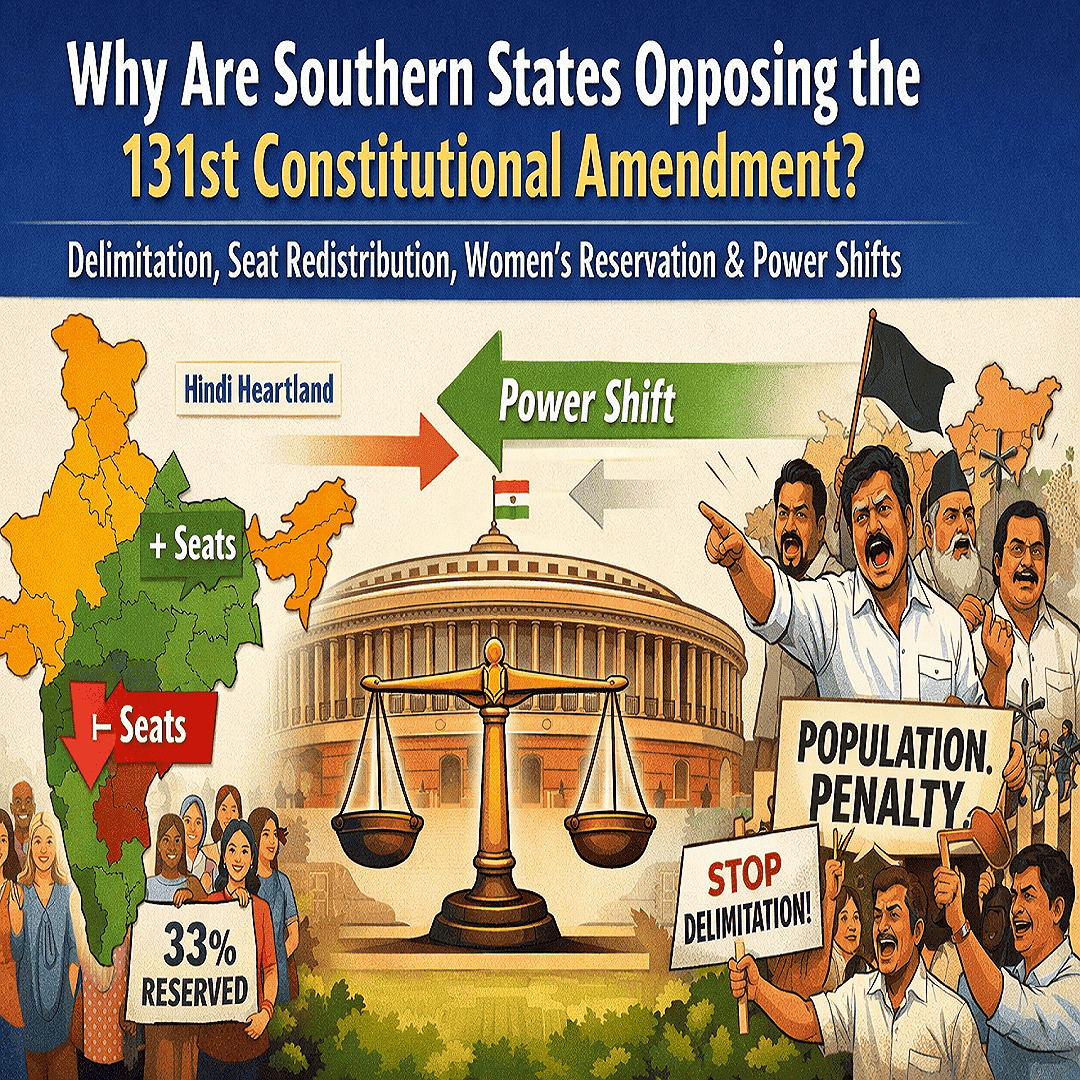
Southern states, all governed by Opposition parties, have strongly opposed the delimitation exercise, arguing that it would disproportionately benefit the Hindi heartland, a BJP stronghold. Chief Ministers MK Stalin of Tamil Nadu, Pinarayi Vijayan of Kerala, Revanth Reddy of Telangana, and Siddaramaiah of Karnataka have all publicly criticized the process, claiming it disadvantages states that successfully implemented population control measures.
This is not a routine parliamentary disagreement. Tamil Nadu CM Stalin called for black flags to be hoisted across his state, framing the bill as a deliberate attempt to reduce the South to "second-class citizens" in the Indian democratic order. Senior Congress leader P. Chidambaram described the combined legislative package as "a mischievous, diabolical move to radically alter the federal balance."
The opposition is bipartisan, ideologically coherent, and geographically unified in a way rarely seen in Indian politics
What Does the Amendment Actually Do to Southern Representation?
This is where the numbers tell the real story.
Under a 543-seat Lok Sabha baseline, Tamil Nadu's seats would fall from 39 to 32, and Kerala from 20 to 15. Meanwhile, Uttar Pradesh would rise from 80 to 89, Bihar from 40 to 46, and Rajasthan from 25 to 30.
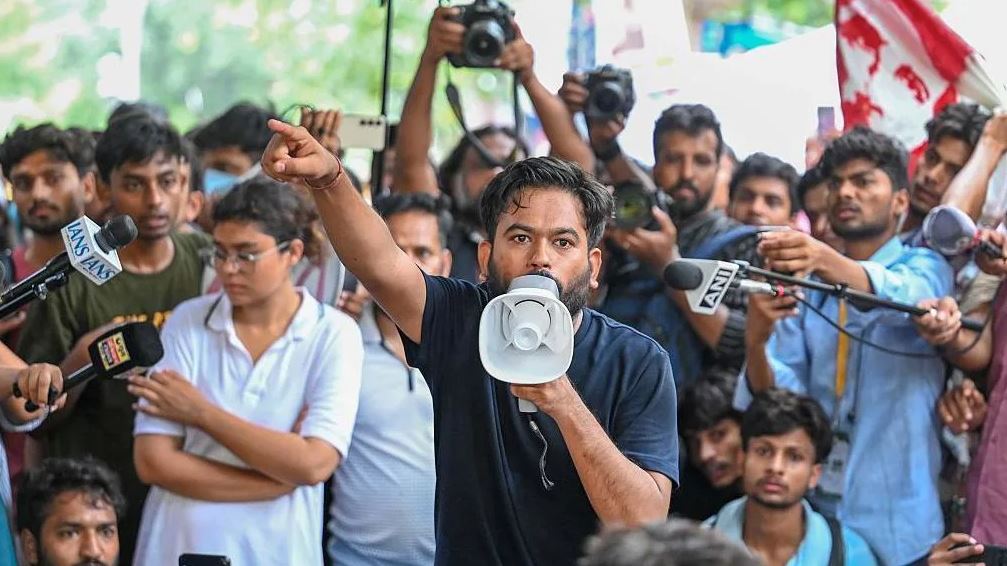
The relative seat share disadvantage persists even when the total Lok Sabha size is increased to 850 seats. Political analyst Yogendra Yadav argued that the Constitution (131st Amendment) Bill is "worse than what everyone feared," warning that the proposed changes open the door for complete reallocation of seats and gerrymandering.
Former Finance Minister Chidambaram made the arithmetic plain: when Lok Sabha strength increases by 50% from 543 to 815, Tamil Nadu's seats may seemingly rise from 39 to 58, but after delimitation, the actual number would reduce to 46, while Uttar Pradesh's count would climb far higher.
Why Do Southern States Feel Penalized for Good Governance?
The deepest grievance is philosophical, not merely mathematical.
States like Kerala and Tamil Nadu were among the first to successfully implement national population control programs. The South's opposition is therefore a protest against being "penalized" for following the Union government's own health directives.
The 1971 census was deliberately chosen as the base for seat allocation and frozen there precisely to protect states that controlled their demographics. That constitutional guarantee, in place for over five decades, is now being dismantled. The Bills remove the existing provision that tied delimitation to the 1971 census and allow the next delimitation to be based on the 2011 census instead, reverting to the principle that each state's seats must be in strict proportion to its population.
What this means in plain terms: a state that educated its women, invested in family planning, and reduced fertility rates is rewarded with fewer parliamentary seats, while states that did none of those things gain representation. It is this logic that has made the phrase "population penalty" the most potent political slogan in Southern India in 2026.
How Is the Women's Reservation Argument Being Used?
The 131st Constitutional Amendment links the 33% women's reservation quota to the completion of delimitation. Southern leaders believe women's empowerment is being used as a "Trojan Horse" to pass a broader political redesign.
Congress MP Hibi Eden alleged that the hidden agenda is to bypass the Women's Reservation Bill and force the delimitation process, calling it "totally unacceptable" and stating that the process penalizes those states that took a firm stand on population control, healthcare, and education after 1976.
Congress MP KC Venugopal urged the government to withdraw the 131st Amendment Bill entirely and implement the Nari Shakti Vandan Adhiniyam with the existing 543 Lok Sabha seats, making clear that the Opposition is willing to support women's reservation but not the delimitation framework tied to it.
The government's counter-argument, presented by BJP MP Tejasvi Surya, is that without this framework, Tamil Nadu would lose eight seats, while under the proposal it gains 20, and Kerala avoids losing a third of its representation while gaining ten seats. Critics, however, point out that relative share within an expanded Parliament is what determines political power, not raw seat numbers.
What Alternative Have Southern Leaders Proposed?
Telangana CM Revanth Reddy has proposed a "50-50 Formula" under which 50% of seat allocation would be based on population and the other 50% would reflect economic contribution and governance performance, arguing that population cannot be the sole basis for democratic representation.
The formula has been criticized as potentially unconstitutional because it does not satisfy the "One Person One Vote One Value" ideal embedded in the Constitution. Under the 50% formula, each of Kerala's MPs would serve approximately 11 lakh people, while each UP MP would serve nearly 17 lakh, creating a six-lakh disparity in the democratic value of an individual vote.
The legal debate has not dampened the political momentum behind regional resistance. If anything, it has sharpened the South's demand for a fundamentally different framework.
What Are the Broader Federal Implications?
The 131st Constitutional Amendment also increases the maximum Lok Sabha strength from 550 to 850, which changes the ratio of seats between Lok Sabha and Rajya Sabha from 2.2:1 to 3.3:1. This would reduce the relative share of Rajya Sabha members in the elections of the President and Vice-President, and strengthen Lok Sabha's powers in joint sittings. Even if the Opposition holds a two-thirds majority in Rajya Sabha, the government could override it with 56% of Lok Sabha seats.
This is the structural dimension that political observers consider even more consequential than the seat arithmetic. A Parliament permanently tilted toward high-population Northern states would alter the balance of power in ways that no future government could easily reverse.