Understanding the Scale of Economic Disruption
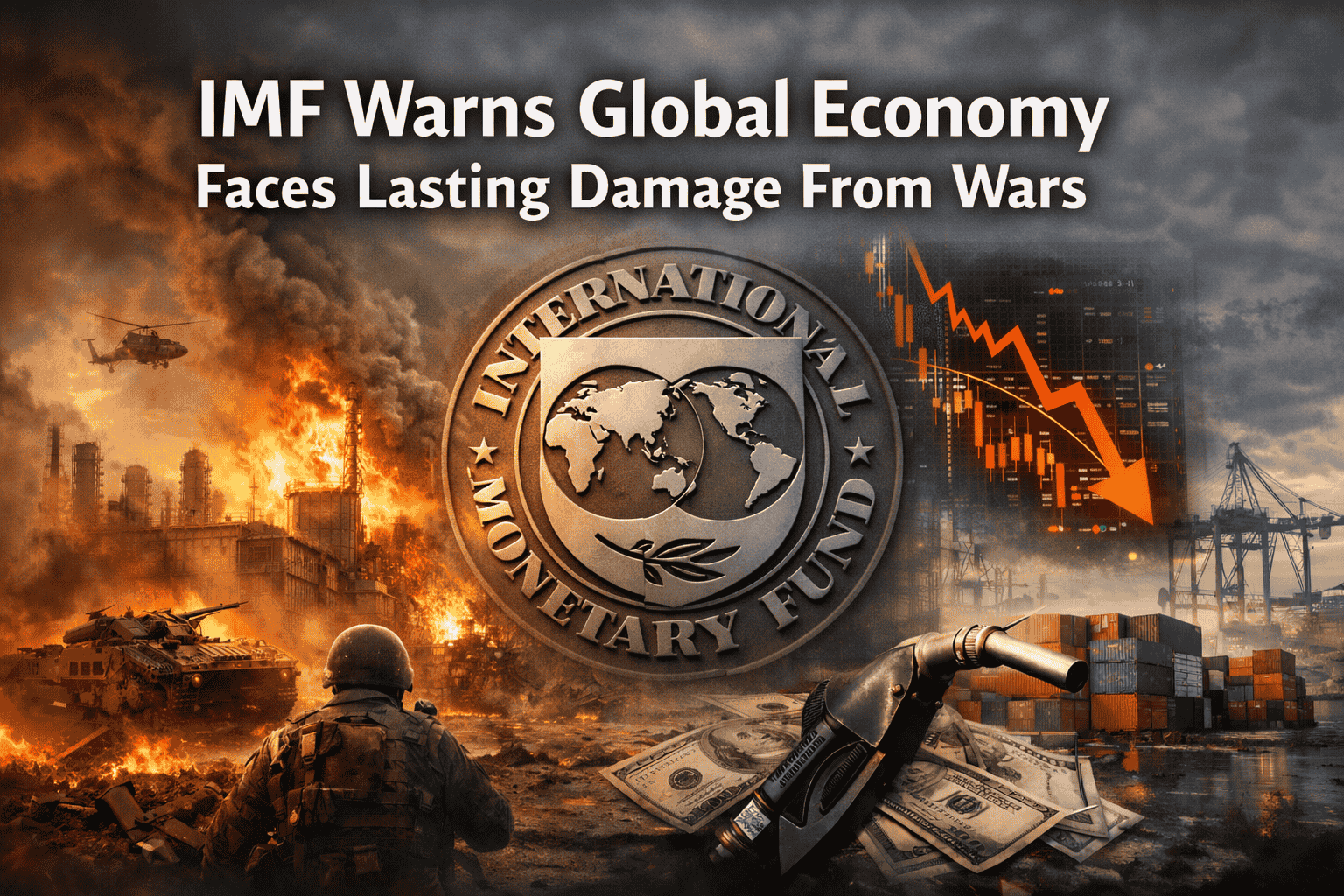
The current geopolitical landscape represents more than a temporary setback to global commerce. Armed conflicts generate profound macroeconomic consequences that exceed those from financial crises or severe natural disasters, creating large and persistent output losses in economies where fighting occurs. This represents a fundamental challenge to economic stability that policymakers cannot simply manage through conventional monetary or fiscal interventions.
IMF Managing Director Kristalina Georgieva emphasized that growth will be slower even if newly established peace agreements prove durable, underscoring how conflict embeds structural damage that persists long after hostilities cease. The economic scarring manifests through destroyed infrastructure, disrupted supply chains, displaced populations, and shattered investor confidence that takes years to rebuild.
How Conflicts Translate Into Economic Harm
The transmission mechanisms through which warfare affects global commerce operate on multiple levels simultaneously. Energy serves as the main transmission channel, with the de facto closure of the Strait of Hormuz and damage to regional infrastructure creating unprecedented supply disruptions. This bottleneck affects not just crude oil prices but cascades through related industries including natural gas transportation, helium supplies, and critically, fertilizer distribution.
Approximately one-third of global fertilizer shipments pass through the Strait of Hormuz, and their disruption comes precisely as planting season begins in the Northern Hemisphere, threatening yields and harvests throughout the year. This timing amplifies the economic damage beyond energy markets into food security, creating compounding pressures on vulnerable populations.
The asymmetric nature of this shock means economic pain distributes unevenly across nations. Energy importers face more exposure than exporters, poorer countries suffer more than richer ones, and those with meager buffers struggle more than those with ample reserves. This inequality in impact creates divergent recovery paths that further fragment the global economy.
Defense Spending Compounds Fiscal Pressures
Simultaneously, rising geopolitical tensions have triggered a historic increase in military expenditures worldwide. Global military expenditure reached approximately 2.63 trillion dollars in 2025, representing a 2.5 percent increase over the previous year, continuing an upward trajectory that shows no signs of reversal.
Analysis of defense spending booms reveals they typically last nearly three years and increase defense outlays by 2.7 percentage points of gross domestic product, with roughly two-thirds financed through deficit spending. This pattern creates medium-term fiscal vulnerabilities precisely when governments need maximum flexibility to respond to other economic shocks.
The macroeconomic consequences of defense buildups extend beyond simple budget allocation. While military spending can boost economic activity short-term through demand stimulation, particularly in defense-related sectors, it also generates inflationary pressures and crowds out investment in critical areas such as education, healthcare, and infrastructure development that drive long-term productivity growth.
For developing economies, this trade-off proves especially painful. Limited fiscal space forces governments into impossible choices between security imperatives and social spending that addresses poverty, inequality, and human capital formation. These decisions carry generational consequences that compound existing developmental challenges.
Regional Vulnerability Patterns
Sub-Saharan Africa and small island countries face particular vulnerability to energy shocks, reflecting structural economic characteristics that amplify external pressures. In low-income countries where food accounts for approximately 36 percent of consumption compared with 20 percent in emerging markets and 9 percent in advanced economies, people bear disproportionate burdens when prices rise.
In conflict-affected countries, output typically contracts by approximately 3 percent at the onset of war and continues declining for years, resulting in cumulative losses of roughly 7 percent within five years. These figures represent lost opportunity that translates into foregone development, reduced living standards, and diminished prospects for poverty reduction.
Fiscal pressures intensify significantly during conflict as government budgets deteriorate with spending shifting toward defense while output and tax collection collapse, forcing deficits to worsen by around 2.6 percent of GDP while public debt rises by as much as 7 percentage points within just three years. This fiscal deterioration occurs precisely when governments need resources most to support affected populations and maintain basic services.
Recovery Challenges and Long-Term Scars
Even when conflicts end, economic recovery proves frustratingly slow and incomplete. Output rises gradually after conflict termination, reaching approximately 3.9 percent five years later, with only about half of the observed output loss recovered five years after conflict onset. This modest rebound reflects fundamental constraints on post-conflict economies.
Economic recoveries remain slow and uneven, depending critically on sustained peace, with recoveries led primarily by labor while capital and productivity stay subdued. The absence of productivity gains means recovered output relies on working longer and harder rather than working smarter through technological advancement and capital deepening.
Investment remains depressed even after fighting stops because economic uncertainty despite peace continues to suppress expected returns. Businesses hesitate to commit capital when political stability remains fragile and institutional quality has deteriorated during wartime. This investment drought perpetuates the productivity stagnation that keeps economies operating below their potential.
Current Conflict Impact Assessment
The Middle East war specifically has generated cascading effects throughout the global economic system. The conflict reduced global oil supply by 13 percent, triggering chain reactions across related supply chains including oil and natural gas transportation, helium, and fertilizers. This magnitude of disruption creates adjustment challenges that ripple through every sector dependent on energy inputs or petrochemical feedstocks.
Qatar specifically faces a three-to-five-year timeline to restore approximately 17 percent of its natural gas production capacity due to war-related destruction, illustrating how infrastructure damage creates persistent supply constraints that cannot be quickly remedied regardless of price signals or political will.
The economic damage from disrupted infrastructure, fractured supply chains, and weakened confidence has already become embedded in the outlook, meaning reversal requires sustained effort over extended periods rather than quick policy fixes. Market participants have absorbed these realities into their expectations, affecting investment decisions and risk assessments worldwide.
Policy Implications and Response Options
Governments possess only limited ability to support their economies through spending increases and tax cuts because their debts are already elevated, constraining the fiscal response capacity available during previous crises. This reduced policy space forces countries to prioritize interventions carefully and accept that stimulus cannot fully offset the economic headwinds from conflict.
Central banks face equally difficult trade-offs. While long-term inflation expectations remain anchored currently, vigilance is required to prevent a more persistent inflation cycle from taking hold. The risk involves supply shocks feeding into wage and price-setting behavior, creating second-round effects that prove difficult to contain without sharp monetary tightening that induces recession.
Georgieva specifically urged policymakers to be careful not to make things worse through go-it-alone moves such as limiting exports and imposing price controls, highlighting how protectionist responses risk amplifying rather than mitigating the global economic damage. Coordination failures during stressed periods can transform manageable challenges into systemic crises.
Structural Shifts in Global Economy
Geoeconomic confrontation has emerged as the top global risk, with 18 percent of respondents viewing it as most likely to trigger a global crisis, ranked first for severity over the next two years. This represents a fundamental shift in the risk landscape from the previous decade when financial stability and climate change dominated concerns.
When examining the geopolitical outlook, 68 percent of respondents expect a multipolar or fragmented order over the next decade, up four points from the previous year. This fragmentation carries profound implications for trade patterns, supply chain organization, technology standards, and financial flows that businesses and investors must navigate.
The weaponization of economic tools through sanctions, export controls, and financial restrictions creates new friction in international commerce. Companies face pressure to align with competing regulatory frameworks while governments leverage economic interdependence for strategic objectives. This politicization of economic relationships introduces uncertainty that discourages cross-border investment and integration.
Path Forward for Economic Resilience
Early macroeconomic stabilization, debt restructuring, international support, and domestic reforms to rebuild institutions are essential for stronger recoveries. These elements require coordination among national governments, international financial institutions, and private sector actors to succeed.
The challenge extends beyond immediate crisis management to addressing root causes of fragility that make countries vulnerable to conflict in the first place. Strengthening institutions, diversifying economies away from resource dependence, investing in human capital, and building inclusive political systems all contribute to long-term resilience that reduces both conflict likelihood and economic damage when conflicts occur.
For the international community, supporting conflict-affected states requires sustained commitment rather than episodic attention. Development assistance, market access, debt relief, and technical support all play roles in enabling recovery, but effectiveness depends on aligning these interventions with local priorities and maintaining engagement through setbacks.
Strategic Considerations for Stakeholders
Businesses operating in this environment must reassess supply chain resilience, geographic exposure, and scenario planning processes. Single-source dependencies that appeared cost-effective during stable periods now represent unacceptable risks. Diversification carries costs but provides insurance against disruptions that can threaten business continuity.
Investors face the challenge of pricing geopolitical risk into asset valuations when traditional models fail to capture regime changes in global order. Historical relationships between risk factors may no longer hold as the structure of international relations transforms. Portfolio construction must account for tail risks that seem improbable but carry catastrophic consequences if realized.
Policymakers confront trade-offs between security investments and growth-enhancing policies without clear formulas for optimization. Defense spending may be necessary for sovereignty and deterrence but crowds out productive investment that raises living standards. Finding the balance requires difficult political judgments about acceptable risk levels and time horizons for different objectives.
The current moment represents an inflection point where decisions made today will shape economic trajectories for years. The IMF assessment provides clear warning that conflicts impose lasting damage beyond immediate destruction, requiring sustained international cooperation and domestic reform to overcome. Whether the global community rises to this challenge or fragments further will determine economic prospects for the next generation.