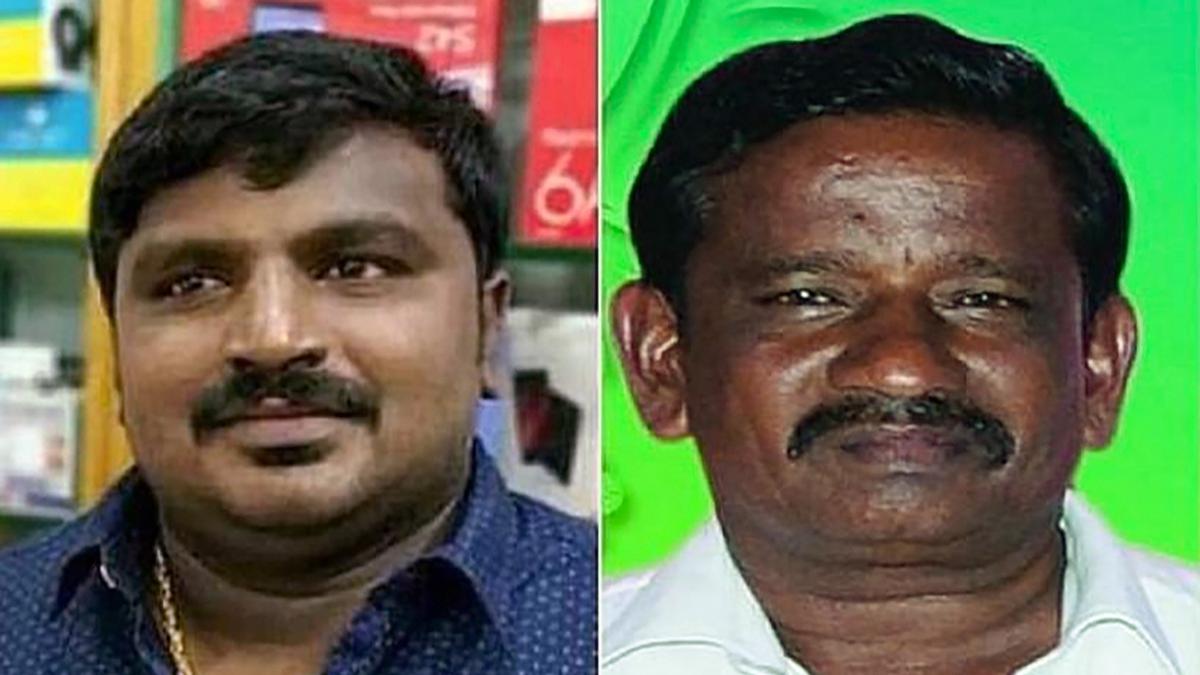
On the night of June 19, 2020, inside the Sathankulam Police Station in Tamil Nadu's Thoothukudi district, a father and son were locked in a room and beaten for over seven hours. The door was shut. The lathis kept swinging. When there was a moment of silence, the inspector on duty would ask why it had gone quiet and instigate his staff to begin again.
Nearly six years later, on April 6, 2026, the First Additional District and Sessions Court in Madurai sentenced all nine convicted police personnel to death. Judge G. Muthukumaran described the case as "rarest of rare," broke the nib of his pen as a symbolic gesture of the sentence's finality, and stated plainly: "If ordinary citizens had committed the same crime, ordinary punishment could have been given, but the police themselves have committed the crime."
This is the complete account of how India's most devastating custodial torture case unfolded, how the system both failed and ultimately delivered, and what it means for accountability in Indian policing.
Who Were Jayaraj and Bennix?
P. Jayaraj was a 59-year-old trader in Sathankulam, a small town in Thoothukudi district in southern Tamil Nadu. His son, J. Bennix (also spelled Benniks or Fenix), was 31 years old and ran a mobile phone accessories sales and service shop. By all accounts, they were ordinary working people with no criminal record.
On June 19, 2020, India was in the grip of a strict COVID-19 lockdown. The police claimed Jayaraj had kept his son's shop open past the permitted curfew hours. The CBI investigation would later establish that this claim was not substantiated and that neither man had actually violated the lockdown rules. The detention was, from its very origin, built on false ground.
When Jayaraj was picked up from Kamarajar Chowk by Sub-Inspector K. Balakrishnan, Inspector S. Sridhar, and Constable M. Muthuraja at around 7:30 pm, his son Bennix rushed to the police station to find out what had happened to his father. What he found was his father being beaten. He questioned the police. For that act of protest, he was arrested too. The station door was then locked.
What Happened Inside the Sathankulam Police Station
The CBI chargesheet, filed on September 26, 2020, details one of the most methodical and sadistic episodes of custodial violence ever documented in an Indian court of law.
The Seven-Hour Assault
Between 7:45 pm on June 19 and 3:00 am on June 20, Jayaraj and Bennix were subjected to multiple rounds of sustained beating. The CBI documented that 11 implements were used in the assault, including two lathis and a plastic pipe. Both men were stripped down to their undergarments, forced to bend over a wooden table, and held down by police personnel so they could not defend themselves. They were then beaten on their buttocks, backs, and other parts of their bodies. The torture included sexual assault.
Jayaraj told the police he was a diabetic with high blood pressure and that he would not survive such injuries. The beating continued.
Inspector S. Sridhar, the station house officer, drove the violence. According to the CBI chargesheet, whenever the assault paused, Sridhar would ask his staff why it had gone quiet and urge them to resume. Police volunteers from the community policing initiative "Friends of the Police" who were present inside the station also joined in the assault.
The Evidence the Walls Kept
The DNA samples collected by the CBI from the lockup walls, the toilet, the floor, and the lathis of the accused officers matched the victims. The Central Forensic Science Laboratory in New Delhi confirmed those findings. The blood had splashed across the walls and floors of the station. The victims were forced to clean their own blood with their clothes. As garments became saturated, they were made to change multiple times. A sanitation worker was later summoned to clean the station floor and destroy additional evidence. Clothes were not returned to the family. They were discarded at a government hospital.
Post-mortem examinations revealed that Jayaraj had sustained at least 17 injuries and Bennix 13 injuries. The severity of those injuries caused massive internal bleeding in both men.
The Magistrate Who Looked Away
After the night of torture, Jayaraj and Bennix were taken for a medical examination on June 20. The examining doctor failed to document the visible and serious injuries on their bodies. They were then presented before Magistrate D. Saravanan for remand. Saravanan, citing COVID-19 protocols, did not speak with either man directly, did not examine their physical condition, and did not question why two visibly injured men were being presented before him. He stood on the balcony of his house and waved to the police to take them away. They were then transported more than 100 kilometres to the Kovilpatti sub-jail. Lawyers were not permitted to meet them until the evening of June 20.
Bennix died at Kovilpatti Government Hospital on June 22, 2020, from heavy internal bleeding. Jayaraj died the following day.
How the Cover-Up Was Attempted
The cover-up was embedded in the arrest itself. The police filed a First Information Report charging Jayaraj and Bennix with lockdown violations and with an alleged altercation at Kamarajar Chowk. The CBI later confirmed these charges were fabricated. The victims were registered as offenders by the very officers who had just tortured them.
CCTV footage from the police station for the relevant period was missing, despite storage capacity being available. Records were delayed. A judicial magistrate who later inspected the station reported that police officers were uncooperative, obstructed his inquiry, and that a constable made a "very disparaging remark" toward him in the presence of senior officers. The original investigation was conducted by the state CB-CID before being handed over to the CBI, a transfer that proved critical to the eventual outcome.
The Tamil Nadu Chief Minister at the time, Edappadi K. Palaniswami, stated publicly that the two men had died due to "breathing difficulty" and "ill health." Opposition leader M. K. Stalin immediately challenged this characterization and demanded a proper inquiry. The claims of natural death were later comprehensively demolished by the CBI forensic record.
Who Were the Nine Convicted Officers
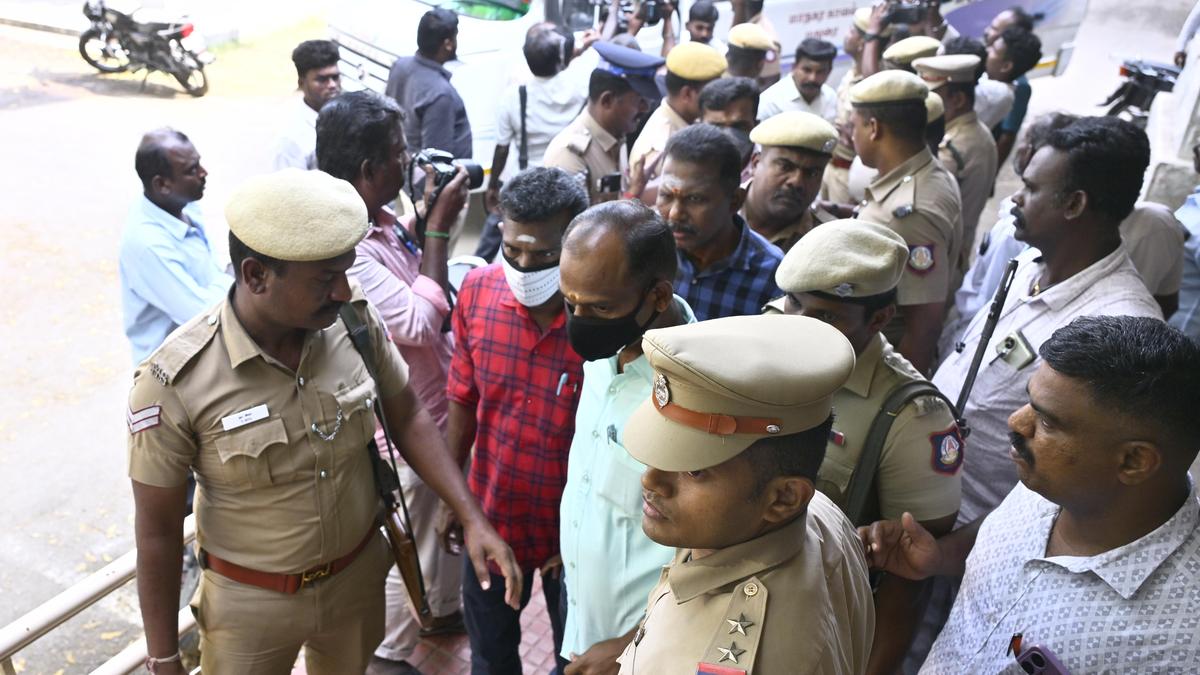
The CBI chargesheet named ten accused persons. One of them, Special Sub-Inspector Pauldurai, died during the course of the investigation after contracting COVID-19. The nine who stood trial and were convicted on March 23, 2026, are:
Inspector S. Sridhar, the then Station House Officer of Sathankulam Police Station and the individual identified as the principal instigator of the assault. Sub-Inspectors P. Raghu Ganesh and K. Balakrishnan, the latter being the officer who initially arrested Jayaraj and then participated in the beating of Bennix. Head Constables S. Murugan and A. Samadurai. Constables M. Muthuraj, S. Chelladurai, X. Thomas Francis, and S. Veilumuthu.
The CBI examined 52 witnesses from a pool of 135 and built its case across a trial spanning more than five years. The convictions covered charges of murder, causing grievous hurt, fabricating evidence, and filing false cases, with criminal conspiracy running through all counts.
The Investigation and Trial That Took Six Years
The CBI Takes Over
The CBI registered two formal cases on July 7, 2020, at the request of the Tamil Nadu government and through a notification from the Government of India. A CBI team camped continuously in Madurai throughout the investigation, working during an active pandemic. All ten accused were arrested. The chargesheet was filed within 90 days, an uncommon pace for an investigation of this complexity.
The Madurai Bench of the Madras High Court had taken suo motu cognizance of the case on June 24, 2020, just two days after Bennix died. The court expressed explicit distrust of the local police and ordered an independent inquiry, establishing judicial oversight that remained a constant pressure on the proceeding over the years that followed.
The Trial
The trial lasted over five years. The prosecution argued that the case represented a gross violation of human rights that had shaken the conscience of society. The forensic record was central: DNA evidence linking blood samples from inside the station to the victims, post-mortem reports documenting fatal injury patterns consistent with sustained blunt force trauma, and witness testimony from a woman head constable who told the court that the torture of the father and son had continued through the entire night.
On March 23, 2026, the court convicted all nine accused. The judge reserved sentencing. On April 6, 2026, the death penalty was pronounced for all nine. The court also ordered the convicted officers to collectively pay compensation of Rs 1.40 crore to the family of the deceased.
Why the Court Called It "Rarest of Rare"
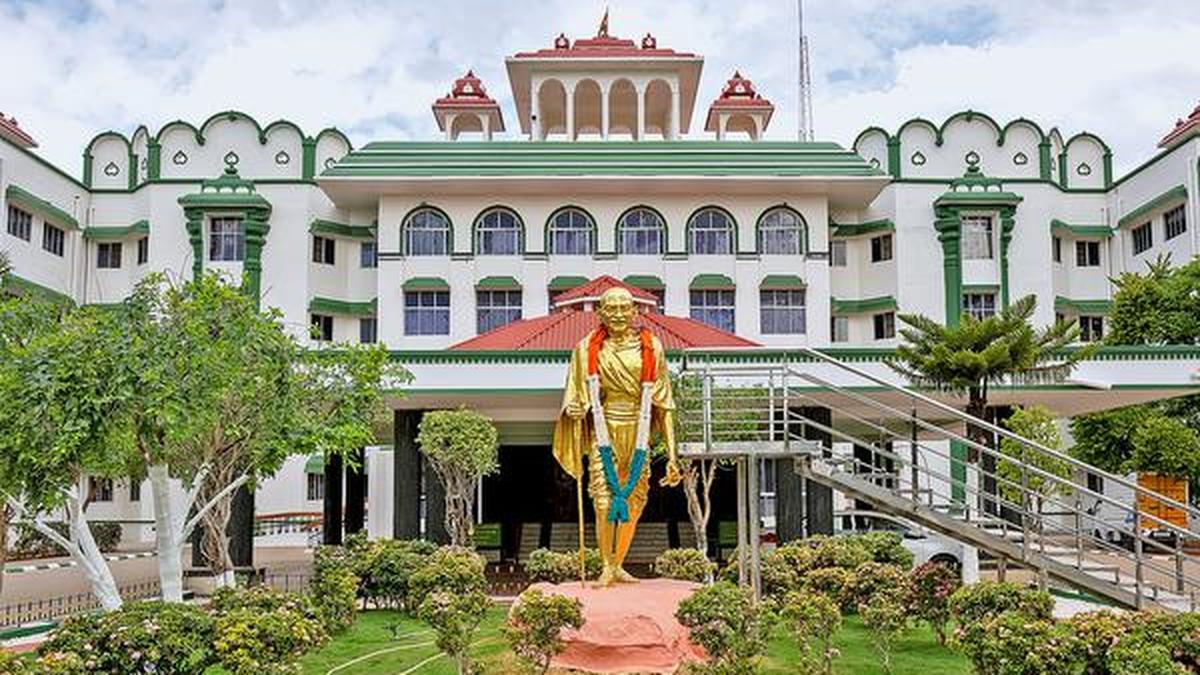
The "rarest of rare" doctrine in Indian law was established by the Supreme Court in the 1980 Bachan Singh case and is the threshold for imposing capital punishment. Courts must find that the crime is so exceptional in its brutality and circumstances that no lesser sentence can serve justice.
Judge Muthukumaran's application of that doctrine to the Sathankulam case rested on several compounding factors: the victims were innocent and not actually guilty of the offence used to justify their detention; the perpetrators were uniformed police officers, agents of the state sworn to protect citizens, who instead organized and participated in prolonged, coordinated torture; the assault included sexual violence; it was carried out with deliberate intent, the inspector actively sustaining it through the night; evidence was systematically destroyed; false charges were filed against the victims; and the deaths of two people resulted directly from injuries inflicted in a place where both men were entirely at the mercy of the state.
The court also noted that this case was exceptional in that the victims were entirely unharmed and defenceless when taken into custody. There was no provocation that could in any way mitigate what followed.
What This Verdict Means for Custodial Violence in India
A Pattern India Has Not Broken
The Sathankulam case did not occur in isolation. Human Rights Watch and domestic rights organisations have long documented that custodial torture in India is widespread and that accountability for it is rare. The deaths of Jayaraj and Bennix prompted immediate comparisons with the killing of George Floyd in the United States, highlighting how police impunity crosses borders and contexts.
Since 2020, custodial deaths have continued to occur in Tamil Nadu alone. In 2022, a 25-year-old Dalit balloon seller named Vignesh died in Chennai after torture, with the autopsy revealing 13 injuries including a leg fracture. Four custodial deaths occurred across Tamil Nadu within 12 days in April 2024. In June 2025, a 27-year-old temple guard named B. Ajith Kumar died after interrogation at a Sivaganga police station, with autopsy findings showing 44 injury marks. In March 2026, just weeks before the Sathankulam sentencing, 26-year-old Akash Delison from Sivagangai died after alleged custodial violence.
The verdict in Sathankulam does not erase this ongoing pattern. It does, however, establish a precedent of a different order than India's courts have previously produced.
What the Verdict Establishes
The death sentence for nine serving police officers is, by any measure, a historically rare outcome in India. The court's reasoning was explicit: a uniform does not confer a license to commit violence. The fact that the perpetrators were the state's own agents, rather than being a mitigating factor, was treated as an aggravating one. The breach of public trust inherent in custodial killing was central to the judgment's reasoning.
For the first time in a case of this kind, the judiciary declined to treat the police institution as something to be protected from its own worst actors.
The Questions That Remain
The verdict will be subject to mandatory review by the Madras High Court, as all death sentences in India are under the law. The case will then be eligible for appeal to the Supreme Court. Given that the Supreme Court has historically been reluctant to uphold capital punishment and has commuted death sentences in cases considered comparable, the nine convicted officers may ultimately face life imprisonment rather than execution.
The systemic failures that enabled the torture have not been structurally addressed. The medical professional who failed to document the visible injuries, the magistrate who remanded two bleeding men to jail without examination, and the institutional conditions that allowed eleven weapons to be raised against two unarmed civilians inside a locked police station: none of these structural gaps have been resolved by the verdict alone.