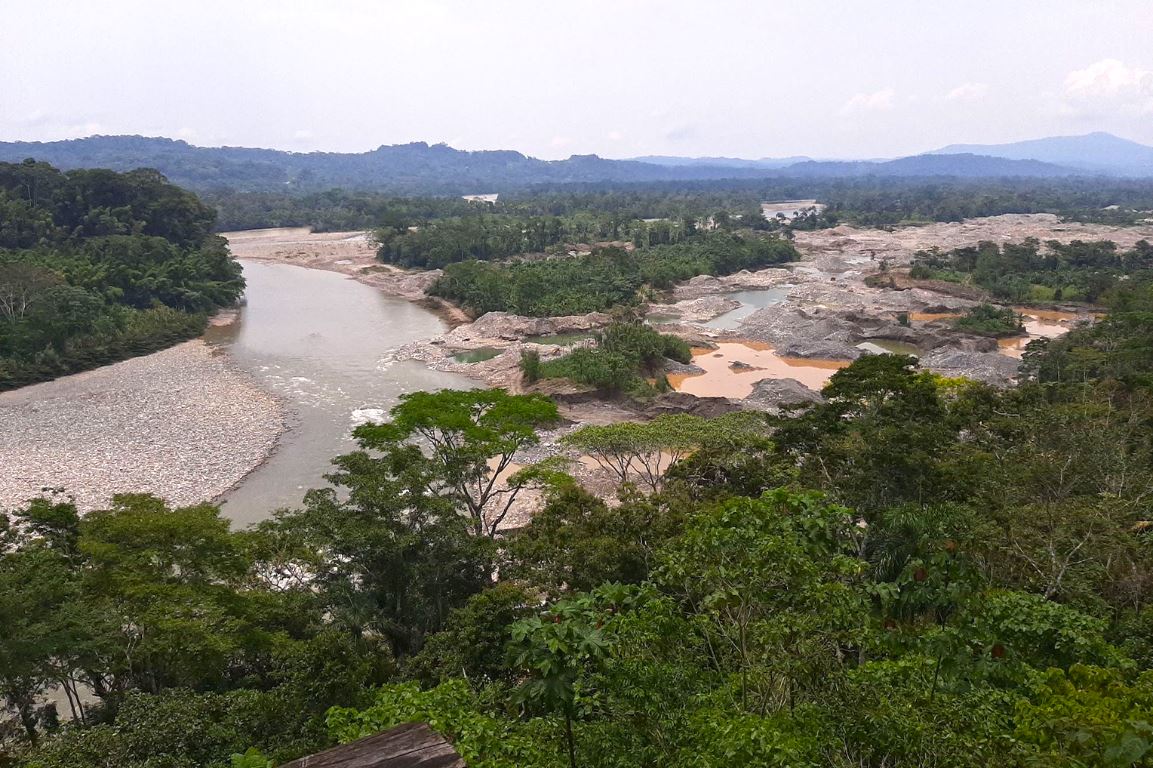
The Criminal-Environmental Nexus
The International Crisis Group published a report confirming that organized crime in South America has become a growing threat to the Amazon rainforest, as criminal groups expand into protected areas, driving violence and setting back environmental preservation. What was traditionally understood as a conservation challenge has now become a complex political and security crisis reshaping the world's largest tropical ecosystem.
The convergence is unmistakable and alarming:
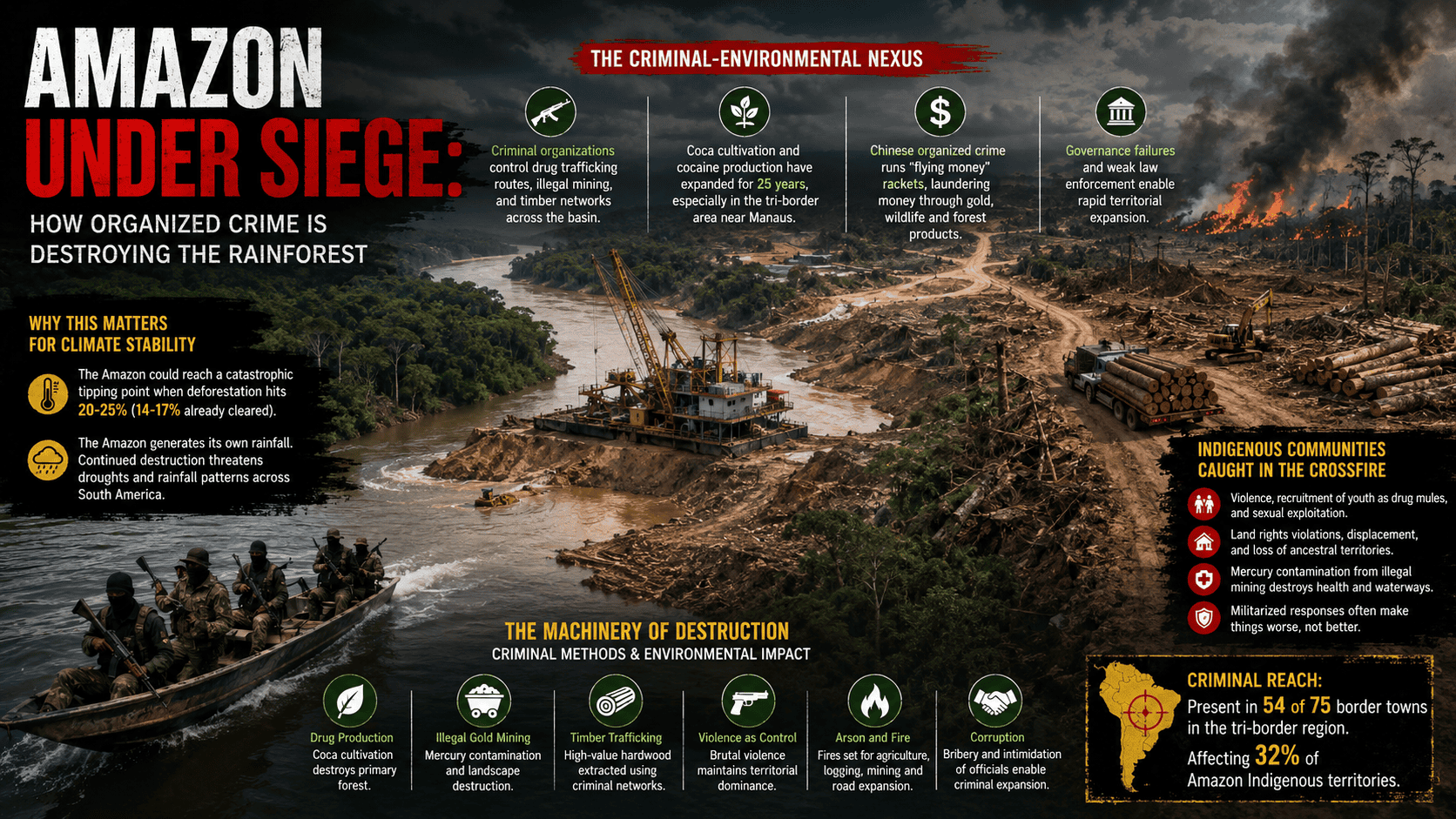
- Criminal organizations control drug trafficking routes, illegal mining operations, and timber trafficking networks across the basin
- Brazilian, Peruvian and Colombian crime enterprises have systematically expanded coca cultivation and cocaine production over the past 25 years, particularly in the tri-border area near the critical transport route to Manaus
- Chinese organized crime groups run "flying money" rackets, a barter-and-money-laundering system trading precursor chemicals for Amazonian wildlife, gold and forest products
- Governance failures and weak law enforcement enable rapid territorial expansion
Why This Matters for Climate Stability
The Amazon rainforest is racing toward a catastrophic tipping point, with scientists warning that the Amazon could undergo irreversible transformation from lush rainforest to degraded savannah once deforestation reaches 20-25% in critical regions, with approximately 14-17% already cleared.
The Amazon helps generate its own rainfall through evapotranspiration and moisture recycling, sustaining both forest ecosystems and agricultural systems across South America, making continued deforestation and degradation a threat to precipitation patterns and drought frequency across the entire continent.
The Machinery of Destruction
How Criminal Networks Operate
Organized crime groups, particularly Brazilian crime groups like Comando Vermelho and First Capital Command, take advantage of government weak spots to expand their territory throughout the jungle. The operational infrastructure adapts and evolves with alarming sophistication.
Criminal Methods & Environmental Impact:
- Drug Production Networks: Coca cultivation cleared directly from primary forest in the Peruvian Amazon and Colombian borderlands
- Illegal Gold Mining: Mercury contamination and landscape destruction affecting headwaters and Indigenous territories
- Timber Trafficking: High-value hardwood extraction using drug trafficking routes for transport and logistics
- Violence as Control: Criminal groups exercise brutal violence to maintain territorial dominance and suppress local resistance
- Arson and Fire: Recent Amazon fires are largely started by arson and related criminal activity accompanying agriculture, logging, mining and road building
- Corruption Infrastructure: Systematic bribery and intimidation of local authorities, judges, and enforcement officials
Scale of Criminal Reach
A 2025 report determined that criminal organizations dominating the cocaine trade in the tri-border region were present in 54 of 75 border towns, with organized crime now affecting 32% of Amazon Indigenous territories.
Indigenous Communities: Caught Between Crime and State Response
The Human Cost of Environmental Crime
Indigenous communities across the Amazon increasingly find themselves caught between expanding criminal networks and state security operations, with organized crime including illegal mining, drug trafficking and logging driving violence and accelerating environmental destruction.
Illegal gold mining has become a major driver of deforestation and mercury contamination across parts of the Amazon, while armed groups and trafficking networks have sought control over strategic river routes and Indigenous lands.
Specific Harms to Indigenous Peoples:
- Recruitment of young people as "mochileros" (drug mules) with threats of violence or murder
- Sexual exploitation of Indigenous girls, some as young as 13-14 years old
- Weakening of Indigenous governance and territorial control systems
- Land rights violations and displacement from traditional territories
- Health impacts from mercury contamination in waterways
The Militarization Dilemma
A report examining seven Indigenous territories across Colombia, Ecuador, Peru, Brazil and Venezuela found that military-oriented state responses to organized crime have repeatedly failed, often making conditions worse by generating additional forms of violence and control rather than strengthening Indigenous peoples' own responses.
Indigenous leaders warn against heavy militarization, calling instead for territorial protection, environmental crime prioritization, and cooperation against transnational organized crime networks while respecting Indigenous governance systems.