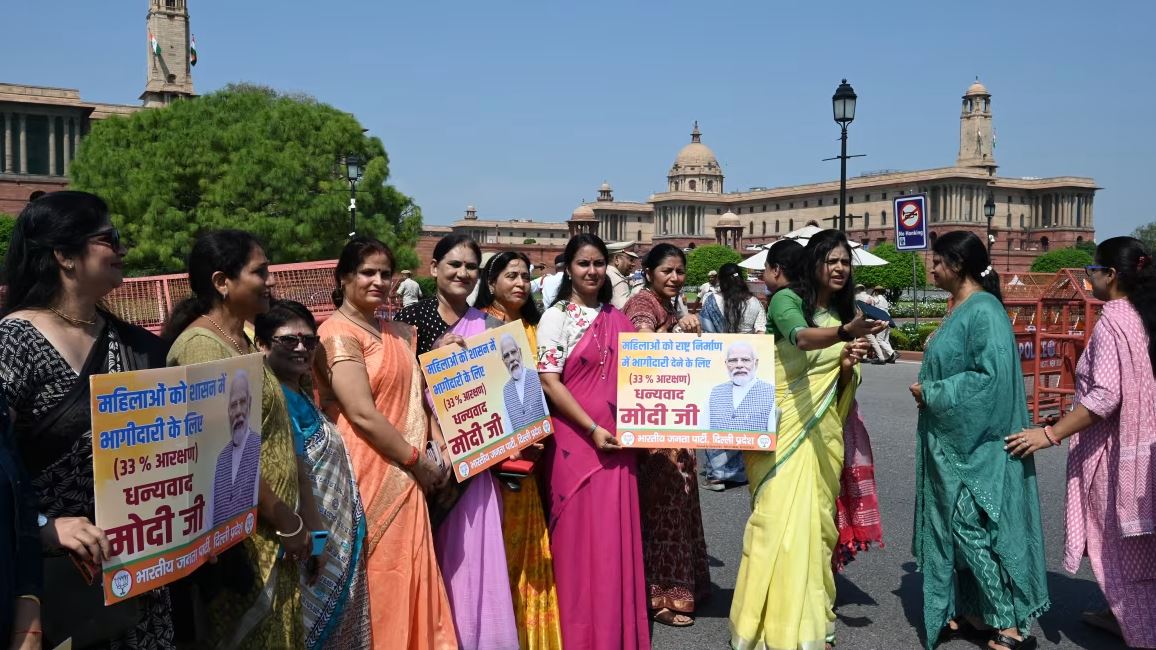
The Women's Reservation Act stands as potentially the most transformative political reform in independent India's history. Passed unanimously by both houses of Parliament in September 2023, this constitutional amendment promises to reserve one-third of all seats in the Lok Sabha and state legislative assemblies for women candidates. However, beneath the historic headlines lies a complex web of implementation challenges, political calculations, and questions about whether this landmark legislation will deliver meaningful change or remain symbolic politics.
Understanding the Women's Reservation Act
The Constitution 106th Amendment Act, officially known as Nari Shakti Vandan Adhiniyam, reserves one-third of seats in the directly elected Lok Sabha, state legislative assemblies, and the Delhi legislative assembly for women. The legislation also ensures that one-third of seats within the existing Scheduled Caste and Scheduled Tribe quotas will be allocated to women from these communities.
This represents the culmination of nearly three decades of political debate. Bills amending the Constitution to reserve seats for women in Parliament and state legislative assemblies were introduced in 1996, 1998, 1999, and 2008, with the first three lapsing with dissolution of their respective Lok Sabhas. The 2008 bill passed the Rajya Sabha but also lapsed without becoming law.
The reservation will continue for 15 years from the date of implementation, creating a limited window for this affirmative action policy to demonstrate its impact on Indian democracy.
The Implementation Puzzle
The Act's passage was celebrated across political lines, yet its implementation will only occur after a new census is published and a delimitation exercise is completed. This procedural requirement has transformed what appeared to be immediate reform into a postponed promise.
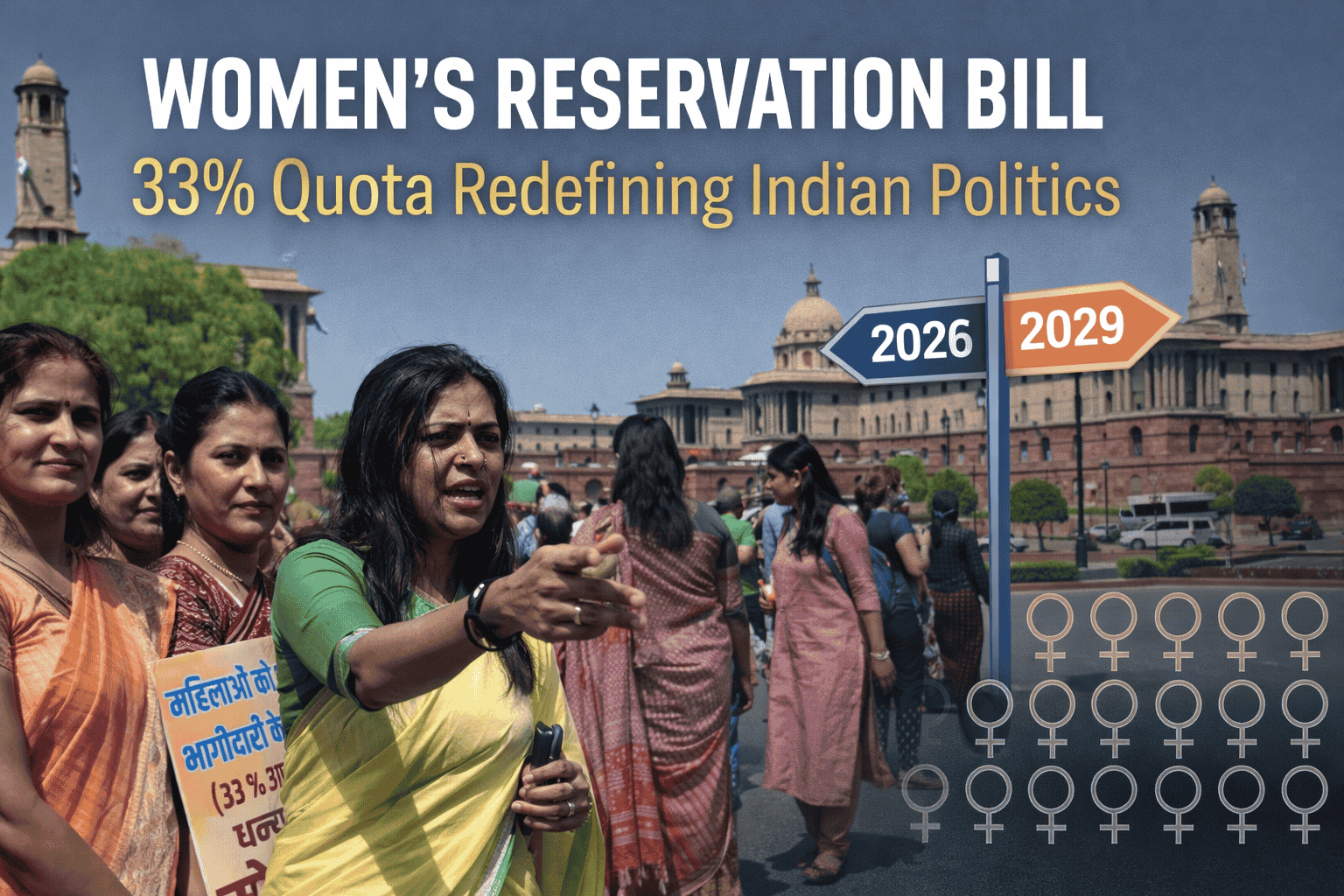
Under the existing framework, delimitation is to be carried out after the first census conducted post-2026, which has delayed the implementation of the Women's Reservation Act. The 2021 census, already postponed due to the COVID-19 pandemic, now faces further delays. By the very nature of this provision, the earliest plausible year for implementation appears to be 2029.
The delimitation process for Jammu and Kashmir took over two years, from 2020 to 2022, while Assam finalized its boundaries in 2023. Given these precedents, experts estimate that completing a nationwide delimitation exercise could extend well into the next decade.
The government now explores alternative pathways. The Union government is exploring a pragmatic policy shift to fast-track implementation by delinking the Women's Reservation Act from the census and delimitation processes, potentially enabling rollout before the 2029 general elections. The government is considering implementing the Women's Reservation Act through delimitation based on the 2011 census to fast-track its rollout.
Political Arithmetic and Electoral Calculations
The mathematics behind implementation reveals why this reform generates both excitement and anxiety. The number of Lok Sabha seats may increase from 543 to 816, with 273 seats reserved for women. This expansion addresses a critical political problem: implementing reservation within the current 543 seats would mean 181 male MPs losing eligibility in their constituencies, creating massive resistance within political parties.
By 2029, Parliament could see nearly 300 female MPs, a fivefold increase from the present, but with the number of Lok Sabha seats potentially increasing to 1000 after delimitation, parties will need to field almost 3000 female candidates. This raises fundamental questions about candidate quality, political family dominance, and whether women will serve as independent leaders or proxies for male relatives.
The Current State of Women's Political Representation
India's democracy presents a striking paradox. In 2019, voter turnout among women edged past that of men for the first time, with 67.2 percent versus 67 percent. During the 2024 elections, this parity continued with nearly equal turnout rates. Women voters now decisively influence electoral outcomes across the country.
Yet this electoral power translates poorly into political representation. In 2024, India elected 74 female Members of Parliament to the Lok Sabha, representing 13.6 percent of total MPs, a decrease from the 14.4 percent representation in the 2019 elections. Among 4666 MPs and MLAs across the country, only 464 or 10 percent are women.
India ranks 143rd out of 183 nations in women's parliamentary representation, significantly below countries like South Africa with 46 percent, the United Kingdom with 35 percent, and even the United States with 29 percent female parliamentarians.
State assemblies present an even bleaker picture. The national average representation of women in state legislative assemblies stands at around 9 percent. No state legislature exceeds 20 percent female representation, with some states having virtually no women MLAs.
The only bright spot exists at the grassroots level, where the 73rd and 74th Amendments passed in 1993 reserve one-third of seats for women in panchayats and municipalities. This has created over 1.4 million elected women representatives at the local level, building a potential pipeline for future national leadership.
Barriers Beyond Legal Reform
Out of 8360 candidates analyzed in the Lok Sabha elections 2024, only 800 or 9.6 percent were women candidates. This reveals that the problem extends beyond electoral outcomes to fundamental issues of candidate selection.
Among national parties, the BJP fielded the highest share of women candidates at 16 percent, followed by the Indian National Congress and CPI(M) at 13 percent each. These numbers demonstrate that even progressive parties struggle to nominate women candidates in proportion to their population share.
Financial constraints significantly limit women's political participation. Many women, particularly in rural areas, face difficulties due to limited financial resources, which impact their ability to engage fully in political processes, as they may need to focus on earning a livelihood to support their families. Campaign costs, time commitments, and the need for extensive travel create barriers that disproportionately affect women candidates.
Cultural and social factors compound these challenges. Patriarchal norms within political parties often relegate women to secondary roles. Even when women win elections at the local level, the phenomenon of proxy representation emerges, where male family members exercise actual power while women serve as figureheads.
The Delimitation Dilemma and Federal Concerns
The proposed delimitation exercise triggers profound federal anxieties. Currently, there is already some imbalance due to the freeze on delimitation since 1976, with an MP in Uttar Pradesh representing around 24 lakh people while in Tamil Nadu it is about 18.5 lakh.
Southern states, which have successfully implemented family planning policies, fear losing political representation to northern states with higher population growth. Tamil Nadu Chief Minister M.K. Stalin stated that it is unjust that southern states which have diligently followed the Union government's policies to control population growth must face punitive measures during constituency delimitation.
The Union government aims to expand the Lok Sabha to 816 seats using 2011 census data while maintaining proportional state weightage to prevent penalizing southern states for successful population control. This approach attempts to balance demographic realities with federal fairness, though it remains politically contentious.
Questions of Substantive Representation
The Women's Reservation Act guarantees descriptive representation through numerical quotas, but questions persist about whether this will translate into substantive representation where women actively shape policy and challenge patriarchal structures.
Research from local governance provides both encouragement and caution. Studies show that women elected to panchayats often prioritize investments in public goods like drinking water, sanitation, and primary education. However, the same research reveals instances where women representatives serve as proxies for male family members, limiting genuine empowerment.
Feminist scholars contend that empirical studies as well as feminist theorizations have underlined the mixing of caste, class, and other structural dichotomies to give rise to varied operations of gender disparities. The Women's Reservation Act, while addressing gender inequality, does not explicitly tackle the intersecting disadvantages faced by women from marginalized castes and classes.
The absence of sub-quotas for Other Backward Classes within the women's reservation remains contentious. The demand for reservation within reservation, especially for OBC women, depends on caste data, but by choosing to rely on 2011 data which lacks caste enumeration, the government effectively sidesteps this demand.
International Comparisons and Lessons
Globally, women currently occupy only 26.7 percent of parliamentary seats and 35.5 percent of local government positions, with the 33 percent quota positioning India among 64 countries worldwide that have reserved seats for women in their national parliaments.
Countries like Rwanda, with over 60 percent women in parliament, demonstrate that numerical representation is achievable. However, research from various countries suggests that reserved seats alone do not automatically produce policy transformation. The quality of representation depends on factors including party culture, broader social attitudes toward women's leadership, and whether women legislators can build coalitions across party lines.
The Political Economy of Implementation
The timing of the Act's passage, during a special parliamentary session ahead of the 2024 general elections, raised questions about political motivations. While the BJP is confident of reaping electoral dividends in the upcoming election by passing the Women's Reservation Bill, women will not benefit from the increase in seats in these polls or any time soon.
Opposition parties criticized the implementation timeline as deliberately postponed. Communist Party of India (Marxist) MP Elamaram Kareem called this legislation an election gimmick of the BJP. The Delhi High Court dismissed petitions seeking immediate implementation, upholding the government's position that constitutional procedures must be followed.
However, the Centre's move to delink women's reservation from census and delimitation processes signals a clear intent to convert a historic legislative promise into timely action, potentially before the 2029 elections.
Beyond Representation: Structural Transformation
The Women's Reservation Act operates within a larger context of democratic reform and gender justice. For the legislation to achieve its transformative potential, several complementary measures appear necessary.
Political parties must invest in candidate development programs specifically designed for women aspirants. Financial support mechanisms, including campaign funding and childcare provisions, could reduce barriers to entry. Media representation and public awareness campaigns challenging gender stereotypes in leadership roles may shift cultural attitudes over time.
Electoral finance reform could level the playing field, as the current system advantages candidates with access to substantial personal or family wealth, disproportionately excluding women. Creating safe political spaces, addressing harassment and violence against women candidates, and enforcing codes of conduct during campaigns could encourage broader participation.
The Path Forward
A Delimitation Commission is expected to be established by June 2026 to redraw boundaries before the 2029 polls, with the new provisions and revised seat strengths likely coming into effect starting from the 2029 general elections. This timeline, while still uncertain, offers a concrete pathway for implementation.
The success of the Women's Reservation Act will ultimately depend not merely on the number of women in legislative seats but on the broader transformation of political culture. If implementation proceeds, India will witness an unprecedented influx of women into formal politics, potentially reshaping party structures, policy priorities, and governance approaches.
However, vigilance remains essential. The risk exists that political families will dominate reserved seats, that women will serve as proxies rather than independent leaders, and that numerical representation will not translate into substantive policy influence. Monitoring mechanisms, transparency in candidate selection, and continued pressure from civil society organizations will prove crucial.