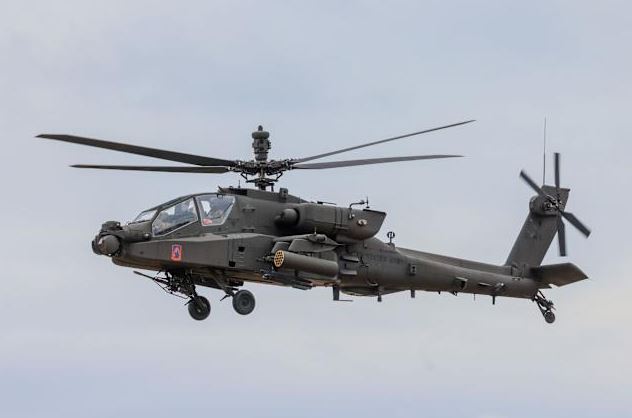
The United States launched waves of strikes on Iran after an American Apache helicopter was downed in the Strait of Hormuz, prompting warnings of retaliation from Tehran. US Central Command said strikes began at 22:00 GMT on Tuesday and ended just before 01:00 GMT on Wednesday.
The AH-64 Apache went down on Monday evening near the coast of Oman while patrolling regional waters. Two crew members were rescued by a US Navy drone vessel and both are in stable condition.
The incident did not emerge from a vacuum. Less than a day before the helicopter was downed, President Trump had claimed a deal with Tehran could be reached as soon as that week, and both sides were described as being in the final stages of negotiations. Within 24 hours, those talks were overtaken by military exchange.
What the US Struck and How Iran Responded
The US struck Iranian air defense, ground control stations, and surveillance radar sites near the Strait of Hormuz. CENTCOM described the strikes as a "proportional response to unjustified Iranian aggression."
Iranian state media reported explosions on Qeshm Island, in Bandar Abbas, and in Jask county, three strategic locations surrounding the Strait of Hormuz. Qeshm Island is part of Iran's layered naval defense architecture near the strait. Bandar Abbas is home to a key Iranian naval and air base. Jask holds a naval presence and a critical shipping port east of the strait.
Iran's retaliation came quickly. The IRGC claimed strikes against:
- US military bases in Bahrain, Kuwait, and Jordan.
- 21 US targets in total, with four reported destroyed, including an F-35 fighter jet hangar at a base in Jordan.
- Jordan's military confirmed it intercepted five Iranian missiles, while Bahrain sounded alarms and Kuwait activated its air defenses against hostile aerial targets.
Iran's Khatam al-Anbiya Central Headquarters warned that if the US repeated its aggression, "more severe and widespread attacks will be carried out against the bank of targets set in the region."
The Strategic Context No Headline Captures
Iran's position on responsibility for the helicopter has been deliberately opaque. Iranian state broadcaster IRIB reported that no offensive military operations had been carried out in the strait in the last 24 hours, while a US official confirmed an investigation determined an Iranian drone struck the helicopter and caused it to crash.
That gap between denial and retaliation is a calculated posture. Tehran has used plausible deniability as a buffer before, absorbing US response while keeping the formal option of de-escalation open.
Iranian Foreign Minister Abbas Araghchi said before the US strikes: "Foreign forces in proximity to our territory are at constant risk on account of their own human errors, plain accidents, or potentially being caught in crossfire. To reduce risk, best solution is for them to leave."
The broader cost of this exchange is not measured in airstrikes alone. The closure of the Strait of Hormuz has driven up fuel costs globally, with fertilizer shipments from the Gulf to countries like Sudan blocked, driving food prices up 20 to 30 percent in some of the world's poorest nations.