How a Moscow-Born Mathematician Built One of the Largest Fortunes in Tech History
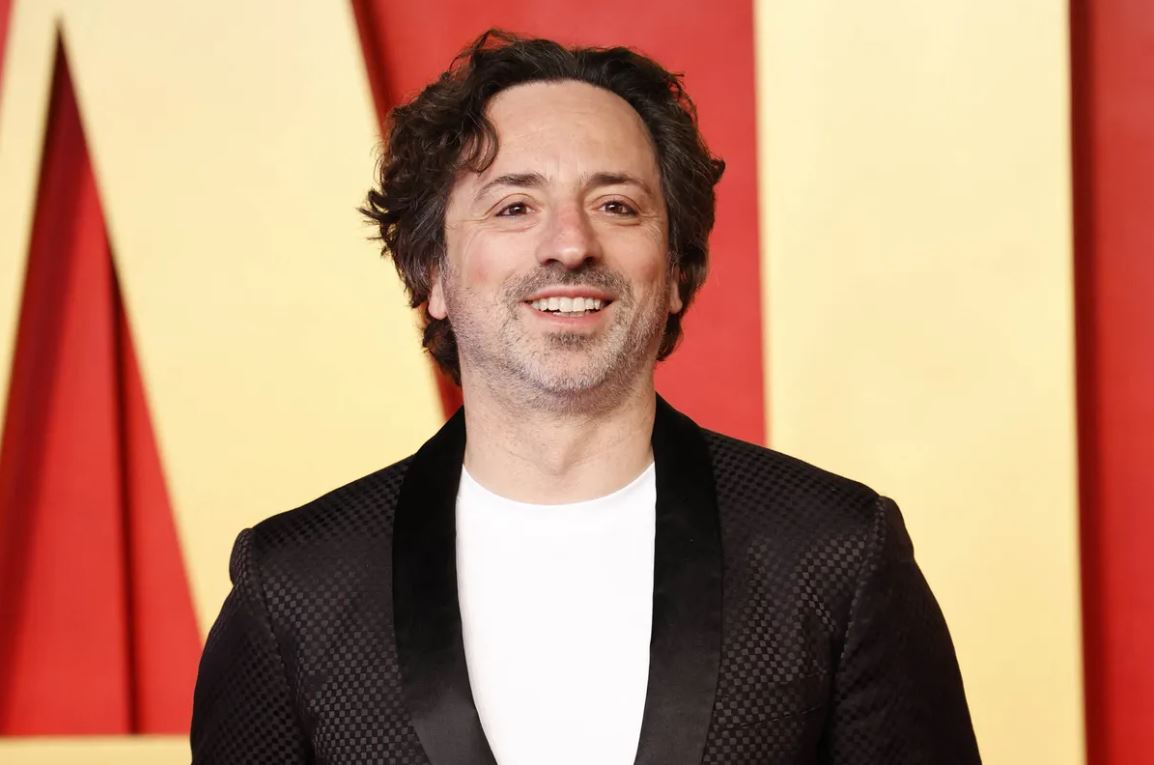
Sergey Mikhailovich Brin was born on August 21, 1973, in Moscow, Russia, to a family of accomplished academics. His father, Michael Brin, was a mathematician, and his mother, Eugenia, was a researcher at the Soviet Oil and Gas Institute. That scientific household shaped the mind that would eventually co-create the most influential information platform in human history.
Born in Moscow and raised in the United States after his family fled anti-Semitism, Brin showed a strong aptitude for mathematics and programming from a young age. He earned a bachelor's degree in mathematics and computer science from the University of Maryland before moving to Stanford University for his doctoral studies.
At Stanford, where he began his graduate studies in computer science in 1993, Brin met Larry Page during his second year. Together they developed PageRank, an algorithm they later renamed Google. What began as a Stanford research project formally debuted as a company in 1998.
The financial outcome of that garage startup is now one of the most studied wealth creation stories in business history:
- Brin's net worth stood at approximately $261 billion as of early 2026, according to the Bloomberg Billionaires Index, putting him within striking distance of the $300 billion threshold.
- He added approximately $92 billion to his fortune in 2025 alone, making him one of the year's biggest wealth gainers globally after Elon Musk.
- The primary driver was Alphabet shares surging 65% in 2025, fueled by investor confidence in the company's AI momentum.
- His wealth has continued climbing in 2026 as Alphabet's AI strategy has attracted sustained institutional capital.
Why Brin Called Retirement a "Big Mistake" and Returned to Build Google's AI Future
The Retirement That Did Not Last
Brin stepped back from Google's daily operations in December 2019, having served as President of Alphabet, hoping to enjoy more leisure time. But those plans did not materialise as the pandemic unfolded.
He had planned to sit in cafes and study physics during retirement, but when COVID hit soon after, he realized that path was no longer available. The transition from president of a global technology empire to a fortysomething retiree ended up not being as smooth as he had imagined. Brin admitted he often felt "spiralling" and "a bit less sharp" without intellectual challenges.
Now deeply involved in Gemini, Brin has said the pace of AI development keeps him energized, noting that if you skip the news for a month, you are already way behind. That observation, coming from a man who helped invent the modern information architecture, carries particular weight.
The Hands-On Return to Gemini
Brin has been regularly attending Google's offices in Mountain View three to four days a week, actively participating in the development of Gemini, Google's flagship AI model. His involvement has been substantial, including leading weekly discussions on new AI research with employees and contributing to personnel decisions such as the hiring of senior researchers.
Demis Hassabis, who leads Google DeepMind, confirmed that Brin has been "in the weeds, programming" on recent projects, particularly the Gemini models. Hassabis described the hands-on return as "fantastic," helping push the company's technical boundaries and ensuring the necessary resources are deployed to train massive frontier models.
The strategic impact of Brin's return on Alphabet's business has been measurable:
- Google CEO Sundar Pichai credited Brin's involvement with accelerating AI progress, including hands-on scrutiny of loss curves in model training, a level of technical depth unusual for a co-founder of his stature.
- Gemini's user base grew 70% to reach 400 million users by late 2025 following its integration across Google Search, Android, and YouTube.
- Brin has also applied lessons from the Google Glass project to shape Gemini's development approach, remaining bullish on Google's extended reality wearable ambitions.
What Sergey Brin's AI Comeback Means for Alphabet's Market Position and Investors
Brin's return to active technical work is not a sentimental story. It is a competitive signal with direct implications for Alphabet's valuation trajectory and its standing against OpenAI, Microsoft, Meta, and Amazon in the AI infrastructure race.
Following the internal restructuring and Brin's deeper involvement, Alphabet shares skyrocketed by approximately 65% by the end of 2025, driven by the release of Gemini 3 and a viral image-generation model. Hassabis characterized this period as a rediscovery of Google's roots, to resurrect a shipping culture that involved taking calculated risks and moving with speed.
Brin also made headlines in early 2025 with an internal memo recommending that Google employees come into the Mountain View offices every weekday, arguing that 60 hours a week represented the "sweet spot" of productivity. For investors watching Google's competitive positioning, that memo was as much a market signal as a workforce policy. It indicated that the co-founder driving Gemini's most critical development phase was treating the AI race with wartime urgency.
For corporate strategy analysts tracking the sector, several dynamics stand out:
- Brin's direct programming involvement differentiates Google's AI leadership model from that of rivals, where founder engagement is more strategic than technical.
- His pattern recognition across decades of Google's AI research, including early investments in neural networks and custom silicon, provides competitive context no external hire can replicate.
- Brin has acknowledged that Google initially "underinvested" in AI and allowed rivals to gain the upper hand, a candid admission that signals a course correction with full founder backing.