What Happened: Israeli Police Block Latin Patriarch from Holy Sepulchre on Palm Sunday
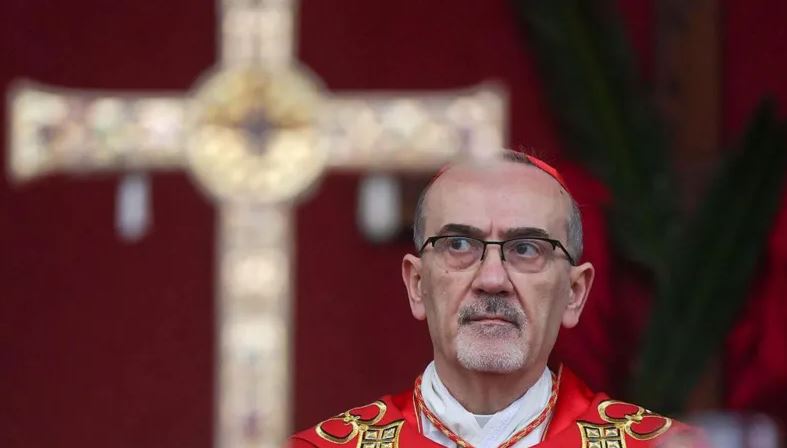
Israeli police prevented the Latin Patriarch of Jerusalem, His Beatitude Cardinal Pierbattista Pizzaballa, Head of the Catholic Church in the Holy Land, together with the Custos of the Holy Land, the Most Reverend Father Francesco Ielpo OFM, the official Guardian of the Church of the Holy Sepulchre, from entering the church in Jerusalem as they made their way to celebrate the Palm Sunday Mass. The two were stopped en route, while proceeding privately and without any characteristics of a procession or ceremonial act, and were compelled to turn back.
For the first time in centuries, the Heads of the Church were prevented from celebrating the Palm Sunday Mass at the Church of the Holy Sepulchre. The incident sent an immediate shockwave across the Catholic world, European governments, and international diplomatic circles, forcing a rapid reversal from the highest levels of the Israeli government within hours.
Palm Sunday marks the start of Holy Week, which ends with Easter, this year on April 5. The day commemorates Jesus Christ's entrance into Jerusalem, when his followers laid palm branches in his path.
Who Reversed the Decision and How the Access Agreement Was Reached
What Netanyahu Ordered Within Hours of the Incident
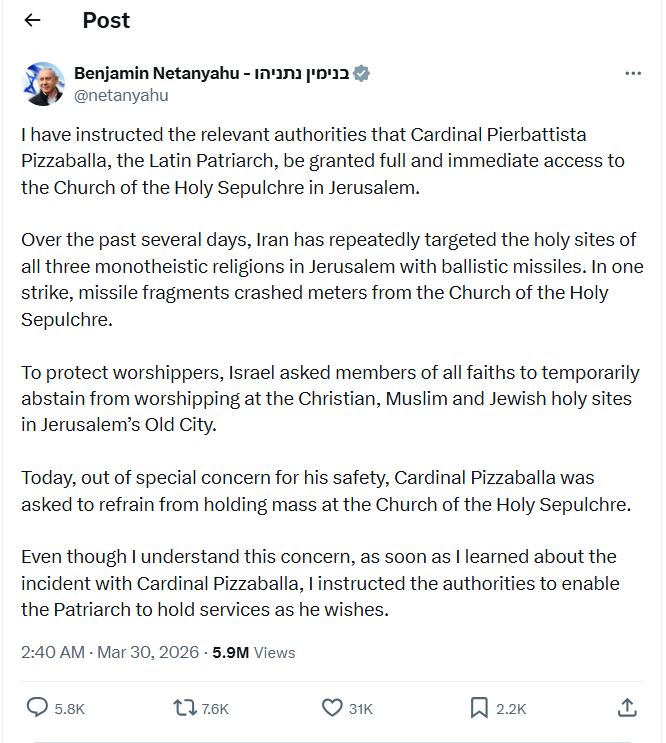
The Catholic Church's Latin Patriarch of Jerusalem would regain access to Christianity's holiest site after the decision to block him from entering the Holy Sepulchre on Palm Sunday triggered international condemnation, Israeli Prime Minister Benjamin Netanyahu said.
Netanyahu stated that he recognised the concern once he was informed about the incident involving Cardinal Pizzaballa and directed the authorities to allow the Patriarch to conduct services. In a post on X, Netanyahu stated: "I have instructed the relevant authorities that Cardinal Pierbattista Pizzaballa, the Latin Patriarch, be granted full and immediate access to the Church of the Holy Sepulchre in Jerusalem."
Netanyahu emphasised that the restrictions were intended to protect worshippers but that Pizzaballa would be able to hold prayers as he wished.
Who Reached the Formal Agreement on Access
Jerusalem District Commander Deputy Commissioner Avshalom Peled and David Sub-District Commander Dvir Tamim met with a representative of the Latin Patriarchate and agreed on a framework that will allow all Christian denominations to worship in the church while the Iran war continues.
The Israeli police, alongside a representative from the Latin Patriarchate of Jerusalem, reached an agreement by which limited groups of Christians will be allowed to pray at the Church of the Holy Sepulchre. According to the new agreement, church representatives will be allowed to hold ceremonies, with services to be broadcast, as wartime restrictions on public gatherings remain. In a joint statement issued by the Latin Patriarchate of Jerusalem and the Custody of the Holy Land, the churches thanked President Isaac Herzog for his intervention and stressed the need to safeguard freedom of worship during the war.
What Israeli President Herzog Said to Cardinal Pizzaballa
Israeli President Isaac Herzog said he had spoken to Cardinal Pizzaballa to express his "great sorrow over this morning's unfortunate incident" and that Israel is committed to "upholding the status quo at the holy sites of Jerusalem." Herzog repeated the government's explanation that its approach to the situation "stemmed from security concerns."
Why the Police Blocked Entry in the First Place
What Israel's Official Security Justification Was
In a statement, Israeli police said Pizzaballa's request to deliver the Catholic Mass to mark Palm Sunday "could not be approved." They stated: "The Old City and the holy sites constitute a complex area that does not allow access for large emergency and rescue vehicles, which significantly challenges response capabilities and poses a real risk to human life in the event of a mass casualty incident."
Since the start of the US-Israel war against Iran on February 28, Israeli authorities have, for security reasons, barred access to the Old City for everyone other than residents or shop owners. The restrictions extend to all holy sites, including the Western Wall, Al-Aqsa Mosque, and the Church of the Holy Sepulchre, which have been closed since March 6. Gatherings in Jerusalem and many other places nationwide remain limited to 50 people, provided a shelter can be reached in time.
What Netanyahu Said About Iranian Missile Strikes Near the Church
Netanyahu cited recent tensions in the region, alleging that Iran had targeted religious sites in Jerusalem with ballistic missiles in recent days. He stated: "Over the past several days, Iran has repeatedly targeted the holy sites of all three monotheistic religions in Jerusalem with ballistic missiles. In one strike, missile fragments crashed meters from the Church of the Holy Sepulchre. To protect worshippers, Israel asked members of all faiths to temporarily abstain from worshipping at the Christian, Muslim and Jewish holy sites in Jerusalem's Old City."
Why the Patriarchate Said the Justification Did Not Hold Up
The Latin Patriarchate pointed out that the Church of the Holy Sepulchre had been hosting Masses not open to the public since the Iran war began on February 28, and it was unclear why Sunday's Mass and access by the two priests was any different. "It's a very, very sacred day for Christians and in our opinion there was no justification for such a decision or such an action," said Farid Jubran, the spokesperson for the Latin Patriarchate of Jerusalem. Jubran said that the church had requested permission from police for a few religious leaders to enter the church for a private celebration, not one that was open to the public.
The Patriarchate stated that preventing the entry of the Cardinal and the Custos, who bear the highest ecclesiastical responsibility for the Catholic Church and the Holy Places, "constitutes a manifestly unreasonable and grossly disproportionate measure." It called the decision "hasty and fundamentally flawed, tainted by improper considerations" and described it as "an extreme departure from basic principles of reasonableness, freedom of worship, and respect for the Status Quo."
Who Is Cardinal Pierbattista Pizzaballa and Why His Standing Matters
What Role the Latin Patriarch Holds in Jerusalem
Cardinal Pierbattista Pizzaballa is the most senior Catholic official in Israel and serves as the Latin Patriarch of Jerusalem, the head of the Catholic Church in the Holy Land.
Pizzaballa is an Italian cardinal considered a leading papal contender in the 2025 conclave, making the incident politically sensitive not only for Israel's relationship with the Catholic Church but also for its diplomatic standing with Italy and the Vatican more broadly.
What Pizzaballa Said After Being Turned Away
Pizzaballa later held a Palm Sunday Mass at the Church of All Nations, also known as the Church of Gethsemane, on the Mount of Olives, where he declared: "War will not erase the resurrection. Grief will not extinguish hope."

What the International Reaction Looked Like
Who Condemned the Decision and What They Said
The speed and breadth of the international condemnation was extraordinary, spanning heads of government, senior diplomats, and multilateral institutions across Europe and beyond.
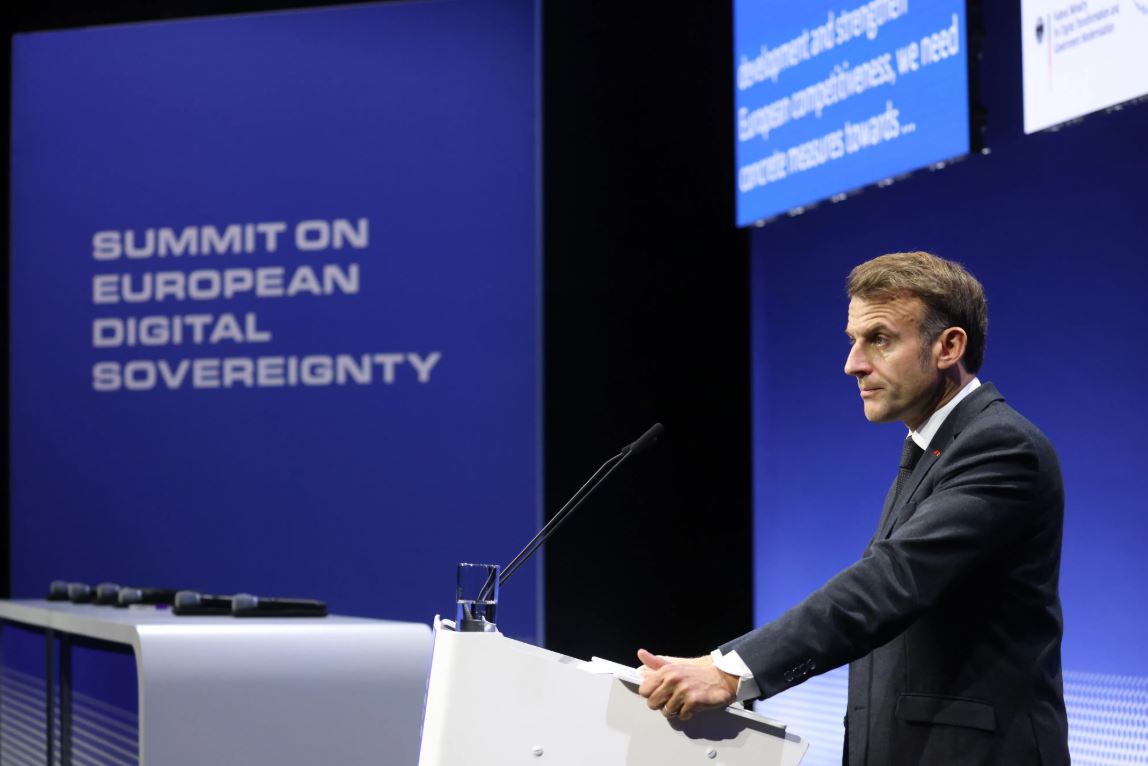
French President Emmanuel Macron called the incident "alarming" and offered his full support to the Catholic figures. He wrote: "I condemn this decision by the Israeli police, which adds to the alarming proliferation of violations of the status quo of Jerusalem's holy sites." He called for the free exercise of worship in Jerusalem to be guaranteed for all religions.
Italian Prime Minister Giorgia Meloni said her government stood with Cardinal Pizzaballa and other religious leaders, stating: "The Holy Sepulchre in Jerusalem is a sacred place of Christianity, and as such must be preserved and protected." She said preventing church leaders from entering the church "constitutes an insult not only to believers, but to every community that recognizes religious freedom." The Italian government formally protested the incident to Israeli authorities and summoned Israel's ambassador to Rome for clarification.
EU foreign policy chief Kaja Kallas denounced it as a "violation of religious freedom" and long-standing protections governing holy sites, urging Israel to guarantee worship "for all faiths." She added: "Jerusalem's multi-religious character must be protected."
What the US Ambassador to Israel Said
US Ambassador to Israel Mike Huckabee, a known Israel supporter, released a statement criticising the Israeli decision, calling it "an unfortunate overreach already having major repercussions around the world." He noted that churches, synagogues, and mosques throughout Jerusalem had met with the restrictions of 50 or fewer people for safety reasons. He wrote: "For the Patriarch to be barred from entry to the Church on Palm Sunday for a private ceremony is difficult to understand or justify."
What Pope Leo XIV Said About Christians in the Middle East
Pope Leo XIV, speaking after the Angelus prayer in Rome on Sunday, paid tribute to "the Christians of the Middle East, who suffer the consequences of a terrible conflict and in many cases cannot fully live the rites of these holy days."
What the Church of the Holy Sepulchre Is and Why Its Status Matters
Who Regards the Church as the Holiest Site in Christianity
The Church of the Holy Sepulchre contains the sites where Christians believe Christ was crucified, buried, and resurrected. It is regarded as the holiest site in Christianity and sits within Jerusalem's Old City. Access to and administration of the church is governed by longstanding arrangements among several Christian denominations, making any restriction on entry a matter of enormous theological, historical, and political significance.
The incident marked "the first time in centuries" that Palm Sunday Mass could not be celebrated at the church, built where many believe Jesus was crucified.
What the Traditional Palm Sunday Procession Normally Looks Like
The traditional Palm Sunday procession normally sees tens of thousands of Christians from around the world walk from the Mount of Olives down the narrow, hilly streets toward the Old City, waving palm fronds and singing. The Patriarchate had already announced the cancellation of the procession due to restrictions imposed by the conflict.
What the Broader Status Quo Debate Means for Jerusalem
Who Defines the Status Quo and Why It Is Being Tested
The concept of the Jerusalem status quo refers to the longstanding arrangements governing access to, and jurisdiction over, the city's holy sites. It is not a formal treaty but a historically embedded understanding that has governed Christian, Muslim, and Jewish access to their respective sacred spaces for generations. Every incident that touches it, particularly during major religious observances, carries consequences far beyond the immediate event.
The Latin Patriarchate said the incident "impeded freedom of worship and the status quo in Jerusalem." The Patriarchate expressed its deep sorrow and apologies to the Christian faithful around the world that prayer, on one of the holiest days of the Christian calendar, had been prevented in this way.
Macron wrote that the police decision "adds to the concerning increase in violations of the status of the holy sites in Jerusalem," signalling that European governments view the Palm Sunday incident not as an isolated wartime measure but as part of a broader pattern of erosion of the protections that have historically governed Jerusalem's sacred sites.
What Israel's Government Said About Its Intentions Going Forward
Netanyahu's office said there was "no malicious intent whatsoever" in the ban, only concern for the safety of the celebrants. It added: "Given the holiness of the week leading up to Easter for the world's Christians, Israel's security arms are putting together a plan to enable church leaders to worship at the holy site in the coming days."
Israeli police stated that "freedom of worship will continue to be upheld, subject to necessary restrictions." Early Monday, police confirmed they had approved a "limited prayer framework" for the church, in consultation with the Latin Patriarchate of Jerusalem.
The speed of the reversal, from a police block in the morning to a prime ministerial order granting full and immediate access by the same evening, tells its own story. The decision to stop Cardinal Pizzaballa and Father Ielpo was not sanctioned at the political level, and the diplomatic firestorm it ignited within hours demonstrated precisely why the Jerusalem status quo remains one of the most politically consequential and institutionally fragile arrangements in the world.