How Larry Page Turned a Stanford Project Into a $281 Billion Fortune
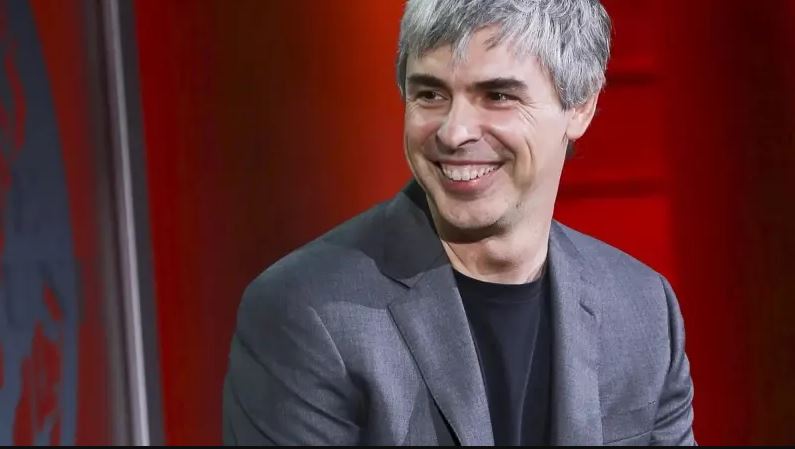
Larry Page's financial trajectory is one of the most remarkable wealth stories in the history of modern capitalism. Page's net worth stood at approximately $281 billion as of early 2026, according to the Bloomberg Billionaires Index, making him one of the few individuals approaching the $300 billion threshold alongside Amazon's Jeff Bezos and Google co-founder Sergey Brin.
The engine behind that wealth remains his founding stake in Alphabet. Page holds roughly 6% of Alphabet across three classes of stock, and despite drawing a symbolic salary of just $1 throughout his career at Google, he has consistently ranked among the ten wealthiest people on earth.
What makes his wealth story strategically interesting in 2026 is not the size of the number but the direction of the capital. Page is no longer a passive beneficiary of Alphabet's growth. He is actively deploying resources into ventures that could define the next decade of technology.
Key milestones in his wealth creation include:
- Google's IPO in 2004, which converted his founding equity into publicly tradable shares
- Alphabet shares surging 65% in 2025 alone, adding $101 billion to Page's fortune and making him one of the year's biggest wealth gainers after Elon Musk.
- A further 4.5% rise in Alphabet stock in early 2026, driven by investor confidence in the company's AI strategy.
- Consistent reinvestment of personal capital into emerging technology outside Alphabet's structure.
Why Page Left the Spotlight and What He Has Been Building Since
The Deliberate Exit from Alphabet
Page and Sergey Brin stepped down from their executive positions at Alphabet in 2019, handing operational control to Sundar Pichai, who assumed the role of CEO of both Google and Alphabet. This exit was widely read at the time as a retreat from relevance. That reading has aged poorly.
Page's post-Alphabet years have been characterized by a pattern familiar to anyone who has tracked his career closely: deep, quiet investment in technologies that most people consider either premature or implausible, followed by those technologies becoming mainstream conversations. He funded flying cars before most executives would say the words in a boardroom without hedging. The same instinct is now directing his attention toward artificial intelligence applied to physical manufacturing.
Dynatomics: The AI Startup Redefining How Objects Are Made
Page is building a new company called Dynatomics, focused on applying artificial intelligence to product manufacturing. He is working with a small group of engineers on AI that can create highly optimized designs for physical objects and then direct factories to build them.
Leading the effort operationally is Chris Anderson, the former chief technology officer of Kitty Hawk, an electric aircraft startup that Page previously backed. The choice of Anderson is telling. It signals that Dynatomics is not purely a software play. It connects directly to Page's longstanding interest in bridging digital intelligence with physical systems.
The competitive landscape Dynatomics is entering includes:
- Orbital Materials, which is developing an AI platform for discovering new materials used in batteries and carbon-capture technology.
- Boston Dynamics, whose robotics systems have advanced AI-guided physical task execution in warehouse environments
- PhysicsX, which provides AI-generated simulations for engineers in automotive and aerospace sectors
What distinguishes Dynatomics from these players, at least in concept, is its ambition to let AI not merely assist manufacturing but originate and optimize product design from the ground up.
What Larry Page's AI Ambitions Mean for Markets and the Technology Sector
Page's return to active company building carries implications well beyond his personal portfolio. When a founder with his track record, capital base, and pattern recognition re-enters a sector, it functions as a signal to institutional investors, talent markets, and corporate strategists simultaneously.
Page's broader record of unconventional bets includes funding Zee.Aero in 2010 to develop personalized flying vehicles, which later produced the Z-P2 eVTOL aircraft before merging with Kitty Hawk. That history establishes that his investment thesis tolerates long timelines and near-term skepticism in exchange for asymmetric outcomes.
For markets, the pattern of Page-backed ventures tends to:
- Pull elite engineering talent toward early-stage projects that would otherwise struggle to recruit
- Validate emerging technology categories for risk-averse institutional capital
- Accelerate timeline expectations across sectors adjacent to his areas of focus
- Drive competitor responses from established players protecting market position
The AI manufacturing space, which Dynatomics is entering, sits at the intersection of two of the most capital-intensive trends in global industry: artificial intelligence infrastructure buildout and reshoring of physical production capacity. Page is, characteristically, arriving before most institutional money has determined whether the category is real.