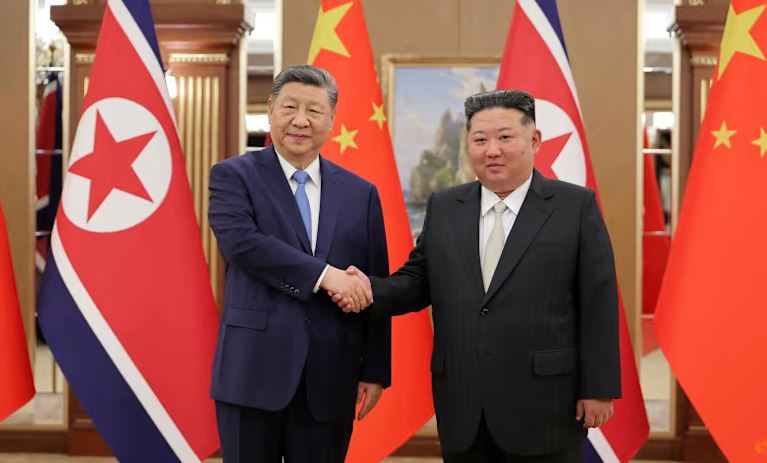
On June 8, 2026, Chinese President Xi Jinping arrived in Pyongyang for a rare state visit, received with a 21-gun salute and military fanfare at the international airport, where Kim Jong Un and his wife Ri Sol Ju personally welcomed Xi and Peng Liyuan. This was not a routine diplomatic gesture. The two-day state visit marks Xi's first overseas trip of 2026 and his first visit to the DPRK since June 2019. That Beijing chose Pyongyang as its first foreign engagement of the year signals something deliberate about China's current strategic priorities.
Why This Summit Matters Now
Kim Jong Un is playing host from a position of rare strength. His backing of Russia's war in Ukraine has paid dividends, his weapons program has cemented North Korea's status as a de facto nuclear state, and an economy that buckled under pandemic isolation and sanctions has since rebounded.
Several factors converge to make this summit consequential:
- Kim Jong Un has reached out to Russia in recent years, notably by sending troops and conventional weapons to support its war against Ukraine.
- Ahead of Xi's visit, North Korea unveiled a new facility for uranium enrichment, with Kim announcing plans to bolster nuclear forces "at an exponential rate."
- 2026 marks the 65th anniversary of the China-North Korea mutual defense treaty.
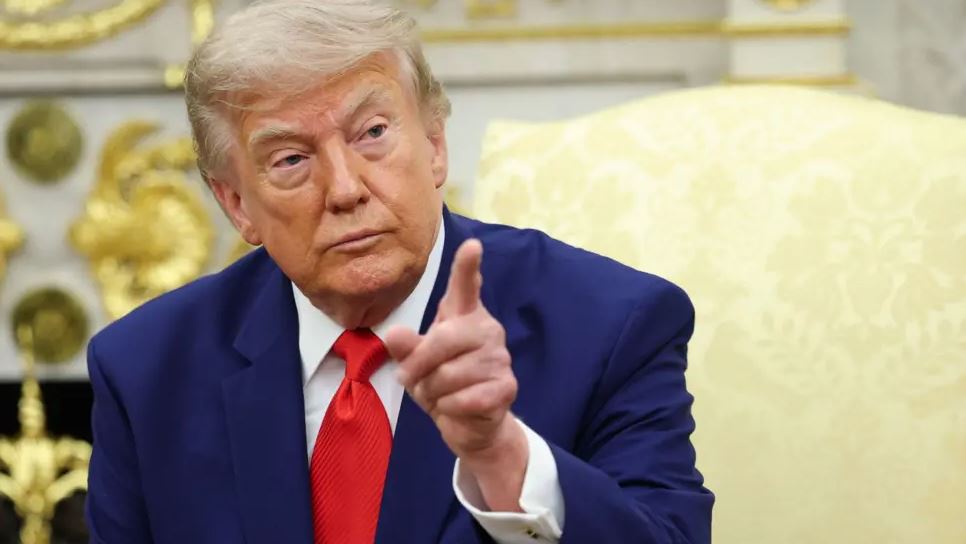
- Some analysts believe Xi may be carrying a message from U.S. President Donald Trump, who has signaled willingness to resume diplomacy with Kim.
What is surprising is not that they are meeting, given the two men met in Beijing just a year ago during China's WWII commemoration parade, but that Xi has travelled to Pyongyang at all. For Xi, travel to a foreign capital carries symbolic weight. This trip signals that Beijing views the relationship as requiring active, in-person repair work.
The Nuclear Question: Where China and North Korea Diverge
North Korea's nuclear program is a key topic. China has historically opposed tougher UN sanctions on North Korea, yet Beijing has never formally endorsed Pyongyang's nuclear ambitions either. That tension sits at the core of this summit.
North Korea may use the summit to press for economic concessions and potentially even Beijing's "tacit recognition" of its nuclear status, analysts say. China is likely to seek Pyongyang's alignment on Taiwan and push back against what it views as destabilizing provocations.
Key fault lines in the nuclear dynamic include:
- China remains publicly committed to a denuclearized Korean Peninsula.
- North Korea has effectively abandoned denuclearization as a policy objective.
- Beijing's leverage over Pyongyang has diminished as Russia fills the economic and military gap.
- "North Korea has more leverage vis-a-vis China compared to June 2019," said Rachel Minyoung Lee of the Stimson Center, citing deepened military ties with Moscow, nuclear program advances, and an improved economy.
China's Strategic Recalibration in Northeast Asia
Beijing's core problem is straightforward: it built its Korean Peninsula strategy on being Pyongyang's indispensable patron. That monopoly is gone.
Xi's visit aims to reassert China's role as North Korea's most critical economic and diplomatic partner amid growing Russia-North Korea ties. During their meeting, Xi called for deepening "strategic coordination and cooperation" and said China was ready to expand cooperation in economics, trade, agriculture, health, construction, science and technology.
For North Korea, Xi's visit marks another chapter in its balancing act between Russia and China, as it seeks military and economic benefits from both while avoiding excessive reliance on either.
- "The fact that Xi decided to make his first overseas trip of 2026 to North Korea reflects the level of significance Beijing attaches to shoring up ties," said William Yang, Crisis Group's senior analyst for Northeast Asia.
- The visit follows Xi's recent hosting of both Vladimir Putin and Donald Trump in Beijing, positioning China as the central node in a triangular great-power negotiation.
- No specific agenda or expected outcomes were shared publicly, meaning post-summit readouts will be the first real signal of whether this was relationship maintenance or something more substantive.