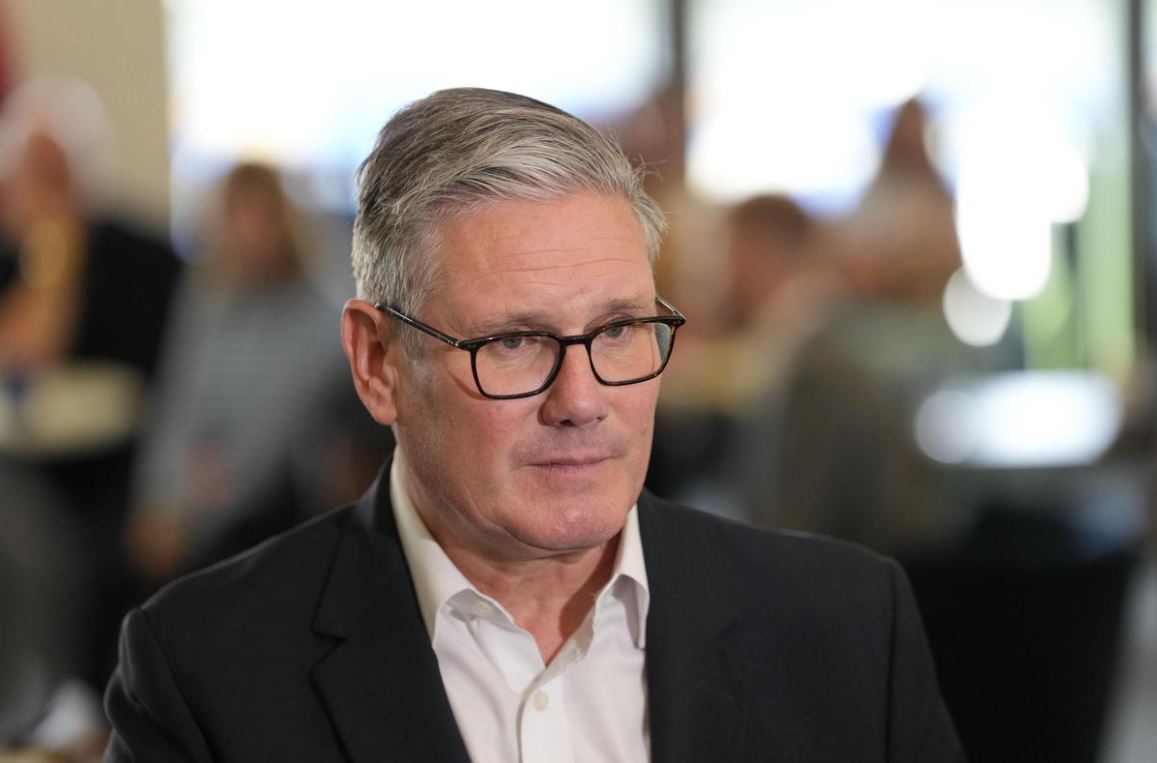
When a party loses its heartland, it does not simply lose votes. It loses a story it has told about itself for more than a century. That is what happened to Keir Starmer's Labour Party on the night of May 8, 2026, and the consequences are still unfolding.
What Happened in the 2026 UK Local Elections
Around 5,000 seats were contested across 136 council elections in England. Labour won just over 1,000 of those seats, losing more than 1,100 it had previously held. Meanwhile, Reform UK gained more than 1,400 seats. The Green Party picked up over 300 seats and the Liberal Democrats more than 150. Even the Conservative Party, traditionally Labour's primary rival, lost over 500 seats.
These were local government elections, not a general election. But the political weight they carried was unmistakable. The results functioned as a blunt verdict from voters widely treated as an unofficial referendum on Starmer, whose popularity has plummeted since he led Labour to power less than two years ago.
How Badly Did Labour Lose and Where
The geography of defeat tells the real story.
Reform UK won hundreds of local council seats in working-class areas across England's north, removing Labour from places like Hartlepool that had been solid Labour territory for decades. In Hartlepool specifically, Reform won all 12 of the seats that were up for election, taking seven from Labour. Labour council leader Pamela Hargreaves lost her own seat to Reform by almost 700 votes.
The damage extended well beyond England. In Wales, Labour lost power for the first time in more than a century, with Plaid Cymru coming first and Reform second. Welsh First Minister Eluned Morgan lost her own seat and resigned, saying the people of Wales had rejected Welsh Labour.
Plaid Cymru's victory means that all three regions of the United Kingdom outside England, namely Northern Ireland, Scotland, and now Wales, will be governed by nationalist and pro-independence parties.
Why Working-Class Voters Abandoned Labour
This is the question that cuts deepest for a party founded to represent working people.
Stephen Houghton, the outgoing leader of Barnsley council in northern England, where Labour lost to Reform, argued that the problem goes deeper than the prime minister. "This has been coming for 30 years around the country, in post-industrial communities, coastal communities, that have been left behind," he said. "You can change prime ministers all day long. If you don't change policy, it's not going to change."
Reform UK's surge in areas such as Newcastle-under-Lyme and gains in Labour heartlands like Hartlepool and Burnley suggest that Labour's reclaiming of its so-called red wall at the 2024 general election may have been only a temporary reinstatement, according to Alia Middleton, Senior Lecturer in Politics at the University of Surrey.
The economic grievances are real and documented. Starmer's tenure has been beset by a weak economy, backlash over his appointment of an ambassador with ties to Jeffrey Epstein, and a surge in antisemitism declared a national emergency. For voters in towns where deindustrialisation hollowed out livelihoods a generation ago, the sense that Labour has failed to deliver is not new. It is compounded.
Who Benefited and Why Reform UK's Rise Matters
Running on an anti-establishment and anti-immigration message, Reform UK won hundreds of council seats in working-class areas of England's north, including Sunderland, which had been solid Labour territory for decades. Nigel Farage called the results a historic change in British politics and expressed confidence that voters who moved to Reform were not doing so as a short-term protest.
Reform has demonstrated a unique ability to draw votes away from both Conservatives and Labour simultaneously. However, analysts note that the more councillors Reform holds, the more voters will expect delivery, and the party will need to function not just as a campaign operation but as a governing force that can keep its promises.
The fragmentation of British politics is now structural, not incidental. The results confirm that the United Kingdom, traditionally a two-party system, now has at least five significant political forces all competing for votes ahead of the next general election, which must be held before May 2029.
What Starmer Has Said and Done in Response
Starmer insisted he will not resign, saying he was elected to meet challenges and would not walk away and "plunge the country into chaos." He acknowledged the results were "very tough" and accepted that voters had sent a message about the pace of change.
On the Saturday after results came in, Starmer brought back two figures from previous Labour governments. He appointed former Prime Minister Gordon Brown as a special envoy on global finance and made former deputy leader Harriet Harman an adviser on women and girls. The moves signalled an attempt to project stability and experience, though critics questioned whether reshuffling advisers addresses the deeper policy failures voters are responding to.
By Sunday, Starmer described his government as a ten-year project of renewal and stated his intention to lead the party into the next general election.
Who Is Calling for Starmer to Go
The pressure is not coming only from opponents.
Following the local election setbacks, Starmer faced calls to resign or to set a departure timetable from members of his own party. Clive Lewis, the Labour MP for Norwich South, wrote on social media that the prime minister needs to go and that this was not negotiable.
Labour MP Clive Betts told the BBC there must be a timetable for leadership change. Another lawmaker, Tony Vaughan, called for an orderly transition of leadership. However, Starmer's cabinet colleagues expressed public support, and high-profile potential challengers including Health Secretary Wes Streeting, former Deputy Prime Minister Angela Rayner, and Greater Manchester Mayor Andy Burnham remained publicly quiet.
Deputy Prime Minister David Lammy cautioned the party not to remove Starmer, saying you do not change the pilot during the flight. Even analysts who doubted Starmer's survival acknowledged that no immediate leadership challenge had materialised.
What the Results Mean for British Politics
Political scientists describe 2026 not as a clean realignment but as continued tactical voting and localised switching. Voters are choosing between multiple parties depending on local context, prioritising immigration concerns in red wall towns, for instance, while focusing on housing and environment in urban and university areas.
The results reflect a broader fragmentation of UK politics after decades of two-party dominance. The Conservative Party also suffered major losses, confirming that both establishment parties are simultaneously losing ground to insurgents from both the left and right.