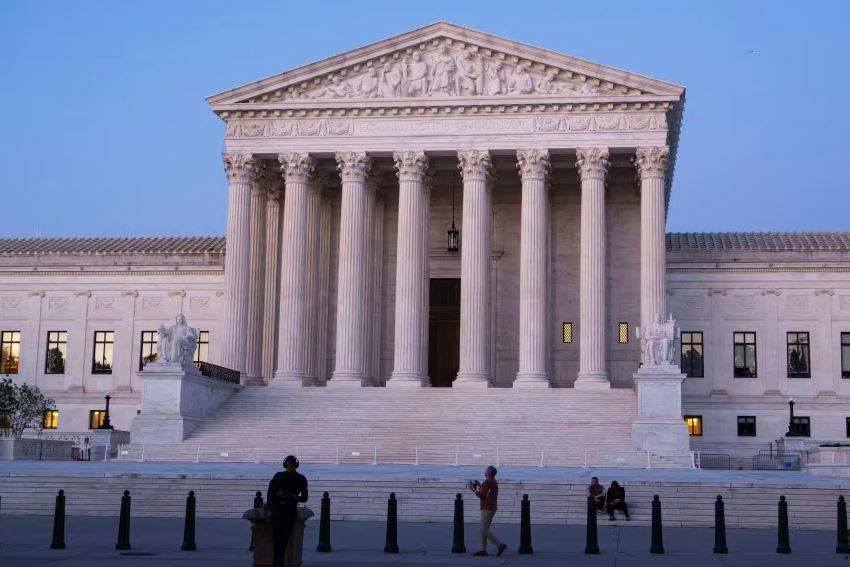
The U.S. Supreme Court agreed on Monday, June 15, to hear an appeal from the Trump administration in Genalo v. Black, a case testing whether immigrants with certain criminal convictions can be held for months or years without a bond hearing while their deportation cases proceed. The outcome will shape how the government applies a mandatory detention provision in immigration law to thousands of noncitizens nationwide.
The Case at the Center of the Dispute
The dispute centers on two lawful permanent residents detained under 8 U.S.C. Section 1226(c), the provision of the Immigration and Nationality Act that requires detention of certain "criminal aliens" while removal proceedings are pending.
- Keisy G.M., a Dominican national, became a lawful permanent resident in 2011 and pleaded guilty to assault in New York
- He was arrested by immigration authorities in October 2020 and held for 21 months
- A federal judge denied his habeas corpus petition in 2021, and he was eventually released in 2022 due to concerns about COVID-19 spreading in detention
- Carol Williams Black, a Jamaican national and lawful permanent resident since 1983, was convicted of sexual abuse of a minor and detained for seven months
Both men filed habeas corpus petitions arguing that the length of their detention, without any opportunity to seek release on bail, violated their constitutional right to due process.
What the Second Circuit Ruled
The U.S. Court of Appeals for the Second Circuit sided with the detainees, holding that once detention under Section 1226(c) becomes "unreasonably prolonged," due process requires a bond hearing. The appeals court went further, ruling that at such a hearing the government must justify continued detention using a clear and convincing evidence standard, a higher bar than typically applied in other civil proceedings. The Trump administration appealed, calling the ruling, in its own filings, "seriously misguided."
What the Supreme Court Will Decide
The justices agreed to take up two core questions raised by the Solicitor General: whether there is a point at which detention under Section 1226(c) becomes unreasonably prolonged such that due process requires a bond hearing, and if so, whether the government must meet the clear and convincing evidence standard to keep someone detained. The court also directed the parties to brief a third issue on its own initiative, namely whether G.M.'s case is moot given that he was released in 2022.
This is not the first time the court has faced this question. In the 2016 case Jennings v. Rodriguez, the Supreme Court ruled that federal immigration statutes did not themselves require bond hearings, but the divided opinion, written by Justice Samuel Alito, stopped short of deciding whether the Constitution independently demands one. That unresolved constitutional question is what Genalo v. Black now puts squarely before the court.
A Circuit Split Forms the Backdrop
The administration's appeal arrives alongside a broader pattern of conflicting rulings across the federal appellate courts. The Second and Third Circuits have both found that prolonged detention without a hearing raises due process concerns. By contrast, the Fifth Circuit in February and the Eighth Circuit in March both upheld a related Trump administration detention policy, allowing immigrants, including some living in the U.S. for decades, to be held without bond hearings under a different reading of mandatory detention law. Attorney General Pam Bondi praised the Fifth Circuit's ruling on social media as a setback for what she called "activist judges." The administration argues this split, with the Second and Third Circuits effectively standing apart from other courts, needs Supreme Court resolution.
Why This Case Matters Beyond the Two Plaintiffs
Genalo v. Black lands in the middle of the administration's broader push to expand immigration detention capacity to support its mass deportation agenda. A ruling in the government's favor would let officials hold noncitizens convicted of qualifying offenses for extended periods without judicial review of whether they pose a flight risk or danger to the community. A ruling for the detainees would require the government to provide a meaningful hearing once detention crosses an unreasonable length, with the burden falling on prosecutors to justify continued confinement.
Immigrant rights advocates argue that indefinite detention without any check from a judge conflicts with basic due process guarantees that apply to lawful permanent residents, regardless of their criminal history. Government lawyers counter that Congress deliberately wrote Section 1226(c) as a mandatory detention provision specifically for individuals already convicted of serious crimes, and that requiring bond hearings undermines the law's purpose. Oral arguments are expected during the court's next term, which begins in October.