What Triggered the All-Party Meeting on the West Asia Crisis

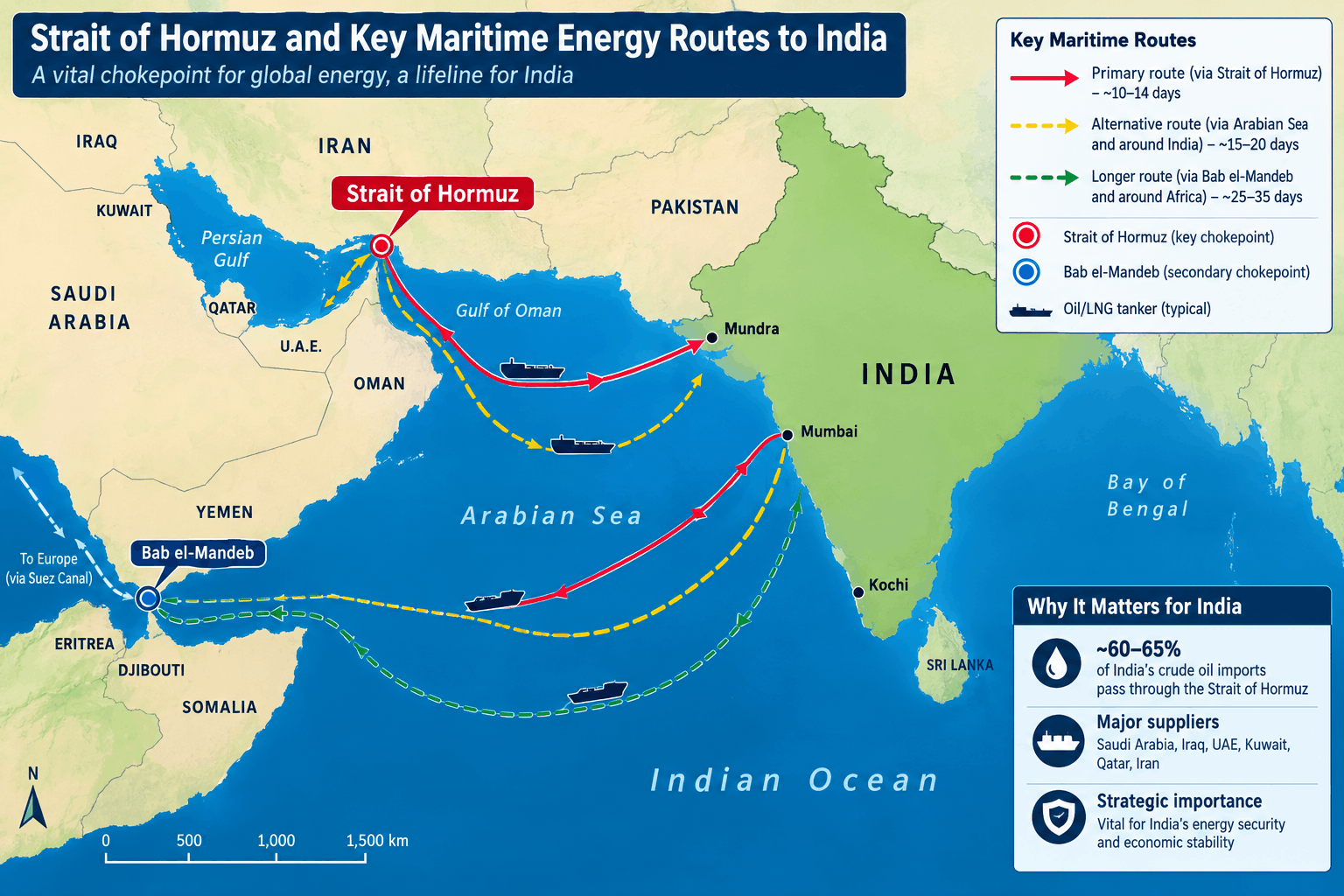
The conflict began after joint strikes by the United States and Israel on Iran on February 28, 2026, raising global concerns around fuel supply, trade routes, and regional stability. For India, a nation with over one crore citizens living and working across Gulf countries and roughly 70 percent of its energy imports routed through the Strait of Hormuz, the crisis landed not as a distant geopolitical abstraction but as an immediate domestic emergency.

Long queues outside LPG dealerships were reported in several parts of the country, with instances of black marketing also emerging, and the conflict between Israel, the United States and Iran quickly became a major political flashpoint. Against this backdrop, the Central Government had no room to maintain silence. Political pressure from the Opposition, public anxiety over fuel availability, and the urgency of diplomatic positioning collectively forced New Delhi's hand.

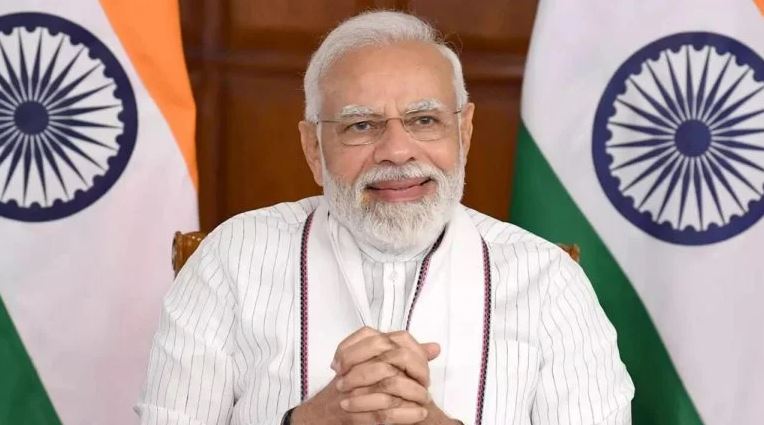
The meeting came days after Prime Minister Narendra Modi addressed both Houses of Parliament, warning that the effects of the West Asia conflict could last for a long time and urging the country to remain prepared. He also announced the formation of seven empowered groups to formulate strategies on fuel supplies, fertilisers and supply chains to mitigate the impact of the conflict.

Who Attended the All-Party Meeting and Who Chaired It

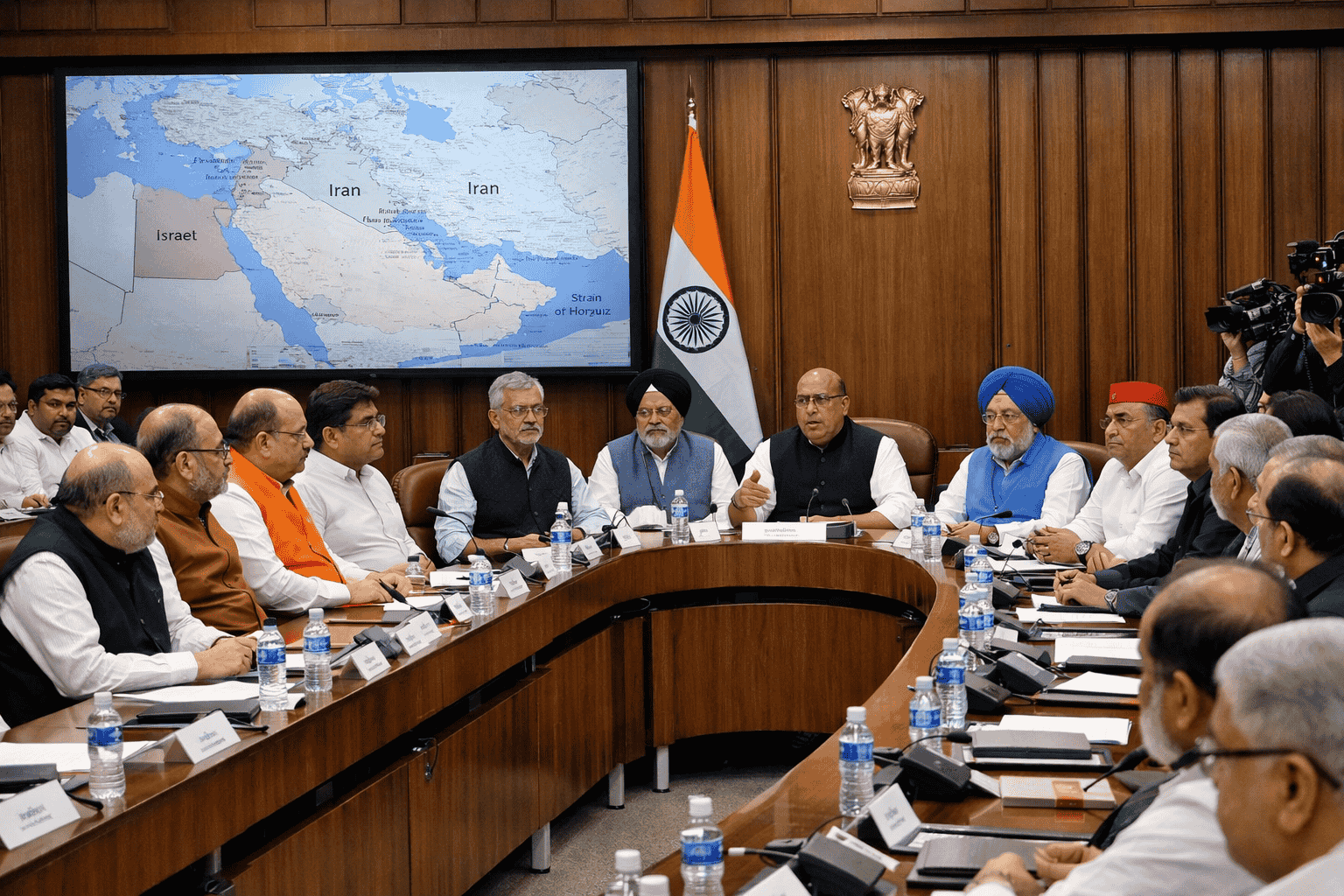
The government convened an All-Party Meeting on the West Asia situation at the Parliament House complex in New Delhi. Defence Minister Rajnath Singh chaired the meeting, which was attended by Home Minister Amit Shah, External Affairs Minister S. Jaishankar, Petroleum Minister Hardeep Puri, Parliamentary Affairs Minister Kiren Rijiju, JDU Working President Sanjay Jha, Rajiv Ranjan Singh, and other leaders. Congress leaders Mukul Wasnik and Tariq Anwar, CPI(M) MP John Brittas, Samajwadi Party MP Dharmendra Yadav, and other opposition leaders were also present.

The composition of the meeting itself carried a deliberate political message. Placing Defence Minister Rajnath Singh in the chair while flanking him with the External Affairs Minister and the Petroleum Minister was a calculated arrangement. It signalled simultaneously that this was a matter of national security, diplomatic management, and energy governance.

A detailed presentation by Foreign Secretary Vikram Misri, followed by remarks from Jaishankar and Petroleum Minister Hardeep Singh Puri, highlighted that energy security is stable. However, not every party chose to be present. Trinamool Congress leaders boycotted the meeting, with TMC MP Sagarika Ghose stating that the party had taken a principled stand against attending a meeting behind closed doors at a time of national crisis, demanding instead that the government speak in the House and take the public into confidence.

What the Government Said Inside the Meeting

The government's messaging inside the meeting pursued three distinct objectives: reassure on energy security, defend India's diplomatic positioning, and rebuff Opposition criticism of its silence.

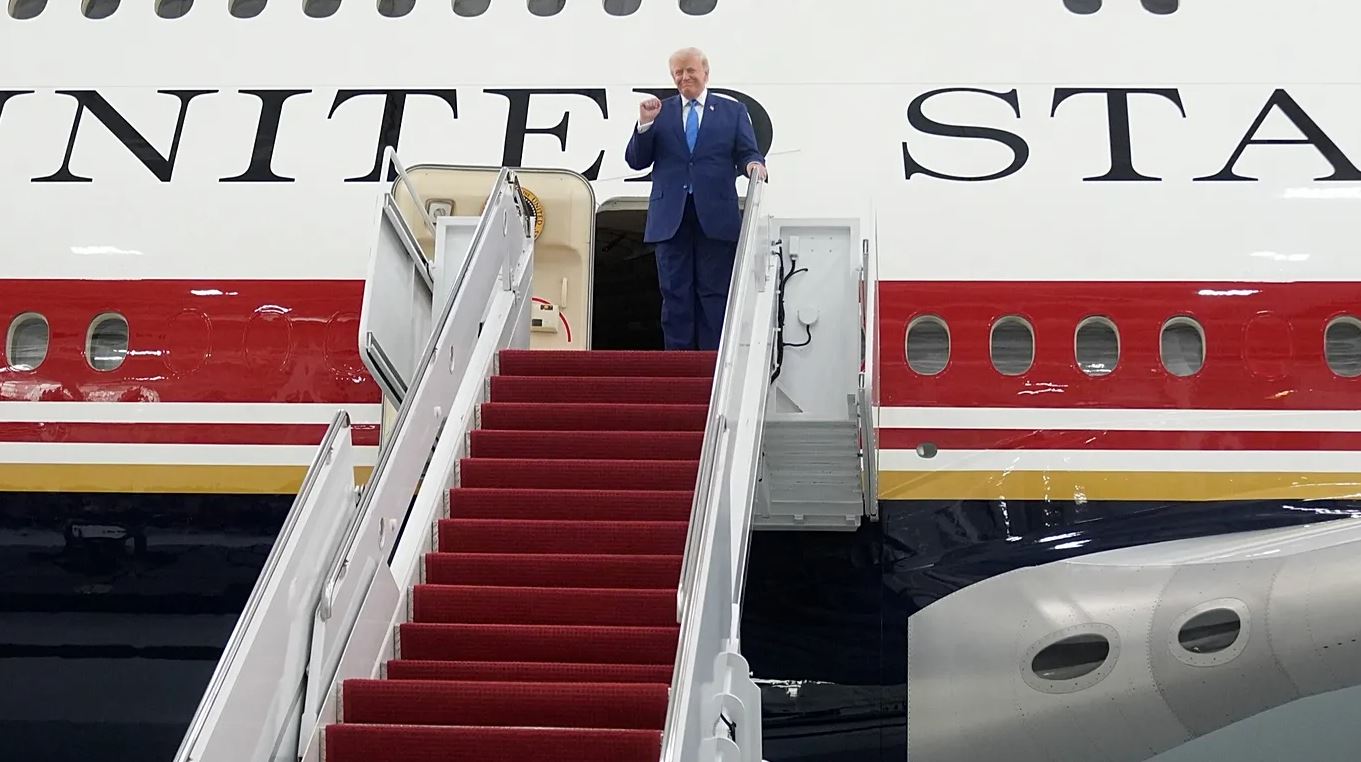
The government assured political parties that India faces no shortage of LPG, crude oil or natural gas despite the raging conflict in West Asia, and said that Prime Minister Narendra Modi had personally conveyed to US President Donald Trump India's desire for a swift end to hostilities.

At least four LPG-laden ships were expected to reach India via the Strait of Hormuz, keeping supply lines secure. External Affairs Minister S. Jaishankar briefed leaders on the Prime Minister's conversation with Donald Trump, emphasising India's push for an immediate end to the conflict.

The government rejected Opposition claims that India had been silent on the crisis, stating it was commenting and responding appropriately. It cited diplomatic outreach, including the Foreign Secretary's visit to the Iranian embassy to sign the condolence book. Officials said the government's primary concerns were the safety of the Indian diaspora in the Gulf and safeguarding energy supplies, both of which were being managed effectively.

On the pointed question of Pakistan's role as a possible mediator between the United States and Iran, the government's response was sharp and unambiguous. External Affairs Minister S. Jaishankar stated at the all-party meeting that India cannot act as a "dalal nation" in global geopolitics, with "dalal" meaning broker. The government responded that Pakistan's role as a conduit was not new, having continued since 1981, with Washington using Islamabad as a channel to engage with Tehran.

Where the Opposition Drew Its Lines of Disagreement

The Opposition did not simply attend and listen. It arrived with prepared arguments and left with unresolved demands. The fault lines that emerged inside the meeting reveal just how politically charged this crisis has become.

Opposition members raised questions about why Prime Minister Modi had visited Israel two days before the attack on Iran, to which no reply was given. It was also raised that India appeared to have taken a side in the conflict, to which the government replied that India was the only country that could talk to Israel, Iran, the United States, and the Gulf countries simultaneously.

Congress leader Tariq Anwar said Pakistan was playing mediator while India remained a "mute spectator," calling for debates in both Lok Sabha and Rajya Sabha. Opposition leaders called the government's responses "unsatisfactory" and demanded a full discussion in Parliament.

The demand for a parliamentary debate is not merely procedural. It is a demand for accountability in the open, before the public record, rather than in a closed room where government representatives can control the narrative. The all-party meeting was being held despite Parliament being in session, which the Opposition viewed as the government deliberately avoiding a formal debate in the House.

How the Meeting Concluded and What Comes Next

Despite the sharpness of the exchanges, the meeting ended with a degree of political convergence on the immediate crisis, if not on its diplomatic handling.

Kiren Rijiju expressed a united front among Opposition parties, stating that all Opposition colleagues had said that in this hour of crisis, whatever decision the government takes, whatever steps it takes according to the prevailing situation, everyone will support it unitedly. More than 375,000 Indians had been brought back since the conflict began, highlighting the urgency of the situation. The government also constituted seven empowered groups to develop strategies concerning fuel, supply chains, and fertilisers, ensuring that the nation remains prepared for any disruptions.

Following the all-party meeting, Prime Minister Narendra Modi convened an interaction with Chief Ministers via video conferencing to review state-level preparedness amid the ongoing West Asia conflict, with discussions focused on coordinated action and "Team India" synergy.

The government's decision to escalate from an all-party meeting to a Chief Ministers' interaction within 48 hours suggests that New Delhi is acutely aware of how quickly public anxiety can translate into political liability, particularly ahead of upcoming state elections.