Two American nationals were arrested on Sunday at Ichikawa City Zoo outside Tokyo after one scaled a perimeter fence and dropped into the dry moat surrounding the enclosure of Punch, the orphaned baby macaque who captured the world's attention earlier this year.
The Ichikawa Police Department identified the suspects as Reid Jahnai Dayson, 24, described as a university student, and Neal Jabahri Duan, 27, who identified himself to officers as a singer. Both men were taken into custody on suspicion of forcible obstruction of business, a criminal charge under Japanese law. One suspect was reportedly uncooperative with investigators; the other denied involvement.
Key facts at a glance:
- Incident occurred Sunday, May 18, 2026, at Ichikawa City Zoo, Chiba Prefecture
- Dayson, 24, entered the macaque enclosure wearing a smiley-face emoji costume
- Duan, 27, allegedly filmed the stunt; both arrested by Ichikawa Police
- Charge: forcible obstruction of business under Japanese criminal law
- Neither suspect made physical contact with the animals
- Zoo staff intervened swiftly; safety inspections completed post-incident
Who Is Punch and Why Does It Matter
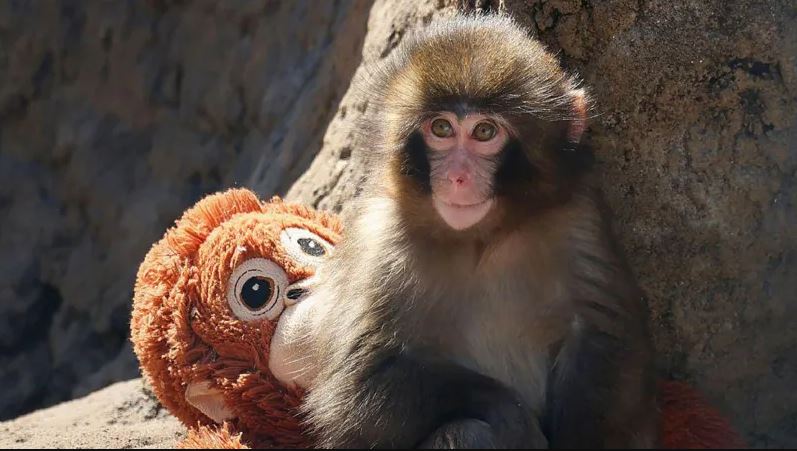
Punch became a global internet phenomenon after zoo staff at Ichikawa City Zoo shared images of the newborn macaque clutching an IKEA plush orangutan toy for comfort. Born in July 2025, Punch was rejected by his mother shortly after birth and raised by zookeepers in an artificial environment. His story generated an enormous devoted online fanbase, anchored by the hashtag #HangInTherePunch, which trended internationally for weeks.
By early 2026, Punch had begun supervised socialization training to reintegrate with his macaque troop, a delicate process that wildlife experts say requires a carefully managed, low-stress environment. That context makes Sunday's enclosure breach significantly more serious than a simple trespass violation. Any sudden trauma during reintegration can set back months of behavioral conditioning.
The zoo confirmed via a post on X (formerly Twitter) on May 17 that the suspects had been handed over to police and that thorough safety inspections had been carried out across all animal areas following the incident.
The Stunt: Anatomy of a Calculated Disruption
Social media footage circulating before authorities intervened showed Dayson scaling a protective fence dressed in a full yellow body costume featuring a smiley-face head with oversized sunglasses. According to AFP, he dropped into the dry moat surrounding the exhibit, then reportedly placed a small stuffed toy near the animals, causing the macaques to scatter in visible distress.
Reports indicate the costume and staging had a cryptocurrency-related promotional theme, suggesting the breach was a planned content stunt rather than an impulsive act of curiosity.
What the footage and police reports confirm:
- Dayson climbed over a security fence into a restricted dry moat area
- Duan filmed from outside the enclosure, reportedly for social media publication
- The monkeys scattered immediately upon Dayson entering the space
- Zoo staff apprehended both individuals before police arrived
- No animals were physically harmed, according to official statements
Japan's Deepening Tourist Conduct Crisis
This incident does not exist in isolation. Japan has recorded an unprecedented surge in international visitor numbers over the past two years, and that volume has brought with it a pattern of high-profile misconduct by foreign nationals, some of it livestreamed for audience engagement.
In 2023, an American content creator known online as "Johnny Somali" was arrested for allegedly trespassing at a construction site in Japan. Last year, a Ukrainian YouTuber with more than 6.5 million subscribers was detained after livestreaming himself entering a residential property inside the Fukushima nuclear exclusion zone. Both cases triggered significant diplomatic commentary and public backlash in Japan.
Sunday's arrest follows that same pattern: foreign nationals treating Japanese locations as content backdrops, with local laws treated as an afterthought.
What the law says: forcible obstruction of business
- Under Article 234 of Japan's Penal Code, this charge covers acts that interfere with another's business operations through force
- It carries a potential sentence of up to three years imprisonment or a fine of up to 500,000 yen
- Zoo management confirmed the incident directly disrupted regular operations on a public-access day
- The charge does not require physical violence, only demonstrable disruption