For decades, the standard options for hair loss have been finasteride, minoxidil, and surgery. None of them regrow hair from follicles that have already gone dormant. PP405 is designed to reactivate dormant hair follicle stem cells, offering a potential first-in-class approach for both men and women experiencing hair loss.
PP405 takes a different approach from current hair loss treatments, which mostly focus on secondary causes like hormones. Instead, it targets the primary biological pathway that controls the natural hair growth cycle.
What sets PP405 apart from existing treatments:
- Hair growth started from follicles where no hair was previously present, which existing drugs cannot achieve.
- Visible results appeared within eight weeks, compared to the 6 to 12 months of continuous therapy typically required with current treatments.
- The drug was specifically engineered for maximum penetration into the skin with minimal blood absorption, with no detectable drug levels in the blood confirmed across all patients.
How PP405 Works: The Mitochondrial Metabolic Switch Behind Hair Regrowth
The science behind PP405 is grounded in cell metabolism rather than hormonal interference.
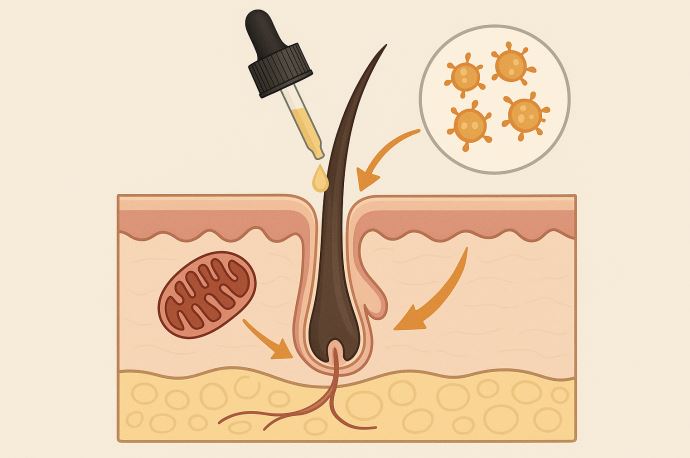
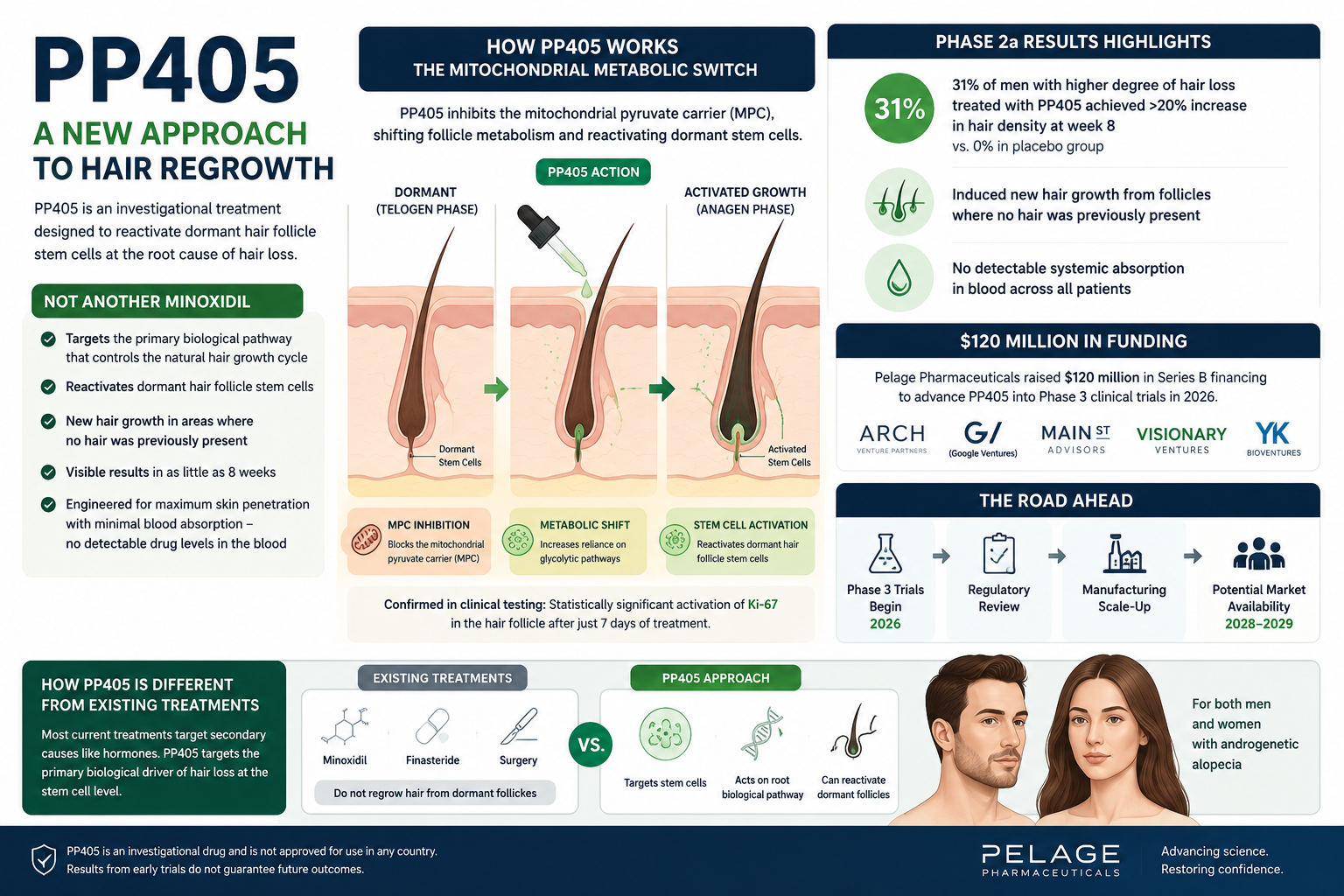
The drug is an inhibitor of MPC, the mitochondrial pyruvate carrier. It is a membrane transporter on mitochondria that is able to shift the aerobic and anaerobic metabolism of the cell. In plain terms, it flips a metabolic switch inside hair follicle stem cells that has been stuck in the off position.
In Phase 1 trials, PP405 demonstrated statistically significant activation of Ki-67 in the hair follicle after just seven days of treatment compared to baseline. The architecture of the hair follicles was observed shifting from the resting telogen phase into the anagen growing phase, visible through changes in follicle structure on biopsy.
Key biological mechanisms confirmed in clinical testing:
- PP405 demonstrates statistically significant activation of Ki-67 in the hair follicle, a well-established marker of stem cell activity.
- MPC inhibition increases the follicle's reliance on glycolytic pathways, reactivating dormant stem cells.
- The treatment activates dormant hair follicle stem cells, restoring the natural regenerative capacity of the follicle and activating new hair growth in previously bald areas.
Phase 2a Results, $120 Million in Funding, and the Road to Phase 3 in 2026
Pelage Pharmaceuticals raised $120 million in Series B financing co-led by ARCH Venture Partners and GV (Google Ventures), with participation from existing investors including Main Street Advisors, Visionary Ventures, and YK Bioventures.
The Phase 2a trial results that triggered that funding round were notable:
- At week eight, 31% of men with a higher degree of hair loss treated with PP405 experienced a greater than 20% increase in hair density, compared to 0% in the placebo group.
- PP405 demonstrated the ability to induce new hair growth from follicles where no hair was previously present, offering early validation of its regenerative potential.
- The Phase 2a trial reported no detectable systemic absorption in blood on pharmacokinetic testing.
Pelage expects to initiate late-stage studies in 2026, designed to further evaluate the safety and efficacy of PP405 in patients with androgenetic alopecia. As for when patients could actually access it, even with a smooth Phase 3, regulatory review and manufacturing scale-up typically mean availability is still measured in years, with PP405 unlikely to reach the market before 2028 or 2029.