How a Harvard Dorm Room Became the Foundation of a $1.7 Trillion Tech Empire
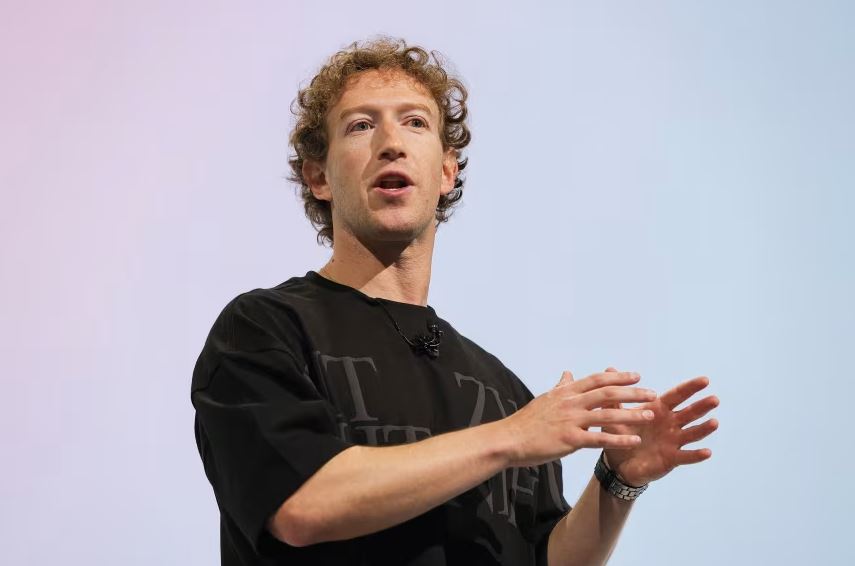
Mark Zuckerberg, born May 14, 1984, is an American technology entrepreneur, software engineer, and philanthropist best known as the founder and CEO of Meta Platforms. Since launching Facebook from his Harvard dorm room in 2004, Zuckerberg has become one of the defining figures of the digital age, reshaping how billions of people connect, share, and communicate online.
Zuckerberg grew up in Dobbs Ferry, New York, the son of a dentist and a psychiatrist. He was coding by middle school. His father hired a software developer to tutor him privately because no class could keep up with him. By high school, he had built a music recommendation program that Microsoft and AOL both tried to acquire. He turned them down and went to Harvard instead.
At Harvard, he built a series of small social tools before landing on TheFacebook in 2004, launched from his dorm room. Within 24 hours, 1,200 students had signed up. Within a month, half of Harvard was on it. He dropped out six months later and moved to Palo Alto with co-founder Dustin Moskovitz.
The commercial trajectory that followed is one of the most studied in modern business history:
- Forbes listed Zuckerberg at approximately $222 billion on its 2026 billionaires list, while Bloomberg's index places him at $217 billion as of late May 2026, reflecting differences in methodology, timing, and treatment of charitable share sales.
- Meta's family of apps collectively reaches over 3.2 billion people daily, with revenue streams spanning digital advertising, virtual reality hardware through Quest headsets, and an expanding commerce layer across Instagram and WhatsApp.
- Zuckerberg holds the majority of voting power at Meta through Class B shares, making him the company's controlling force regardless of market sentiment or investor pressure.
- He was ranked No. 6 on AI Magazine's Top 100 Leaders 2026 list, reflecting his growing impact on the global AI race beyond his traditional social media identity.
Why Zuckerberg Is Betting $135 Billion a Year to Win the AI Race
From the Metaverse Stumble to an Open-Source AI Strategy
Founded in a Harvard dormitory in 2004 as Facebook, the company aggressively acquired competitors like Instagram in 2012 and WhatsApp in 2014 to maintain social dominance. The 2021 rebrand to Meta signaled a shift toward the metaverse, a move that initially met with skepticism and a significant stock price collapse in 2022. However, the 2023 Year of Efficiency orchestrated by Zuckerberg streamlined the company, leading to a massive recovery.
In 2025, the company launched the fourth iteration of its Llama large language model family, introducing Scout and Maverick, alongside a preview of the much larger Behemoth model. These models are designed to position Meta as a serious competitor to OpenAI, Google, and Anthropic in frontier AI development.
Zuckerberg has positioned Meta at the forefront of open innovation, multimodal AI development, and the pursuit of artificial general intelligence, a strategy that distinguishes Meta from rivals who keep their most powerful models proprietary.
The Infrastructure Bet That Defines Meta's Next Decade
The financial scale of Zuckerberg's AI commitment is extraordinary even by Big Tech standards.
Meta told investors in January 2026 that AI-related capital expenditures for the year should come in the range of $115 billion to $135 billion, up from $72.2 billion in 2025.
Zuckerberg has committed over $600 billion through 2028 to build United States data centers supporting AI development. The Prometheus cluster, scheduled for 2026, will be the world's first gigawatt-plus computing facility. Hyperion will scale to five gigawatts over several years.
Zuckerberg stated in a public post that in 2025 he expected Meta AI to become the leading assistant serving more than one billion people, Llama 4 to become the leading state-of-the-art model, and an AI engineer to begin contributing increasing amounts of code to Meta's research and development efforts.
What Zuckerberg's Empire Means for Investors, Markets, and the Future of AI
The story of how the 41-year-old founder who lost $60 billion on the metaverse bet now stakes Meta's future on an even more expensive and uncertain wager: achieving artificial general intelligence before OpenAI, Google, or Anthropic, represents one of the most consequential strategic decisions in technology industry history.
Zuckerberg's leadership style has evolved from a "move fast and break things" philosophy to one of strategic discipline, as evidenced by the 2023 to 2025 turnaround, with CFO Susan Li praised by Wall Street for transparency around capital expenditures and a focus on return on invested capital.
For investors tracking Meta's position in the AI economy, the critical signals are:
- Meta released Muse Spark, a new AI model showing early promise in improving its core online advertising business, with analysts at Loop Capital noting that Meta holds a clear advantage in ads regardless of how frontier model competition plays out.
- Meta laid off 10% of its workforce, approximately 8,000 employees, in May 2026 to improve business efficiencies as it simultaneously scales AI infrastructure investment.
- Llama 5's release in 2026 will be a key test of whether Meta can match frontier model capabilities against the dominant players in closed-source AI.
- Meta's open-source Llama model strategy is positioning the company as a serious player in the artificial intelligence race by building developer ecosystems and enterprise adoption that proprietary models cannot easily replicate.
The broader market implication is significant. A Meta that successfully converts its advertising dominance into an AI infrastructure and services business would fundamentally alter competitive dynamics across cloud computing, enterprise software, and consumer AI, sectors currently led by Microsoft, Google, and Amazon.