For much of Donald Trump's second term, Silicon Valley and the White House have operated in lockstep on artificial intelligence, united by a shared hostility toward regulation and a common desire to outpace China. But that alliance is now showing significant strain. A series of high-stakes confrontations over AI safety, executive orders, and industry lobbying has exposed deep contradictions at the heart of America's approach to governing its most consequential technology.
How Tech Giants Killed a White House AI Safety Order
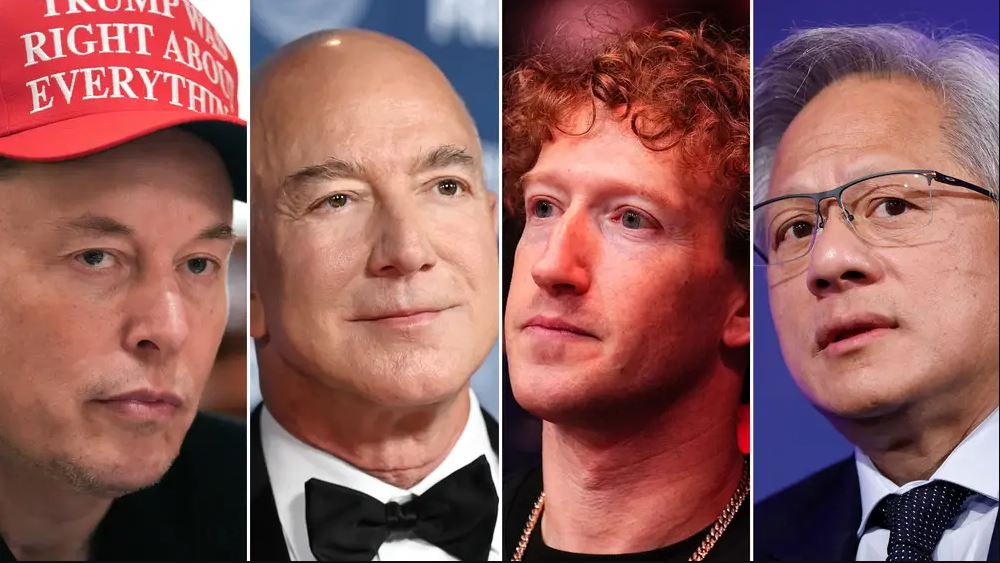
The Trump administration's plans for an executive order regulating artificial intelligence were put on hold after some of the tech industry's biggest players, including Elon Musk, Mark Zuckerberg, and venture capitalist David Sacks, persuaded the White House to call it off. The episode laid bare precisely who holds effective power over federal AI policy.
According to Semafor, which first reported the backstory, the White House's plans were halted after Musk, Zuckerberg, and Sacks all spoke directly with Trump between Wednesday night and Thursday morning. The argument that landed was an appeal to the accelerationist faction in the administration, including officials at the National Economic Council and staffers in the Vice President's office.
The shelved order would have established a 90-day voluntary review window for frontier AI models before public release, a lightweight mechanism by any regulatory standard, making its cancellation a significant signal about the ceiling for any U.S. AI oversight.
Trump himself told reporters in the Oval Office: "I didn't like certain aspects of it. I postponed it. I think it gets in the way of, you know, we're leading China, we're leading everybody, and I didn't want to do anything to get in the way of that lead."
What Triggered the Oversight Debate in the First Place
Key developments that brought AI regulation back onto the agenda:
- Anthropic released a large language model called Claude Mythos in April 2026, which exposed thousands of vulnerabilities in widely used software, prompting bipartisan calls for stronger regulations.
- Treasury Secretary Scott Bessent and Federal Reserve Chair Jerome Powell summoned Wall Street bank heads to Washington for a flash meeting to warn them of cybersecurity threats posed by Anthropic's Mythos model, which experts warned marked a profound shift in the technology.
- A bipartisan letter sent to the White House marked an escalation in pressure on the Trump administration to confront the risks posed by frontier AI cyber models like Anthropic's Mythos.
- The backlash against AI became a rare unifier across the political spectrum, culminating in data center moratoriums, pro-regulation super PACs, and a congressional letter urging Trump to address security threats posed by advanced models.
The Anthropic Dispute and the Limits of Industry Alignment
The contradiction at the center of the Trump AI agenda is perhaps most visible in the administration's treatment of Anthropic. Anthropic itself was labeled a national security threat by the administration after refusing to grant the Pentagon unrestricted use of its technology, a designation the company is now challenging in court.
When the Trump administration demanded unrestricted access to Anthropic's technologies, the company refused to comply out of concern that its services would be used for mass domestic surveillance and the development of lethal weapons that trigger without human control. The administration responded by initiating the process to eliminate Anthropic's government contracts.
The Trump Administration, driven by concerns about the national security implications of Anthropic's Mythos model and broader fears around cyberwarfare and infrastructure security, found itself considering oversight for advanced AI models, a position it had previously dismissed as contrary to American innovation.
Where Public Opinion Stands
The political calculation on AI regulation is increasingly uncomfortable for the White House. A 2025 Gallup poll found that 80 percent of U.S. adults prioritize rules for data security and AI safety over fast-paced innovation. A national poll by Morning Consult found that 47 percent of Republican voters strongly support Trump's plan to test AI models before public release, compared to just 5 percent who strongly oppose it, and more than 70 percent believe in legally mandatory testing done by an independent party.
The episode establishes a precedent that even voluntary, non-binding AI safety frameworks can be neutralized by direct billionaire lobbying before reaching public debate, compressing the window for practitioner or civil society input to zero.