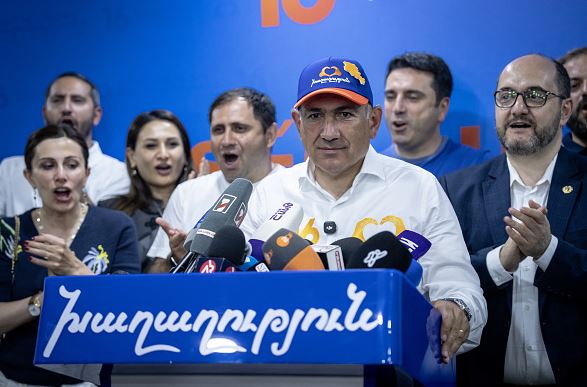
Armenian Prime Minister Nikol Pashinyan declared victory early Monday in a parliamentary election after results from just over one-fifth of polling sites showed his party with roughly 54 percent of the vote. When the Armenian Central Elections Commission completed counting all 2,005 polling stations, the final tally confirmed Civil Contract's lead with 49.81 percent of votes cast.
Voter turnout reached 59 percent, the commission confirmed. Pashinyan called the outcome a "historic victory," framing it as a clear public mandate for Armenia's westward geopolitical path.
Who is Nikol Pashinyan?
Nikol Vovayi Pashinyan came to power in 2018, following the "Velvet Revolution," a massive protest movement that end decades of rule by Armenia's traditional political elite. Nikol positioned himself as a reformist leader focused on democratic governance and anti-corruption measures.
Vote Results and Party Standings
Four parties cleared the electoral threshold and will be represented in the new parliament. The final standings were as follows:
- Civil Contract (Pashinyan): 49.81 percent (727,160 votes).
- Strong Armenia alliance (Samvel Karapetyan): 23.29 percent (340,062 votes).
- Armenia alliance (Robert Kocharyan): 9.94 percent (145,097 votes).
- Prosperous Armenia Party: 4.00 percent (58,368 votes).
If Pashinyan serves the full five-year term, he will become the longest-serving head of government in Armenia's post-independence history.
What This Election Was Really About
A Geopolitical Choice, Not Just a Domestic Vote
Sunday's election was held as Armenia's incumbent government, under mounting Russian pressure, sought to loosen ties with Moscow and deepen cooperation with the West. Casting his ballot, Pashinyan stated that Armenia would continue strengthening its independence, statehood, democracy, and rule of law, adding that the European Union is the country's main partner in democratic reform.
The election was mainly a contest between two political directions. Civil Contract supports continuing reforms and closer ties with Europe, while the opposition Strong Armenia alliance advocates for maintaining close relations with Russia, which remains a key economic partner for Armenia in trade and energy.
Azerbaijan Peace Deal at the Center
Pashinyan framed the vote as a choice between lasting peace with Azerbaijan or a return to conflict. His peace efforts took center stage in his campaign, including a US-brokered agreement he signed at the White House with Azerbaijan in August 2025.
Opposition groups accused Pashinyan of making too many concessions in that agreement, claiming the compromises weakened Armenia's position. He also faced accusations of authoritarian behavior, though the government insisted arrests of opposition figures were linked to alleged coup attempts.
International Attention and Electoral Concerns
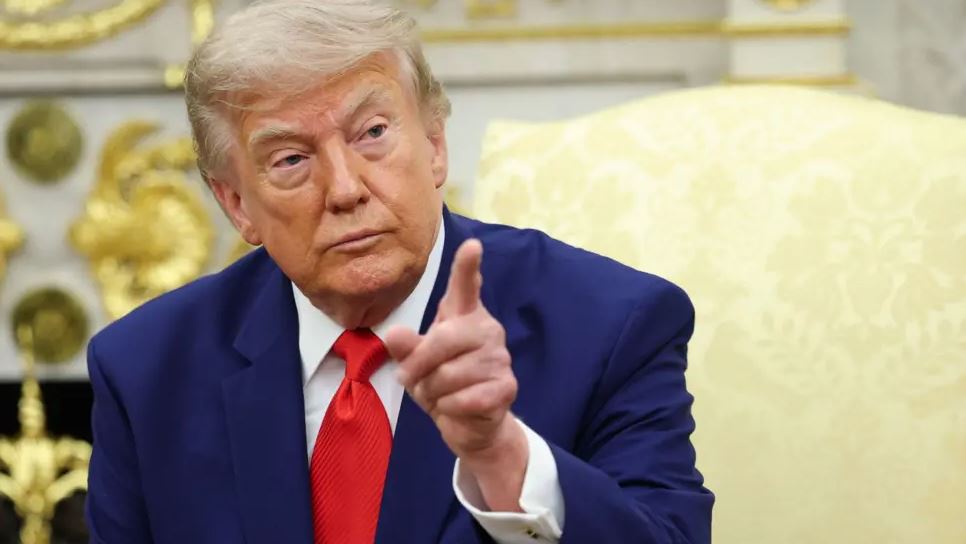
US President Donald Trump offered his full endorsement for Pashinyan's reelection, while Moscow has shown deep unease at the prospect of losing another ally in its former sphere of influence.
On election day, Armenian police detained more than 10 people over allegations of vote-buying and arrested three members of a local election commission, adding tension to an already closely watched electoral process.
Economic Record Supporting the Mandate
Supporters of Pashinyan credited his governance with doubling Armenia's GDP per capita since he came to power, a record that strengthened his electoral standing.