the fight against climate change, promising that AI-powered solutions will ultimately offset the environmental cost of running the data centers that power them. A sweeping new report released in February 2026 says that case has never been made with credible evidence, and that the tech industry has instead borrowed a tactic perfected by the fossil fuel sector: greenwashing at industrial scale.

The report, titled "The AI Climate Hoax," was authored by independent climate and energy analyst Ketan Joshi and commissioned by a coalition of environmental organizations including Beyond Fossil Fuels, Climate Action Against Disinformation, Friends of the Earth U.S., Stand.earth, the Green Screen Coalition, and the Green Web Foundation. It was released at the AI Impact Summit in New Delhi on February 17, 2026, and its findings have reverberated across boardrooms, regulatory agencies, and newsrooms ever since.

Key findings at a glance:

  • 74% of AI climate claims are unproven
  • 36% of claims cited zero supporting evidence
  • 26% cited peer-reviewed academic papers
  • 0 verified cases of generative AI cutting emissions

"It appears tech companies are using vagueness about what happens within energy-hogging data centres to greenwash a planet-wrecking expansion. The promises of planet-saving tech remain hollow, while AI data centres breathe life into coal and gas every day." Ketan Joshi, independent climate and energy analyst and report author

The bait-and-switch at the heart of AI sustainability claims

One of the report's most important contributions is identifying a structural deception embedded in how Big Tech communicates about AI and climate. Companies and institutions routinely conflate two fundamentally different categories of technology under the single umbrella term "AI."

Traditional AI versus generative AI

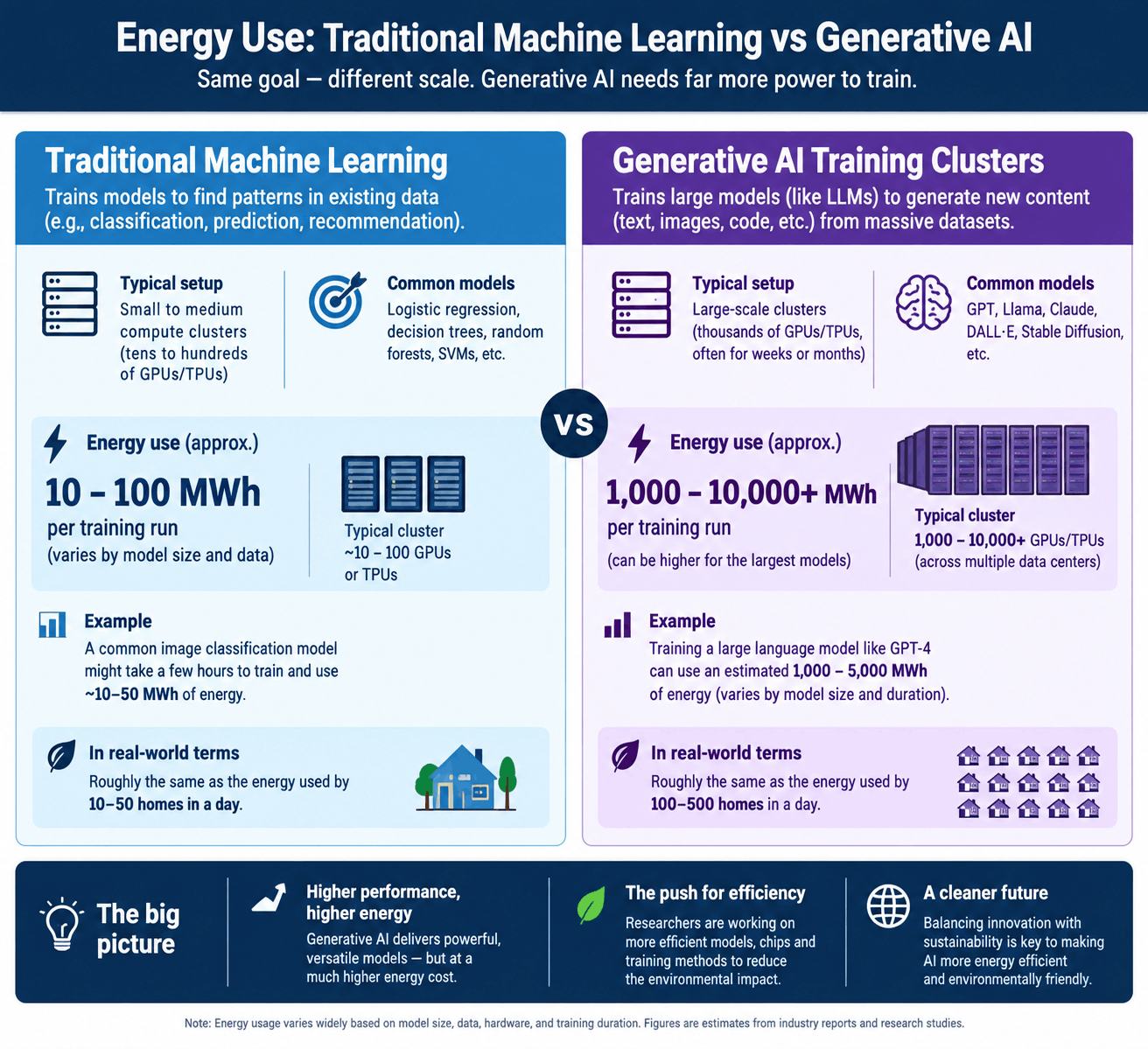
Traditional AI, meaning machine learning models used to forecast wind patterns, optimize energy grids, or detect methane leaks from satellite imagery, does carry genuine environmental promise. It is relatively low in energy consumption and has documented applications in climate science. This is the category that makes an optimistic case.

Generative AI, on the other hand, is the category driving the overwhelming majority of Big Tech's revenue growth and infrastructure expansion. Training and running large language models is extraordinarily energy-intensive. According to MIT researchers, a generative AI training cluster can consume seven to eight times more energy than a typical computing workload. When companies issue sweeping claims that "AI will help the climate," they often cite research on traditional machine learning while pointing investors toward a business model built on computationally expensive generative systems.

The report calls this a deliberate rhetorical strategy and labels it a new form of greenwashing specific to the tech sector: using the credibility of narrow specialist AI applications to justify the unchecked expansion of consumer generative AI platforms.

How fast is AI's environmental footprint actually growing

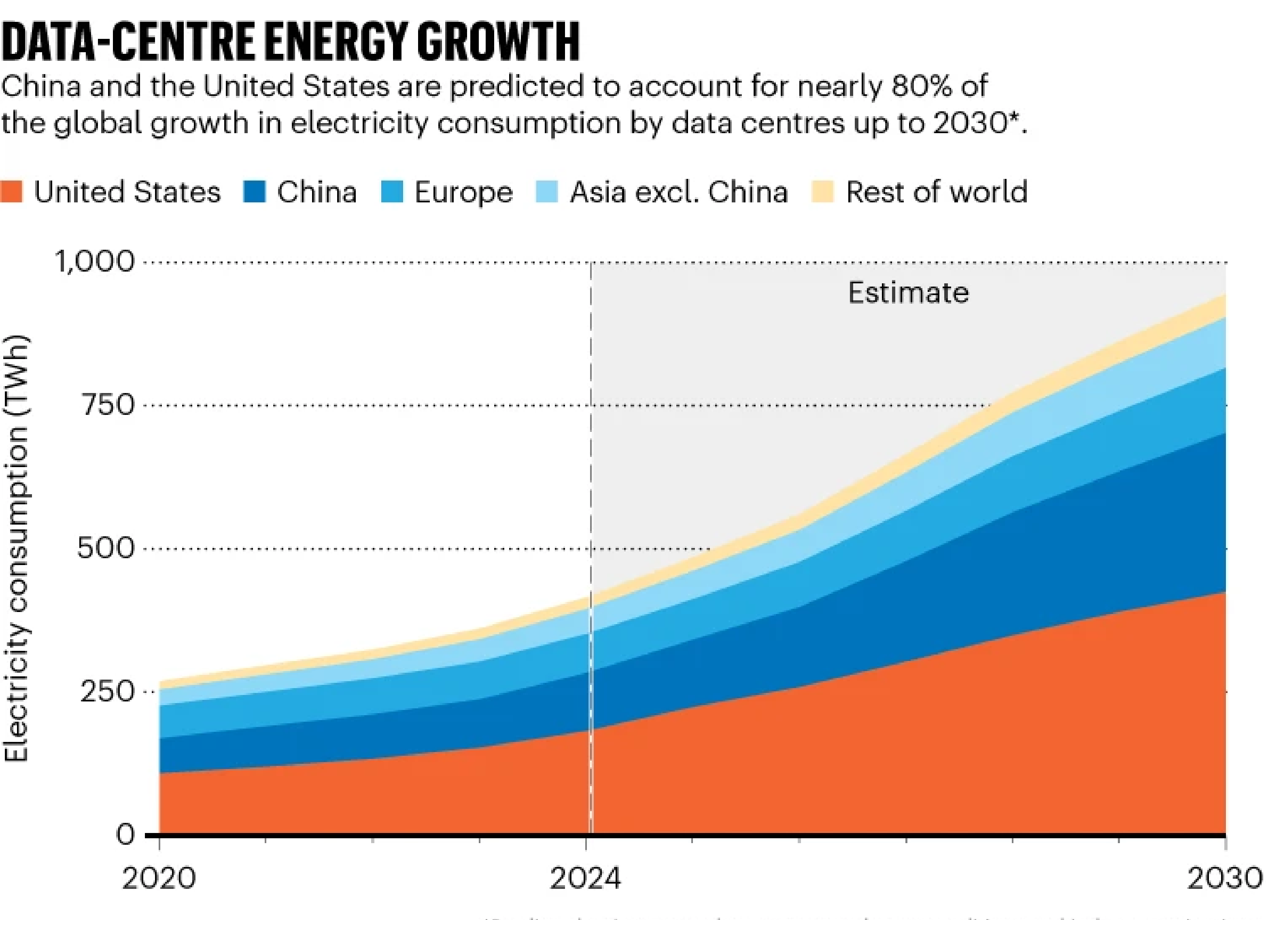
A January 2026 study published in the journal Patterns estimated that data centers alone may have emitted between 32.6 million and 79.7 million tonnes of carbon dioxide in 2025, roughly equivalent to the annual emissions of a small European nation. The International Energy Agency projected in April 2025 that global electricity demand from data centers will more than double by 2030, reaching approximately 945 terawatt-hours, a figure comparable to Japan's total annual electricity consumption.

A 2025 Greenpeace Germany report warned that AI data center electricity demand could be eleven times higher in 2030 than it was in 2023. Greenpeace East Asia documented a 4.5-fold increase in emissions from AI chip manufacturing in a single year. Goldman Sachs Research projected in August 2025 that approximately 60 percent of rising data center energy demand will be met by burning fossil fuels, adding roughly 220 million tonnes of carbon to the atmosphere annually.

Corporate emissions are already rising

The environmental cost is not theoretical. Amazon's greenhouse gas emissions rose 6 percent in 2024 compared to 2023, driven in part by data center expansion tied directly to AI integration. U.S. greenhouse gas emissions rose overall in 2025 for the first time in two years, with data centers identified as a significant contributor according to the Rhodium Group. Capgemini's 2025 research found that 42 percent of executives are being forced to re-examine previously set climate goals because of generative AI's energy demands, while only 12 percent are even measuring that impact.

A self-referencing evidence network

The report does not just identify that claims are unproven. It examines the evidentiary structure underlying those claims and finds what Joshi describes as a structural accountability failure. Big Tech companies have built citation networks that reference their own internal carbon accounting methodologies and their own commissioned studies rather than independent peer-reviewed research.

Google, for example, continued citing a figure about AI's climate benefits as recently as April 2025, despite the citation chain looping back exclusively to Google's own carbon accounting approach. This creates a situation where regulators, investors, and the public have no independent scientific baseline against which to verify corporate sustainability disclosures.

"Big Tech's AI hype is distracting users from the rapid and dangerous expansion of giant, energy and water-intensive data centres, while the tech industry's huge energy demands are throwing the fossil fuel industry a lifeline. There is simply no evidence that AI will help the climate more than it will harm it." Jill McArdle, International Corporate Campaigner, Beyond Fossil Fuels

What accountability would actually look like

Campaign groups that commissioned the report are calling for binding transparency requirements. Companies should be required to disclose total energy consumption and emissions from their AI operations, broken down by model type, geography, and use case. Sustainability claims should cite peer-reviewed research, not internal methodologies. New data centers must be backed by locally sourced, around-the-clock renewable energy before they go online, rather than future clean energy credit promises.

The IEA's own analysis acknowledges that AI could help reduce global emissions by up to 5 percent by 2035 if applied strategically in the energy sector, particularly in accelerating battery chemistry research and smart grid optimization. The operative phrase is "if applied strategically," not if deployed at unlimited scale for consumer applications while data centers continue drawing from coal and gas grids.