A decision by President Volodymyr Zelensky to name an elite Special Operations Forces unit after the Heroes of the Ukrainian Insurgent Army (UPA) has sparked criticism and political backlash in Poland. The decree entered into force on May 26 and landed inside one of the most sensitive fault lines in Eastern European memory politics, at a moment when Warsaw and Kyiv can least afford a rupture.
Zelensky argued the decision was made to restore the historical traditions of the national army, in recognition of the unit's exemplary performance in defending Ukraine's territorial integrity and independence. Polish officials heard it differently.
Why the UPA Name Cuts So Deeply in Poland
The move triggered outrage in Poland where the UPA is held responsible for the Volyn massacres of 1943 to 1944, one of the most painful chapters in Polish-Ukrainian history. Carried out in Nazi-occupied territories of what is now western Ukraine, UPA members killed tens of thousands of Poles, while thousands of Ukrainians were killed in retaliatory violence that followed.
Poland considers the killings a genocide. Ukraine has described the events as part of a broader bilateral conflict in which both sides bear responsibility.
That interpretive gap has never fully closed. What the decree did was reopen it publicly, at scale, in wartime.
The backlash moved across political lines in Warsaw:
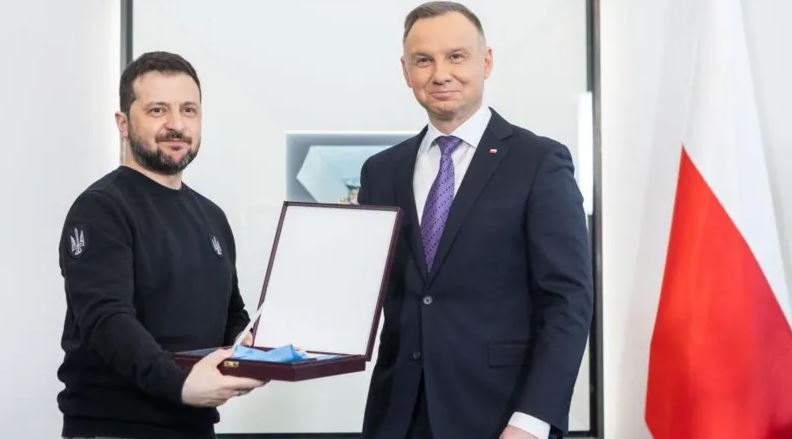
- Polish President Karol Nawrocki said he was "outraged" and proposed the withdrawal of the Order of the White Eagle from Zelensky, Poland's highest state decoration, awarded in 2023.
- Prime Minister Donald Tusk said the move "wounds our historical sensitivity" and is "worrying from the point of view of our relations".
- Former President Lech Walesa, a longstanding supporter of Ukraine since Russia's full-scale invasion, said he had removed a Ukrainian flag pin from his lapel in protest.
- Ukraine's ambassador to Poland, Vasyl Bodnar, was formally summoned to Poland's Foreign Ministry on May 28, where Deputy Foreign Minister Marcin Bosacki lodged an official protest.
- Polish Defence Minister Wladyslaw Kosiniak-Kamysz conveyed to his Ukrainian counterpart Poland's expectation that the decision be reversed.
How Both Governments Are Managing the Damage
Nawrocki argued that glorifying the UPA provides Russian propaganda with a great deal of oxygen for disinformation, while simultaneously maintaining that supporting Ukraine against Russia remains a priority.
That dual position captures the bind Warsaw is in. Poland cannot afford to functionally weaken Kyiv. It also cannot absorb the domestic political cost of silence on the Volyn massacres.
Tusk moved to calm the situation, warning that the only party to benefit from conflict between Poland and Ukraine is Russia.
Ukraine's Foreign Ministry offered its own framing. Spokesperson Heorhii Tykhyi said the honorary title was not intended to offend the Polish people and that the soldiers who initiated the designation viewed the UPA struggle as exclusively an opposition to Moscow's imperial policy, not as directed against Poles. He urged both sides not to allow quarrels over the past to undermine resistance to the common enemy.
Tykhyi also expressed regret that the dispute had occurred contrary to the broader trend of resolving difficult issues in Polish-Ukrainian relations observed over the previous eighteen months, during which both sides had made significant efforts to establish dialogue and build understanding.
The strategic logic behind Zelensky's timing is not difficult to read. As the war drags on with no clear end in sight and peace talks stalled, Zelensky has been working to unify the country against Russia by invoking historical figures. The UPA holds genuine nationalist resonance inside Ukraine. The cost of that domestic political calculation is now being paid in diplomatic capital with a critical neighbour.