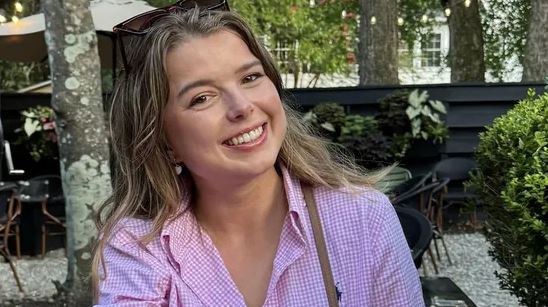
Norwegian journalist Helle Lyng reported that her Instagram and Facebook accounts were suspended after she faced heavy online criticism for attempting to question Prime Minister Narendra Modi during a media event in Norway. The incident has reignited an international debate over press freedom, diplomatic accountability, and the role of social media platforms in political controversies.
What Happened at the Oslo Press Briefing
During PM Modi's official diplomatic visit to Oslo, Lyng attempted to ask him a question after a joint press briefing with Norway's Prime Minister Jonas Gahr. As Modi was leaving, she called out: "Why don't you take some questions from the freest press in the world?" Modi and his Norwegian counterpart did not respond, as they were already on their way out of the venue.
Lyng, who works for the Oslo-based newspaper Dagsavisen, was unapologetic about her action:
- She clarified she did not expect Modi to answer.
- She noted that Norway holds the top spot on the World Press Freedom Index, while India sits at 157th, alongside Palestine, the UAE, and Cuba.
- She stated it is a journalist's duty to question powers with which their country cooperates.
Meta Account Suspension and Lyng's Response
On X, Lyng wrote: "If you're trying to reach me on Instagram or Facebook, I would like to let you know I have been suspended from both accounts. I have wanted to respond to as many Indians as possible, but my responses will now be delayed." She tagged Meta's official X account, adding that she hoped to recover her accounts.
She described the suspension as "a small price to pay for press freedom" and shared a screenshot of the suspension message.
She also raised a key question publicly:
- Whether the suspension resulted from two-step verification being misused by others.
- Or whether another technical or policy reason was involved.
- She requested advice on securing her accounts if restored.
Indian Government's Response at the Follow-Up Briefing
Following the viral incident, Lyng was invited to an official media briefing held by senior officials from India's Ministry of External Affairs. At the briefing, she asked: "As we strengthen our partnership, why should we trust you? Can you promise that you will try to stop the human rights violations that go on in your country? And also, will the prime minister start taking critical questions from the Indian press at some point in the future?"
MEA Secretary Sibi George responded by highlighting India's 1947 decision to grant women the right to vote, describing recent Assembly elections as proof of India's vibrant democratic process, and stating: "We are one-sixth of the world's total population, but not one-sixth of the world's problems; we have a Constitution that guarantees fundamental rights of the people."
When Lyng attempted to repeat her original question, George told her sharply: "Please do not interrupt me. This is my press conference."
Online Backlash and Accusations Against Lyng
The incident quickly turned into a polarized social media storm:
- Some users accused Lyng of being a "foreign plant," a "spy," or a "Chinese proxy," pointing to her earlier articles about China and President Xi Jinping.
- Supporters rallied behind her, framing her actions as legitimate journalism.
- The suspension of her Meta accounts further fuelled the narrative around digital suppression of press voices.
Why This Incident Matters for Global Press Freedom
The Helle Lyng episode sits at the intersection of three urgent issues:
- Diplomatic immunity vs. journalistic access: Should visiting heads of state face scrutiny from the host country's press?
- Platform accountability: Meta has not publicly commented on the reason for the suspensions.
- Coordinated online campaigns: The pattern of mass reporting to suspend accounts of journalists is a growing concern documented by press freedom organizations worldwide.
India has strongly rejected the press freedom and human rights questions raised by Lyng, with a senior foreign ministry official defending the country's democratic record. However, Norway's top ranking on the World Press Freedom Index lends institutional weight to Lyng's challenge.