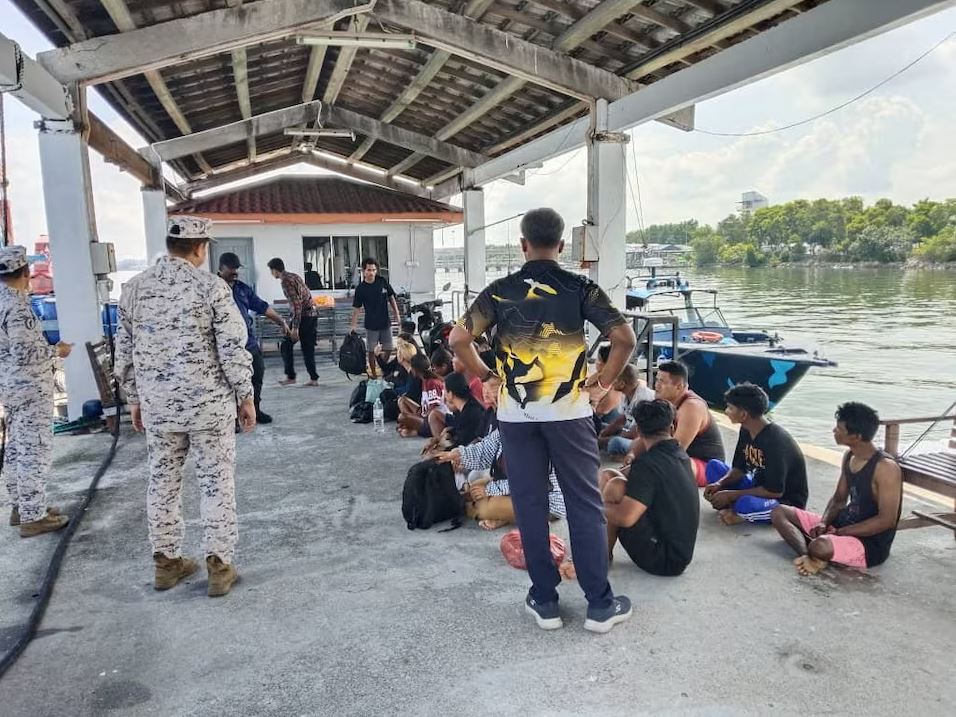
Who Were the Migrants on the Capsized Boat Off Pangkor Island?
A boat carrying 37 undocumented migrants from Indonesia sank in the waters off Pangkor Island in Perak early on Monday morning, with 14 still missing as of today.
Preliminary investigations found that they left Kisaran, Indonesia, on May 9. The migrants were bound for several destinations including Penang, Terengganu, Selangor, and Kuala Lumpur.
These were not tourists or transit passengers. They were working-age people, risking their lives to reach a country where demand for undocumented labour remains structurally embedded in its economy.
Who Rescued the Survivors and How Were They Found?
A fisherman alerted authorities early Monday after discovering victims floating in the waters off Pangkor Island. A local fishing vessel rescued 23 Indonesians, including seven women, who were escorted to a marine police jetty for documentation and further investigations.
Two MMEA vessels, assisted by the marine police, the navy, and members of the local fishing community, are involved in the search operation.
The fact that a civilian fisherman made the initial discovery before authorities raises hard questions about maritime surveillance capacity along one of Southeast Asia's most consistently deadly migration corridors.
Who Is Leading the Search for the 14 Still Missing?
Perak state maritime director Mohamad Shukri Khotob confirmed the operation, stating: "As of now, the remaining victims have yet to be identified and search operations are continuing."
Authorities have deployed boats, a helicopter, and surveillance aircraft. The search is active. Whether it is fast enough, and whether it will find survivors rather than bodies, remains an open and urgent question.
Who Is Behind These Crossings and Why Do They Keep Happening?
Malaysia is home to millions of migrants from poorer parts of Asia, many of them undocumented, working in industries including construction and agriculture. The crossings are facilitated by human trafficking syndicates and are often hazardous, leading to boats capsizing.
An estimated 100,000 to 200,000 Indonesians make the perilous journey each year, often recruited by trafficking gangs and subject to exploitation when they arrive, migrant activists have said.
This is not a tragedy of bad weather or bad luck. It is a predictable outcome of a system in which demand for cheap labour in Malaysia, criminal profiteering by trafficking networks, and the absence of legal migration pathways combine to push vulnerable people onto overloaded boats.
In one of the deadliest recent incidents, 36 migrants died in November 2025 after their boat capsized near the Thai-Malaysian coast. Six months later, the same waters are again a search zone.